
Wine Pot
Unknown Artist
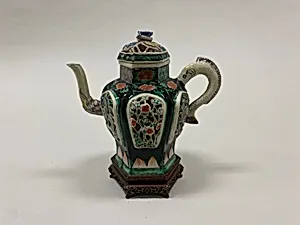
Medium
Porcelain decorated with green, red, blue, and black enamels on the biscuit; some gilding on lid
Dimensions
H. (with lid and base) 6 9/16 in. (16.7 cm); W. 6 1/4 in. (15.9 cm); D. 3 5/8 in. (9.2 cm)
Classification
Ceramics
Culture & Period
China · Qing dynasty (1644–1911), Kangxi period (1662–1722)
Department
Asian Art
Museum
Metropolitan Museum of Art, New York, NY
Credit
Gift of Edwin C. Vogel, 1963
Accession Number
63.213.18a, b
Rights
Public Domain
Tags
Art Historical Context
This elegant wine pot hails from China's Qing dynasty during the Kangxi period (1662–1722), a golden era for porcelain production renowned for its technical innovation and exquisite craftsmanship. Crafted from biscuit porcelain—an unglazed body that provides a soft, matte canvas—the vessel is vibrantly decorated with overglaze enamels in lush green, red, blue, and black hues, accented by delicate gilding on the lid. Standing just over 6 inches tall with its base, it exemplifies the period's mastery in combining functionality with artistry, designed to warm and pour rice wine at scholarly banquets or festive gatherings. The colorful enamel technique, known as yangcai or similar polychrome styles, allowed artisans at imperial kilns like Jingdezhen to achieve vivid, layered designs that popped against the creamy biscuit ground. Fish motifs, suggested by the decoration, hold deep cultural symbolism in Chinese art, representing abundance, harmony, and good fortune—echoing Confucian ideals of prosperity. This piece reflects the Kangxi court's cosmopolitan tastes, blending domestic refinement with export appeal. A generous gift to the Metropolitan Museum of Art from Edwin C. Vogel in 1963, this wine pot invites visitors to appreciate the tactile beauty of Qing ceramics, where everyday objects became treasures of imperial elegance.