
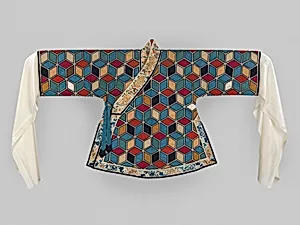
清 暗花彩緞女戯衣|Woman's Theatrical Jacket
Unknown Artist
19th century
Medium
Silk damask applique, silk thread embroidery on satin, plain weave silk
Dimensions
Overall: 33 1/2 x 114 in. (85.1 x 289.6 cm)
Classification
Costumes-Embroidered
Culture & Period
China · Qing dynasty (1644–1911)
Department
Asian Art
Museum
Metropolitan Museum of Art, New York, NY
Credit
Gift of Alan Priest, 1962
Accession Number
62.27.2
Rights
Public Domain
Art Historical Context
This exquisite Woman's Theatrical Jacket, crafted in 19th-century China during the Qing dynasty (164–1911), exemplifies opulent world of Chinese opera costumes. as "Qing An Hua Cai Duan Nü Xi Yi" in Chinese, it was designed for female performers, likely in regional or Peking opera traditions, where elaborate attire transformed actors into mythical heroes, virtuous maidens, or cunning spirits. The jacket's impressive length—over 9 feet—allowed for dramatic sweeping gestures on stage, enhancing the theatrical spectacle that captivated audiences in imperial theaters. Made from luxurious silk damask appliqué, silk thread embroidery on satin, and plain weave silk, the garment showcases masterful textile techniques. The "an hua" (subtle pattern) damask provides a textured, shimmering ground, while intricate embroidery adds vibrant motifs—possibly floral or symbolic designs—that denoted character status and narrative role. Such costumes were not mere clothing but cultural artifacts, blending artistry with symbolism to convey morality, status, and emotion in a performance art form central to Qing social life. Today, this rare piece, gifted to the Metropolitan Museum of Art in 1962, offers a window into China's golden age of textile innovation and live theater, reminding us how fabric could weave stories as vividly as any script.