
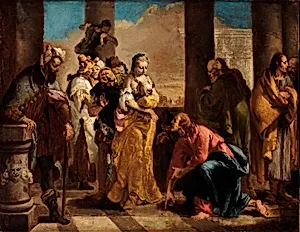
Woman Taken in Adultery
18th century
Medium
Painting
Classification
Painting
Department
Smithsonian Collection
Museum
Smithsonian American Art Museum
Credit
Smithsonian American Art Museum, Bequest of Mabel Johnson Langhorne
Accession Number
1956.11.54
Rights
Public Domain
Tags
Art Historical Context
In the hushed galleries of the Smithsonian American Art, the 18th-century Italian painting *Woman Taken inultery* captivates with its dramatic portrayal of a pivotal biblical scene from the Gospel of John8:1-11). Created by an unidentified Italian artist, this work depicts Jesus confronting scribes and Pharisees who bring before him a woman accused of—often interpreted in art as a symbol of mercy triumphing over judgment. The central figure group, including Christ and the accused woman (tagged here evocatively as a "prostitute"), draws viewers into a moment of tense moral drama, highlighting themes of forgiveness and human frailty that resonated deeply in Catholic Europe. Though the artist's identity remains a mystery, the painting exemplifies 18th-century Italian traditions, likely employing rich oil techniques to convey emotional intensity through expressive gestures and shadowed figures. Such scenes were popular in Baroque-influenced devotional art, serving as visual sermons for the faithful. Its presence in the Smithsonian collection, via the bequest of Mabel Johnson Langhorne, underscores its enduring appeal across continents, bridging European religious narrative with American tastes. This understated gem invites reflection: What does Jesus's challenge—"Let him who is without sin cast the first stone"—mean today? A testament to art's power to humanize scripture.
About the Artist
Unidentified (Italian)
The designation "Italian" in art collections typically refers to an anonymous artist or a loose attribution to works from Italian schools, rather than a specific individual. With 173 known artworks in the museum's collection, this entry likely encompasses paintings by unidentified masters active across various periods, such as the Renaissance, Baroque, or later eras. Early life and personal detail...