
Woman's Sleeve Bands
Qing dynasty (1644–1911), 1875/1900
Medium
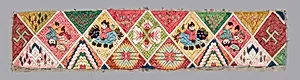
Figures and geometric patterns embroidered on gauze.
Dimensions
12.2 × 53.8 cm (4 3/4 × 21 1/4 in.)
Classification
textile
Department
Textiles
Museum
Art Institute of Chicago
Accession Number
22089
Rights
Public Domain
Art Historical Context
Step into the refined world of late Qing dynasty fashion with these exquisite *Woman's Sleeve Bands*, crafted by Han-Chinese artisans around 1875–1900. During China's Qing era (1644–1911), such textiles adorned the cuffs of women's robes and jackets, serving as elegant accents that signaled social status and refined taste. Produced in the final decades of imperial rule, they reflect a blend of tradition and sophistication amid a period of cultural flourishing and foreign influences. Meticulously embroidered on delicate gauze—a sheer, lightweight silk fabric—these bands measure 12.2 × 53.8 cm and feature intricate figures and geometric patterns. Gauze's translucency allowed the embroidery to shimmer, highlighting the embroiderers' mastery of fine stitches like satin or chain, which created vibrant, textured motifs. Geometric designs often symbolized harmony and protection, while figures evoked prosperity or mythical themes, common in Han-Chinese textile arts. Housed in the Art Institute of Chicago's Textiles Department, these bands offer a tactile glimpse into everyday luxury. They showcase the Qing's pinnacle of embroidery skill, where women's handiwork rivaled court workshops, preserving cultural motifs through turbulent times. A testament to artistry in the domestic sphere, they invite us to appreciate the unseen labor behind imperial elegance.
About the Artist
Han-Chinese
**Han-Chinese** was the collective attribution given to anonymous artisans of Han Chinese descent who crafted intricate embroidered textiles during the Qing dynasty (1644–1911). These makers, active primarily in the late 18th to early 20th centuries, specialized in luxurious garments and furnishings that showcased the pinnacle of Han Chinese needlework traditions. Their early lives and individual ...