
Wooden Indian Doll
c. 1937
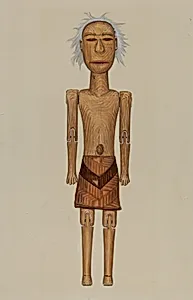
Medium
watercolor, graphite, and gouache on paperboard
Dimensions
overall: 47.3 x 31.6 cm (18 5/8 x 12 7/16 in.) Original IAD Object: 24" long
Classification
Index of American Design
Department
CG-W
Museum
National Gallery of Art, Washington, D.C.
Credit
Index of American Design
Accession Number
1943.8.16643
Rights
Public Domain
Art Historical Context
Behold the *Wooden Indian Doll*, captivating watercolor, graphite, and gouache rendering by Rex F. Bush, created around 1937. Measuring 47.3 x 31.6 cm, this detailed depiction captures a 24-inch-long folk art object—a carved wooden doll stylized as a Native American figure, emblematic of early 20th-century American vernacular craft. Bush's meticulous technique blends the transparency of watercolor for subtle shading, the precision of graphite for fine lines, and the vibrant opacity of gouache to bring the doll's painted features and attire to life on paperboard. This artwork is a gem from the Index of American Design (IAD), a ambitious WPA Federal Art Project from 1935–1942 that employed artists during the Great Depression to document the nation's rich folk art heritage. Through over 18,000 such renderings, the IAD preserved everyday objects like trade figures and toys, safeguarding cultural artifacts from obscurity. Housed in the National Gallery of Art, Bush's piece highlights the IAD's artistic rigor—photographic accuracy fused with interpretive color—celebrating America's diverse design traditions. The *Wooden Indian Doll* reflects a poignant slice of cultural history, where such figures served as playful yet stereotypical symbols in shops, homes, and fairs. It invites visitors to ponder the interplay of craft, commerce, and identity in prewar America, reminding us of the enduring value of folk expression.
About the Artist
Rex F. Bush · 1915–2002
Rex F. Bush (c. 1915–2002) was an American artist best known for his meticulous contributions to the Index of American Design, a Federal Art Project initiative under the Works Progress Administration (WPA) during the Great Depression era. Active primarily from 1935 to 1942, Bush produced watercolor, gouache, graphite, and pen-and-ink renderings on paperboard that documented everyday American folk ...