
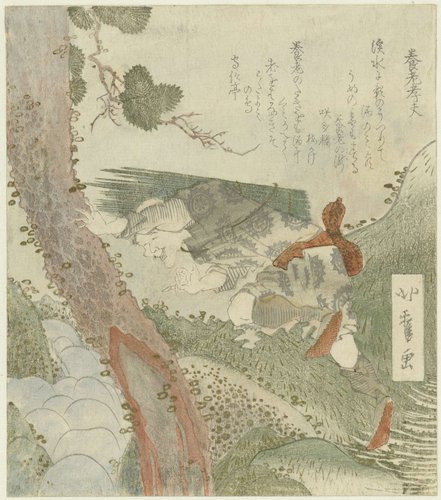
Yôrô no kôfu
ca. 1820 - ca. 1830
Medium
nishikie, with metallic pigments and blindprinting
Dimensions
180; 205
Rights
Public Domain
About this artwork
height 205 mm x width 180 mm
Art Historical Context
"Yôrô no kôfu" is a delicate woodblock print created by the Japanese artist Karyôsai Hokuga around 1820–1830, during the late Edo period. Measuring just 205 mm high by 180 mm wide, this compact work exemplifies the intimate scale of many ukiyo-e prints, designed for personal appreciation rather than grand display. While specific subject details are scarce, the title evokes poetic imagery—possibly alluding to the famed Yôrô Falls or themes of labor and nature in Japanese folklore—inviting viewers to ponder its serene, evocative narrative. Rendered in *nishikie* (brocade prints), Hokuga's piece showcases the pinnacle of Edo-period printing artistry. Vibrant colors are achieved through intricate woodblock layering, enhanced by shimmering metallic pigments like gold or silver, which catch the light to mimic luxurious textiles. The use of blindprinting (*gauffrage*), an embossing technique that raises designs without ink, adds tactile depth, making the surface come alive under fingertips. These advanced methods highlight the collaborative genius of artists, carvers, printers, and publishers, elevating humble paper into jewel-like treasures. In the flourishing world of ukiyo-e, such prints captured fleeting beauties of life, bridging art and everyday culture. Hokuga's work reflects a golden age of technical innovation just before Western influences reshaped Japanese printmaking, offering modern visitors a window into 19th-century Japan's refined aesthetic sensibilities.