
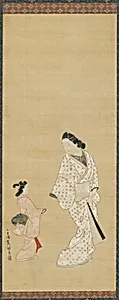
Yujo and a girl
Classification
Painting
Department
Smithsonian Collection
Museum
Smithsonian American Art Museum
Credit
Gift of Charles Lang Freer
Accession Number
F1898.7
Rights
Public Domain
Tags
About this artwork
Signature reads: "Yamatoe, Hishikawa Morofusa no zu".
Art Historical Context
This captivating painting by Hishikawa Morofusa depicts a yujo, or courtesan, alongside a young girl, capturing a tender moment from Japan’s Edo period (1615–1868). Active between 1685 and 1703, Morofusa worked in the emerging ukiyo-e tradition, which celebrated the fleeting pleasures of urban life, theater, and the pleasure quarters. The work’s signature, “Yamatoe, Hishikawa Morofusa no zu,” identifies it as a yamato-e style composition, blending classical Japanese aesthetics with the lively spirit of early ukiyo-e. As a hanging scroll, or kakemono, the piece would have been displayed seasonally in private homes, inviting quiet contemplation of beauty and companionship. Though the medium remains unknown, the painting reflects the refined tastes of its time and forms part of the renowned Charles Lang Freer collection now housed at the Smithsonian American Art Museum. Its presence in the collection highlights the enduring fascination with Edo-period portrayals of women and children.