
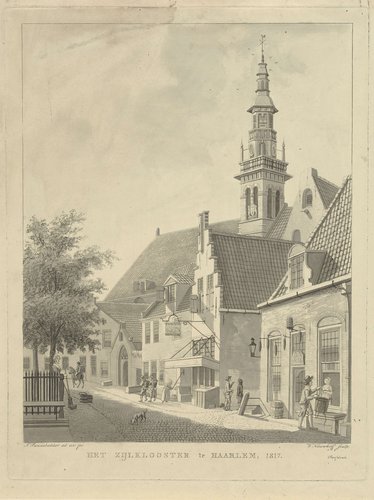
Zijlklooster in Haarlem
1800 - 1837
Medium
etching
Dimensions
284; 370
Rights
Public Domain
About this artwork
verzamelaarsmerk, verso, gestempeld: Lugt 2228
Art Historical Context
**Zijlklooster in Haarlem** *Walraad Nieuwhoff etching, 1800–1837, 370 × 284 mm* Nestled in the historic Dutch city of Haarlem,Zijlklooster in Haarlem* captures the charm of a local cloister, a type of religious house emblematic of the Netherlands' medieval monastic heritage. Created by Walraad Nieuwhoff during the 19th century—a of Romantic interest in national landscapes and antiquities—this etching reflects the era's fascination with topographic views, preserving fading structures amid urbanization and post-Napoleonic recovery. As an etching, Nieuwhoff's work showcases the precision of intaglio printmaking, where acid etches intricate lines into a metal plate for rich, tonal depth. This medium allowed artists to produce detailed, affordable reproductions of architecture, making cultural landmarks accessible beyond elite patrons. The generous dimensions suggest it was designed for display, inviting viewers to appreciate Haarlem's layered history. A collector's mark on the verso (Lugt 2228) hints at its esteemed provenance, linking it to discerning 19th- or 20th-century connoisseurs. This piece not only highlights Nieuwhoff's skill in rendering stone textures and atmospheric light but also serves as a window into Dutch identity, blending piety, place, and artistry.
About the Artist
Walraad Nieuwhoff · 1790–1837
Walraad Nieuwhoff (1790/91–1837) was a Dutch printmaker and engraver whose career coincided with the turbulent early decades of the nineteenth century in the Netherlands, a period encompassing the final years of French occupation, the establishment of the Kingdom of the Netherlands, and the early reign of King William I. Working primarily in aquatint and line etching, Nieuwhoff created topographic...