
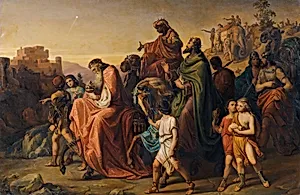
Zug der heiligen drei Könige
1852
Medium
Öl auf Leinwand
Dimensions
106 x 158 cm
Classification
Gemälde
Department
Belvedere Collection
Museum
Belvedere
Credit
Belvedere, Vienna
Accession Number
3258
Rights
Public Domain
About this artwork
Matthäus 2, 1–12
Art Historical Context
August Wörndle's *Zug der heiligen drei Könige* (Procession of the Three Holy), painted in 1852, the biblical narrative from Matthew 2:–12, depicting the Magi’s journey to honor the newborn Christ child. This grand oil on canvas, measuring 106 x cm, exemplifies the Austrian artist’s mastery of religious themes during the Biedermeier era, a period marked by introspective piety and detailed realism in Central European art. Wörndle, a short-lived talent who died at 38, drew from Nazarene influences, blending Romantic idealism with precise brushwork to evoke spiritual reverence. The painting’s expansive composition likely unfolds a majestic procession through a luminous landscape, highlighting the kings’ exotic attire and gifts as symbols of universal homage. Oil on canvas allowed Wörndle to layer rich colors and textures, creating depth and drama that immerse viewers in the sacred event. Such works reflected 19th-century Austria’s Catholic devotion amid political upheavals like the 1848 revolutions. Housed in Vienna’s Belvedere Collection, this gem underscores Wörndle’s role in elevating genre-religious painting. Visitors are drawn to its narrative warmth, a timeless reminder of faith’s enduring journey.