Ctrl K
A demon who clones himself from every drop of spilled blood. A god who dances the universe in and out of existence. A goddess assembled from the fires of every god who failed. 27 works spanning 1,400 years, from Gupta sandstone to Kolkata bazaar painting.
27 works · 3 museums
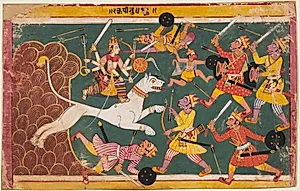
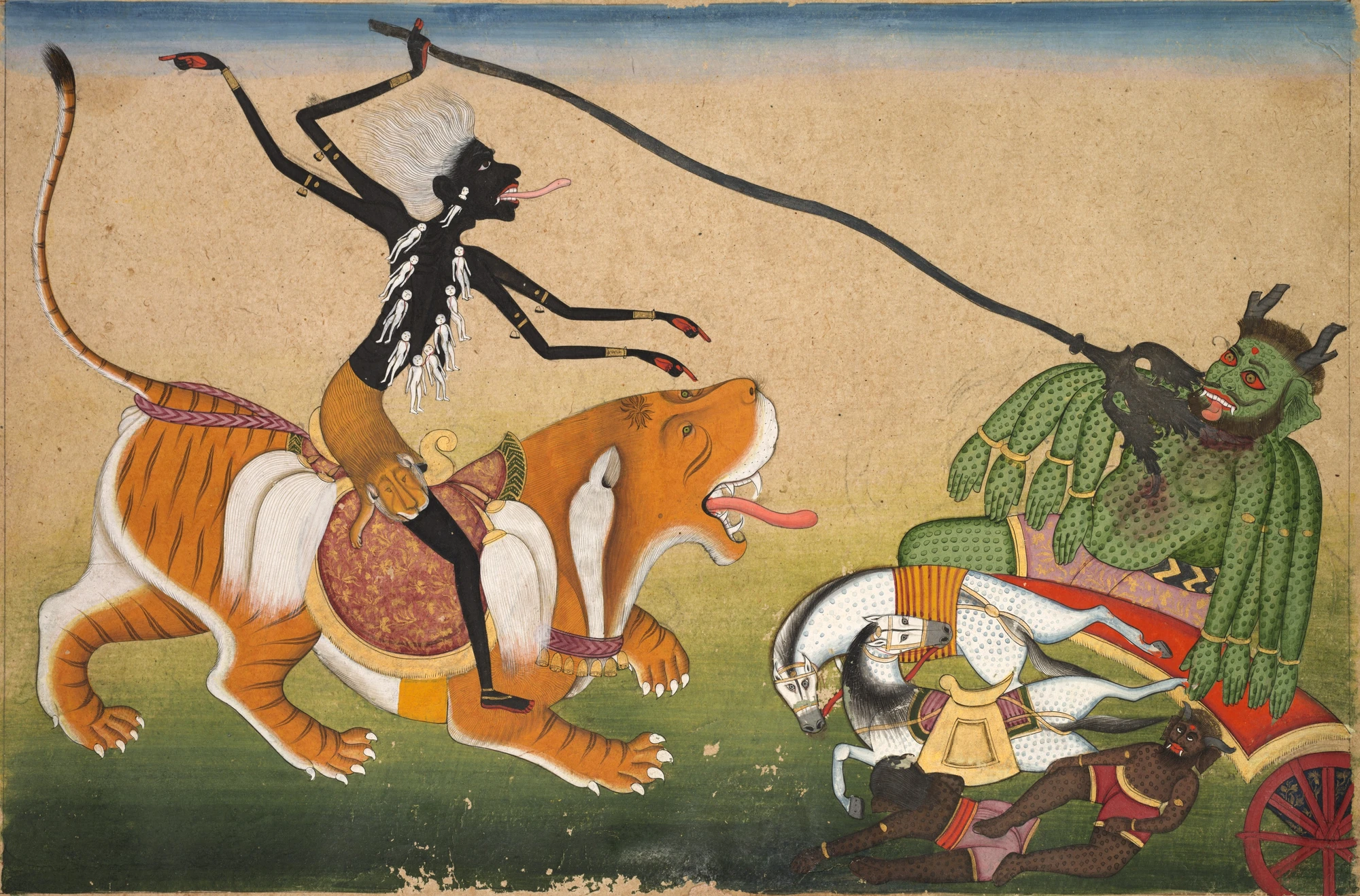
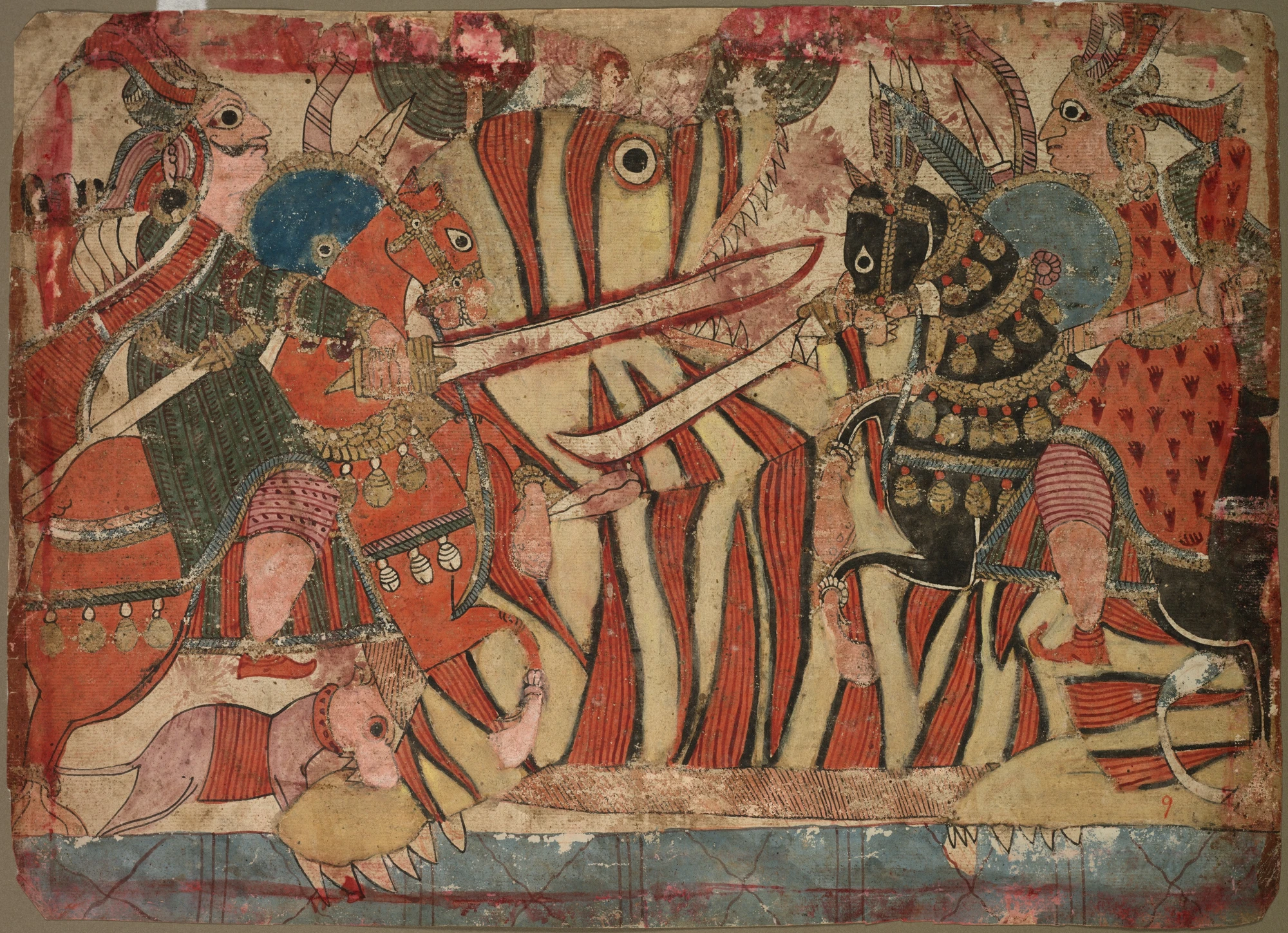
Around 1640, a painter in the Punjab Hills took on one of the strangest battle scenes in world mythology.
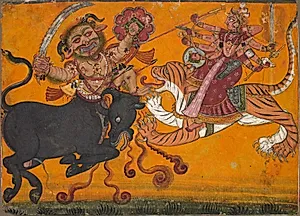
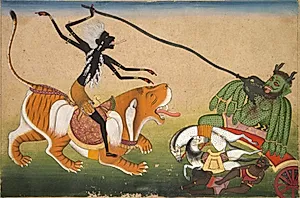
The demon Raktabija carried a terrible blessing: every drop of his blood that touched the ground sprang up as another Raktabija. Wound him, and you multiplied him. The gods' armies were drowning in copies of their enemy. So the Great Goddess did the only thing that could work — she sent Kali to spread her tongue across the battlefield and drink every drop before it landed.
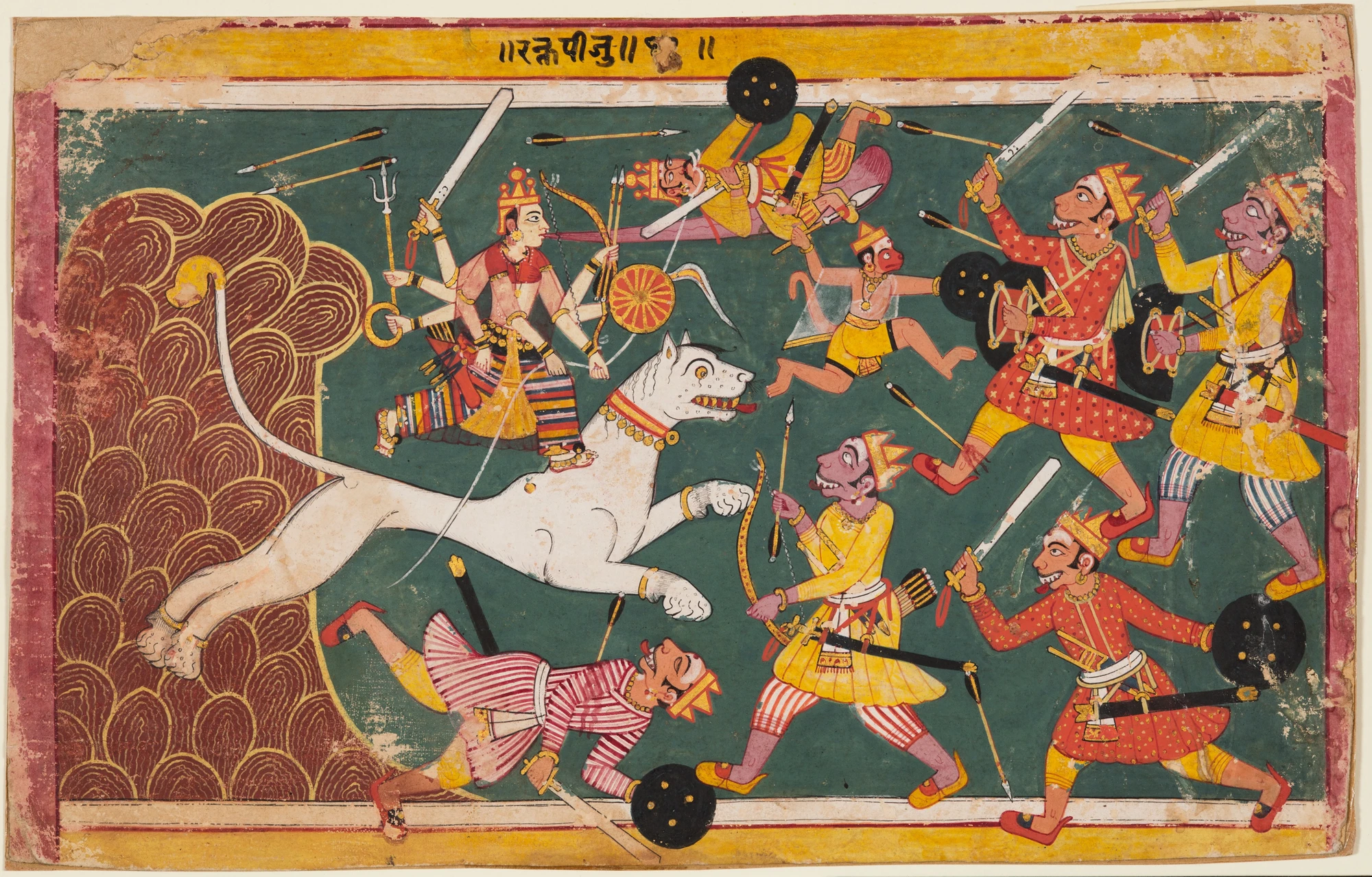
Look at how calmly the painter handles the horror — the elegant profile, the jewelry, the tidy rows of soldiers. That calm is the point. These stories have been told so many times, for so many centuries, that terror and tenderness sit side by side without strain. This exhibition is about the family of gods who live inside those stories — and the sculptors and painters across fourteen centuries who kept them visible.
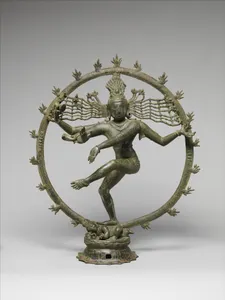
Begin with the most famous bronze in Asia. Shiva as Nataraja — Lord of the Dance — performs the universe: the drum in his upper right hand beats creation, the flame in his upper left burns it away, and the ring of fire around him is the cosmos doing both at once. Under his foot, a dwarf: ignorance, being stepped on. His raised left foot is the way out. The whole of Hindu cosmology, balanced on one leg.
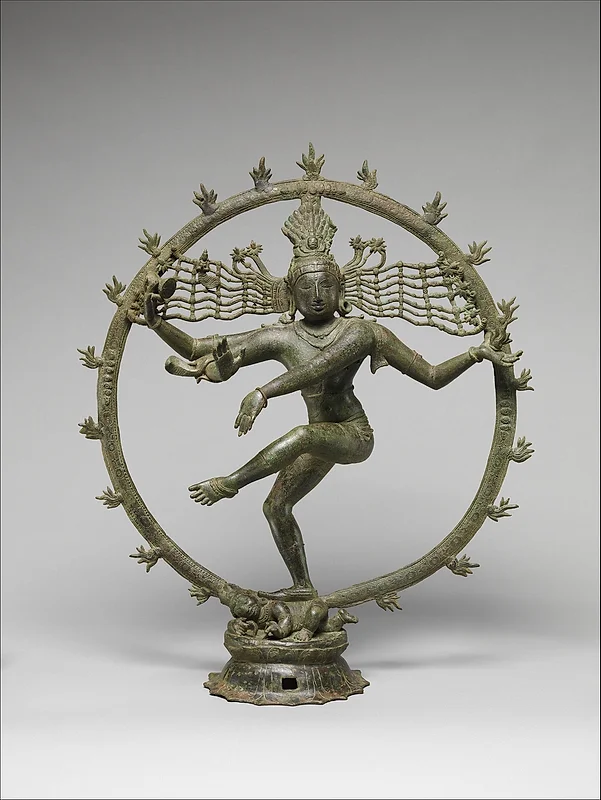
Chola-dynasty workshops cast these bronzes to be carried through the streets on festival days — gods designed for procession, not pedestals. And the form never died: the same Nataraja is still cast by hereditary bronze-casters in Tamil Nadu today, and a two-meter version stands outside CERN in Geneva, a gift from India to the physicists studying the cosmic dance by other means.
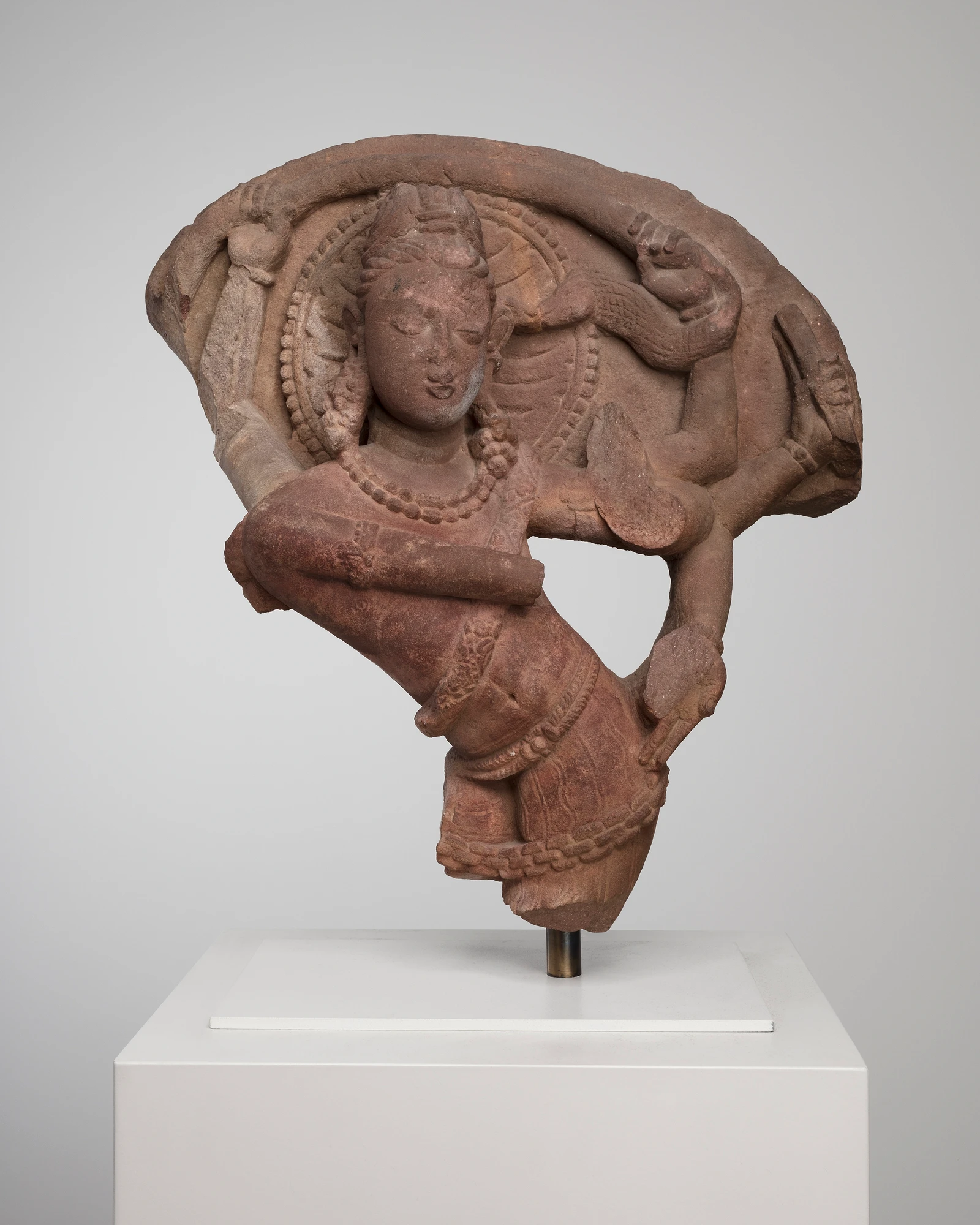
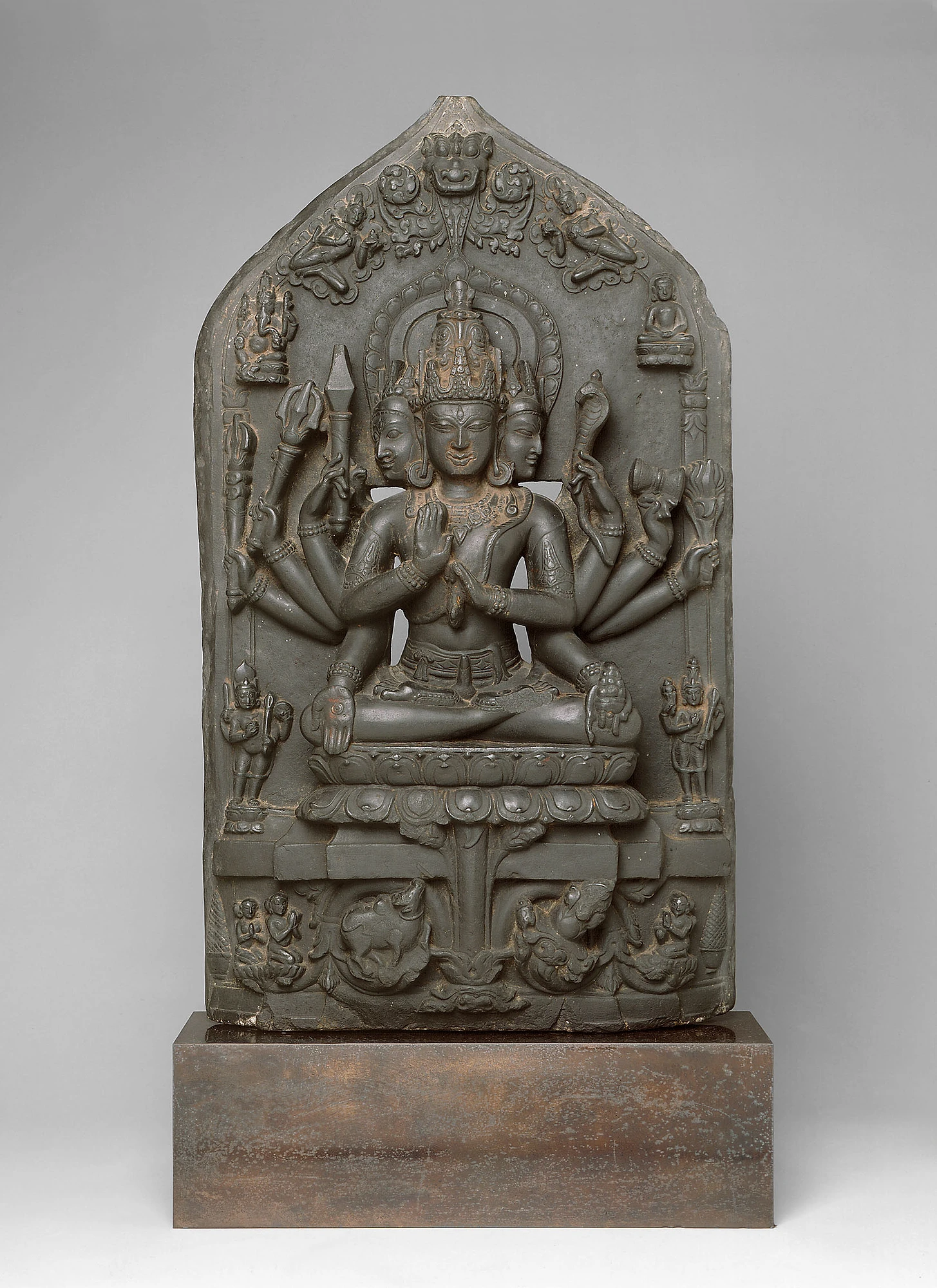
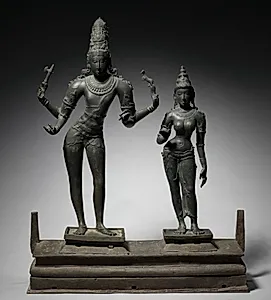
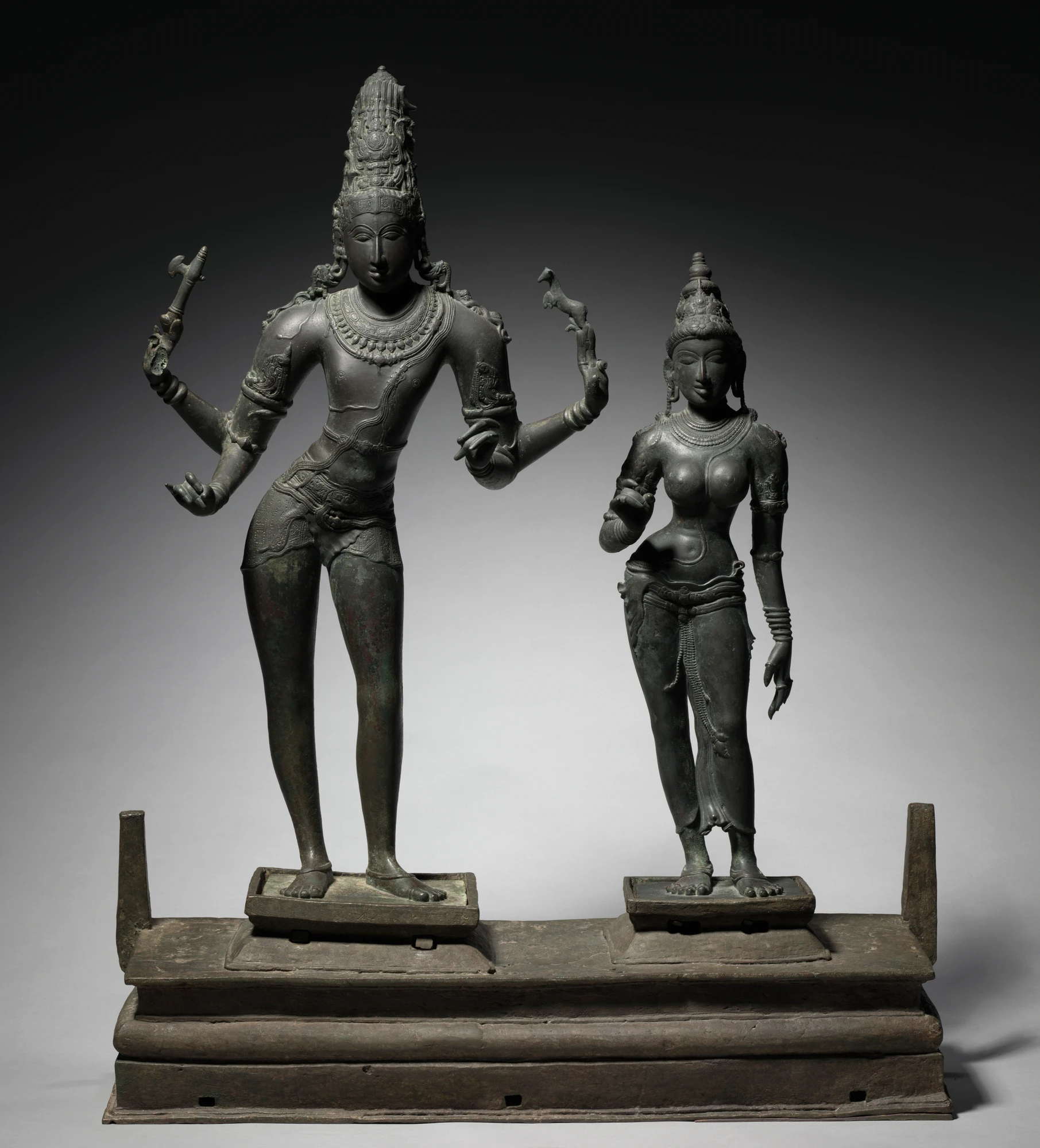
But Shiva is not only the cosmic dancer. The Chola bronze-casters also made him a husband — standing beside Parvati, hip cocked, entirely at ease.
And when philosophers asked which came first — god or goddess — the sculptors gave the best possible answer. Ardhanarishvara: one body, half Shiva, half Parvati, split down the middle. Not a compromise. A statement that the question was wrong.
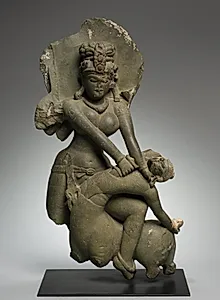
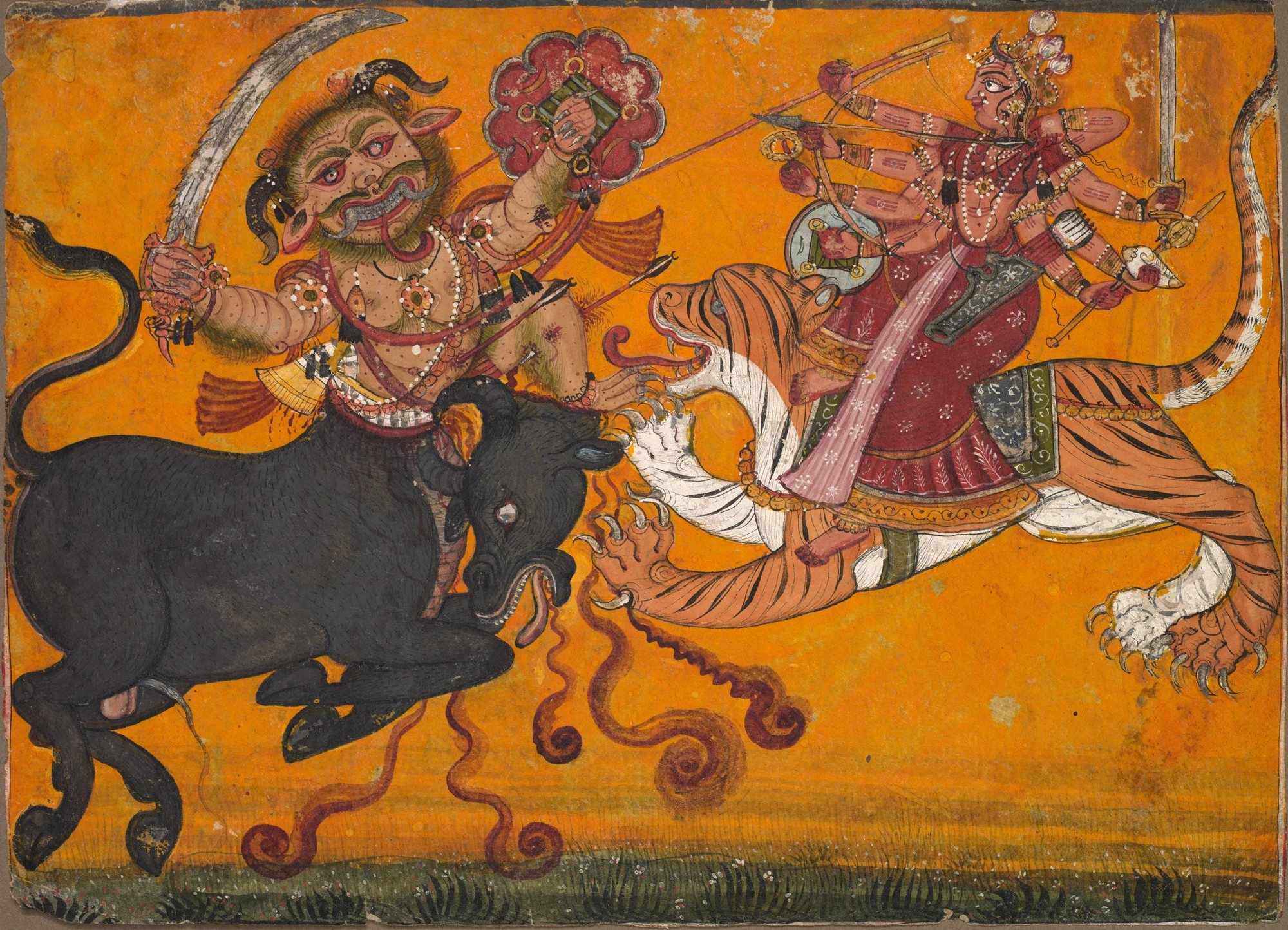
The buffalo demon Mahishasura had a boon of his own: no god and no man could kill him. Nobody had mentioned goddesses.
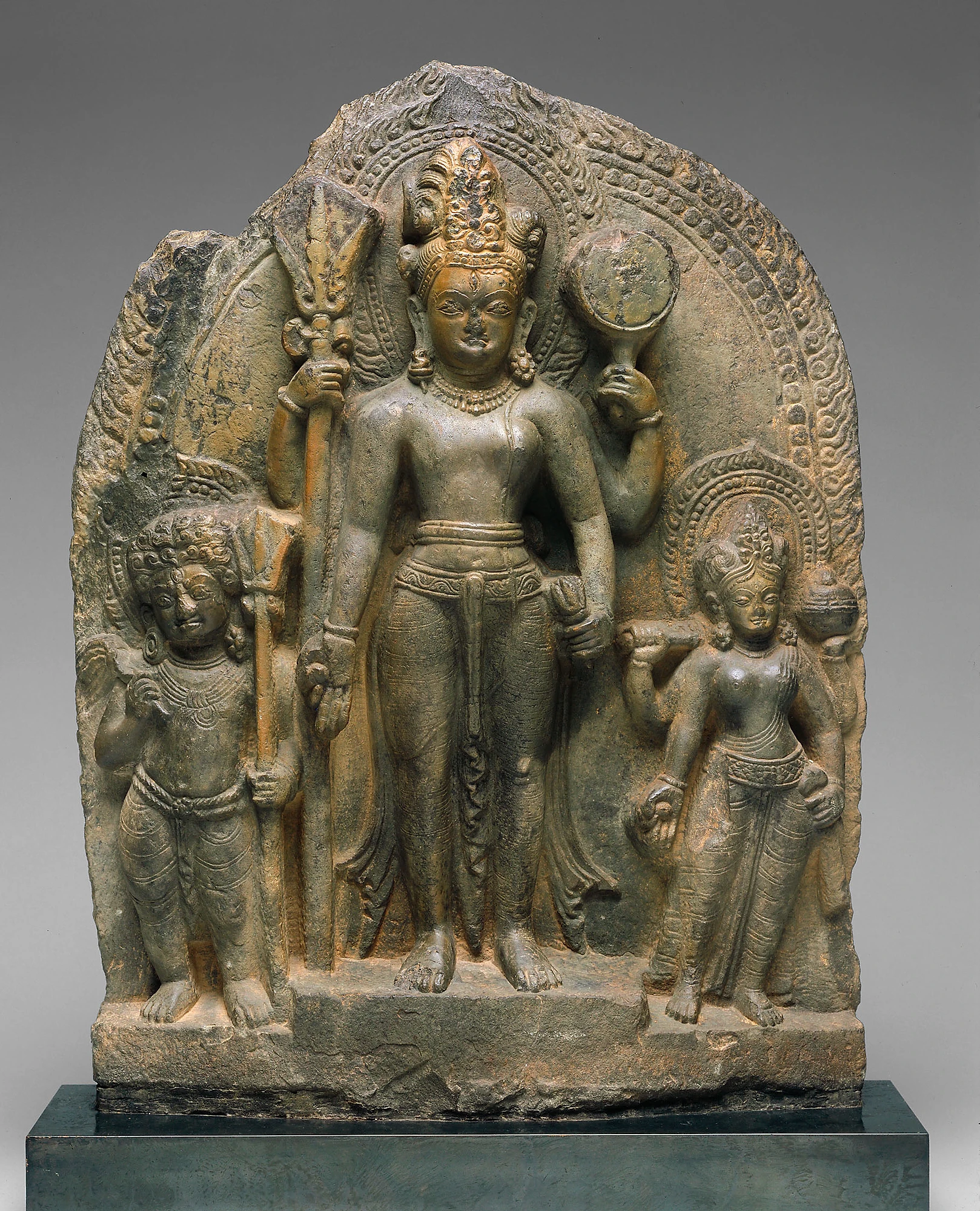
So the gods poured their powers together into a single blazing figure, and each handed her his weapon — Shiva's trident, Vishnu's discus, Indra's thunderbolt. Durga rode out on a lion with an armory in her many hands and did what the entire male pantheon could not.
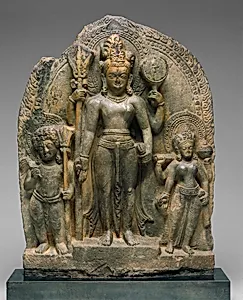
The Nurpur painter shows the moment with jeweled precision. But sculptors had been carving it for the better part of a millennium before him — this Kashmir-region stone is eight hundred years older, and the choreography is already fixed: lion, trident, buffalo collapsing.
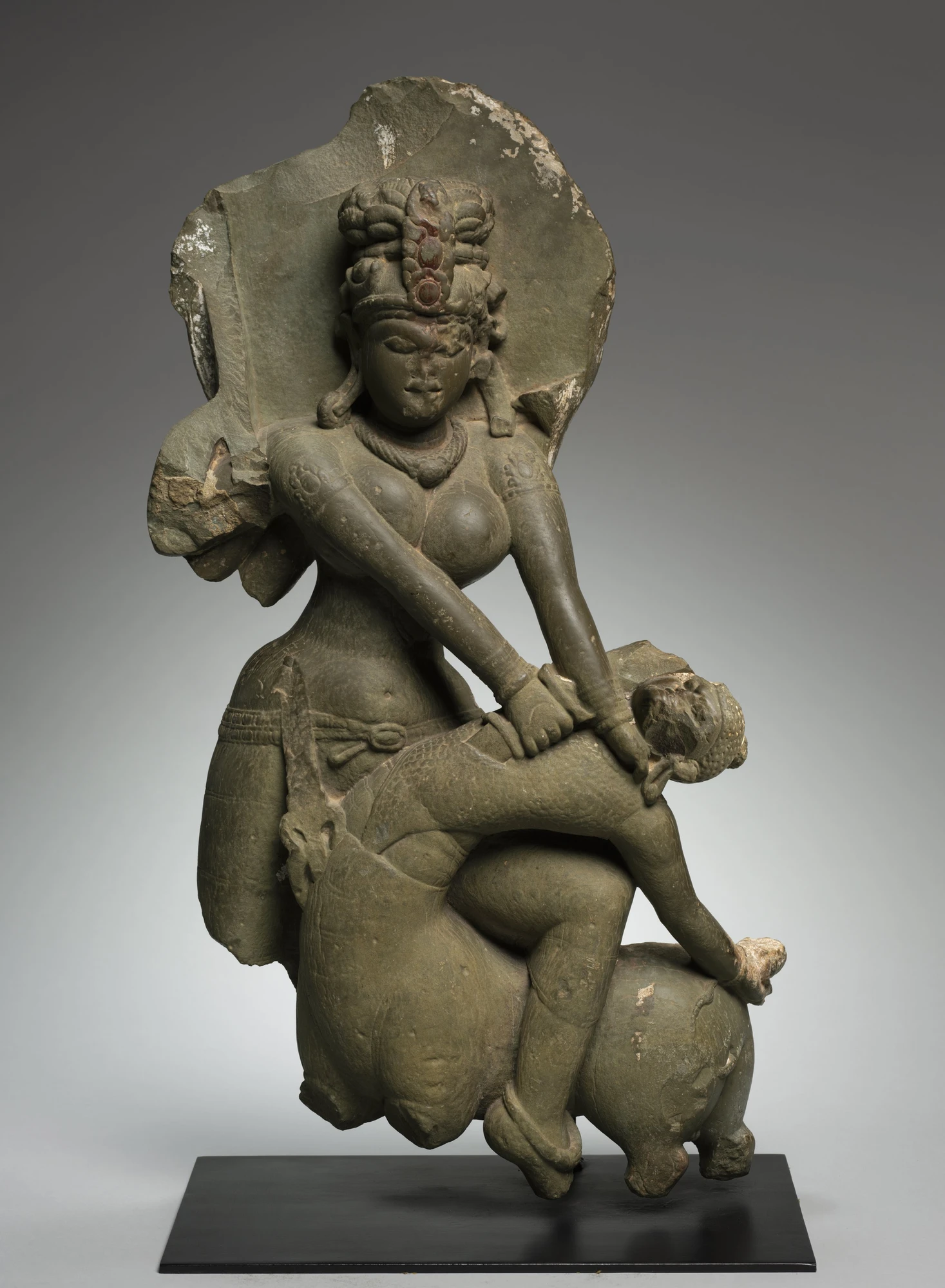
When the fighting turns desperate, the goddess's rage takes on its own body: Kali, black, gaunt, garlanded with heads, entirely done with restraint.
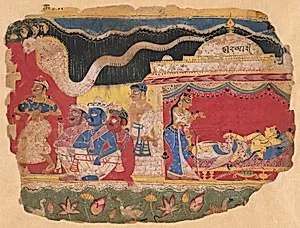
Vishnu, the preserver of the universe, keeps entering it in person. His eighth descent was born in a prison cell at midnight — a tyrant uncle had promised to kill the child. So the newborn Krishna was smuggled out that same night: his father Vasudeva carried him across the storm-swollen Yamuna river in a basket, while the divine serpent spread its hoods above them as an umbrella.
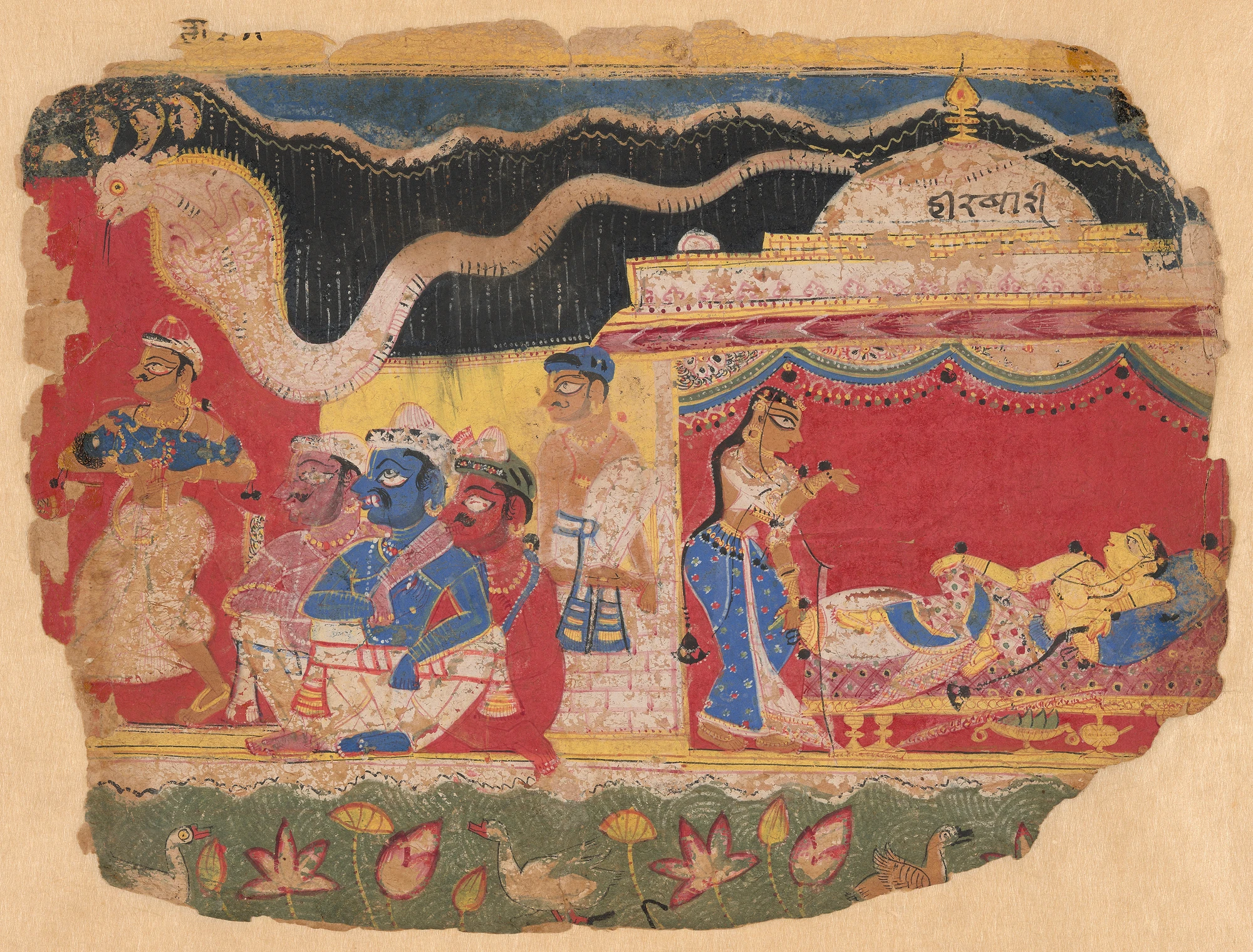
This page is among the earliest surviving Rajput paintings — the story was already ancient when it was made; the tradition of painting it was just beginning.
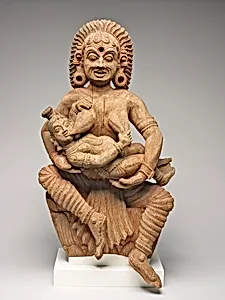
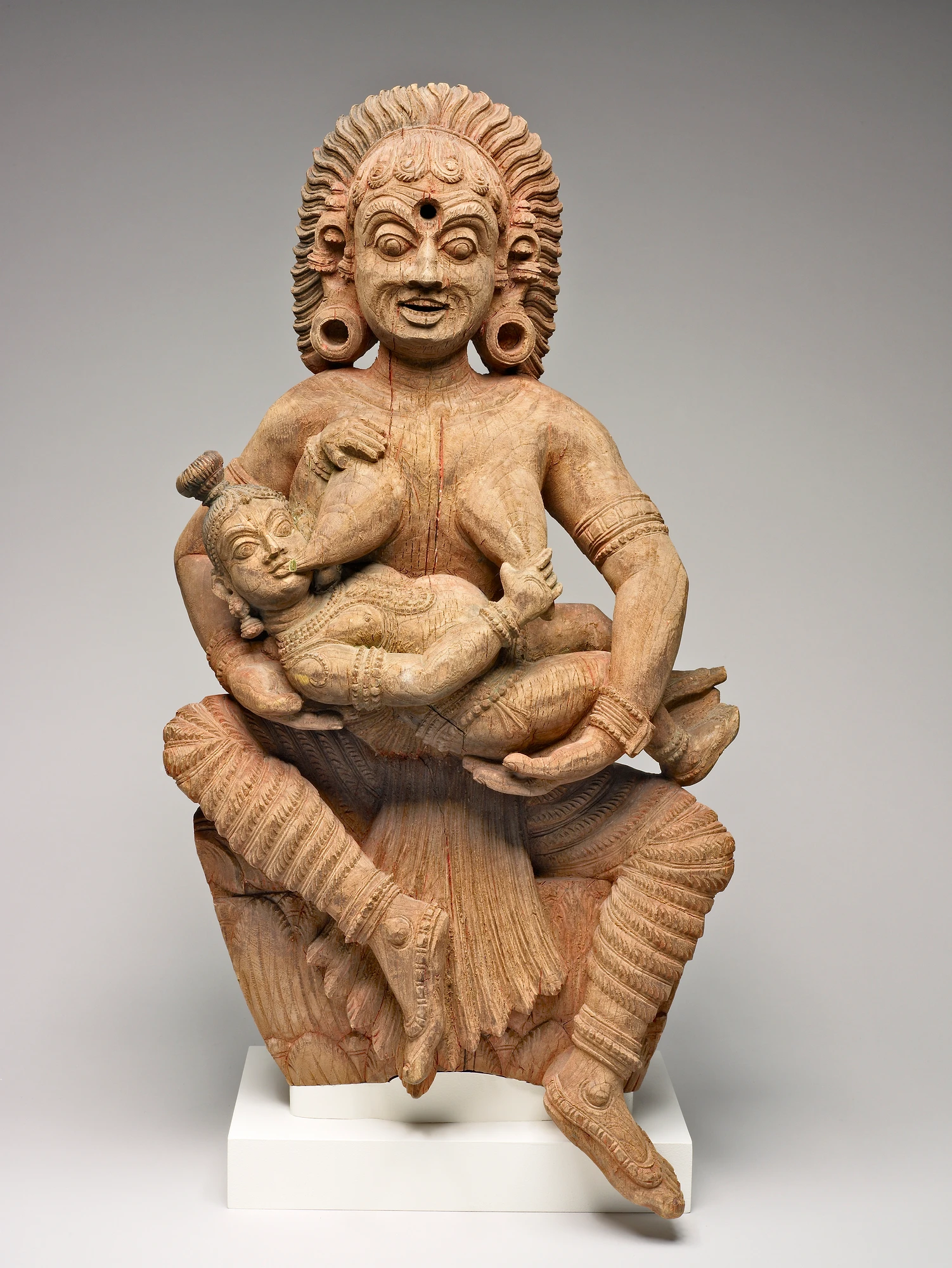
What follows is the strangest childhood in world literature. A demoness named Putana came to nurse the baby with poisoned milk; the baby drank her life out instead — and this South Indian woodcarver shows the infant calmly feeding at the moment of her ruin.
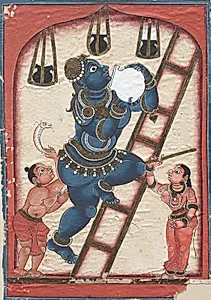
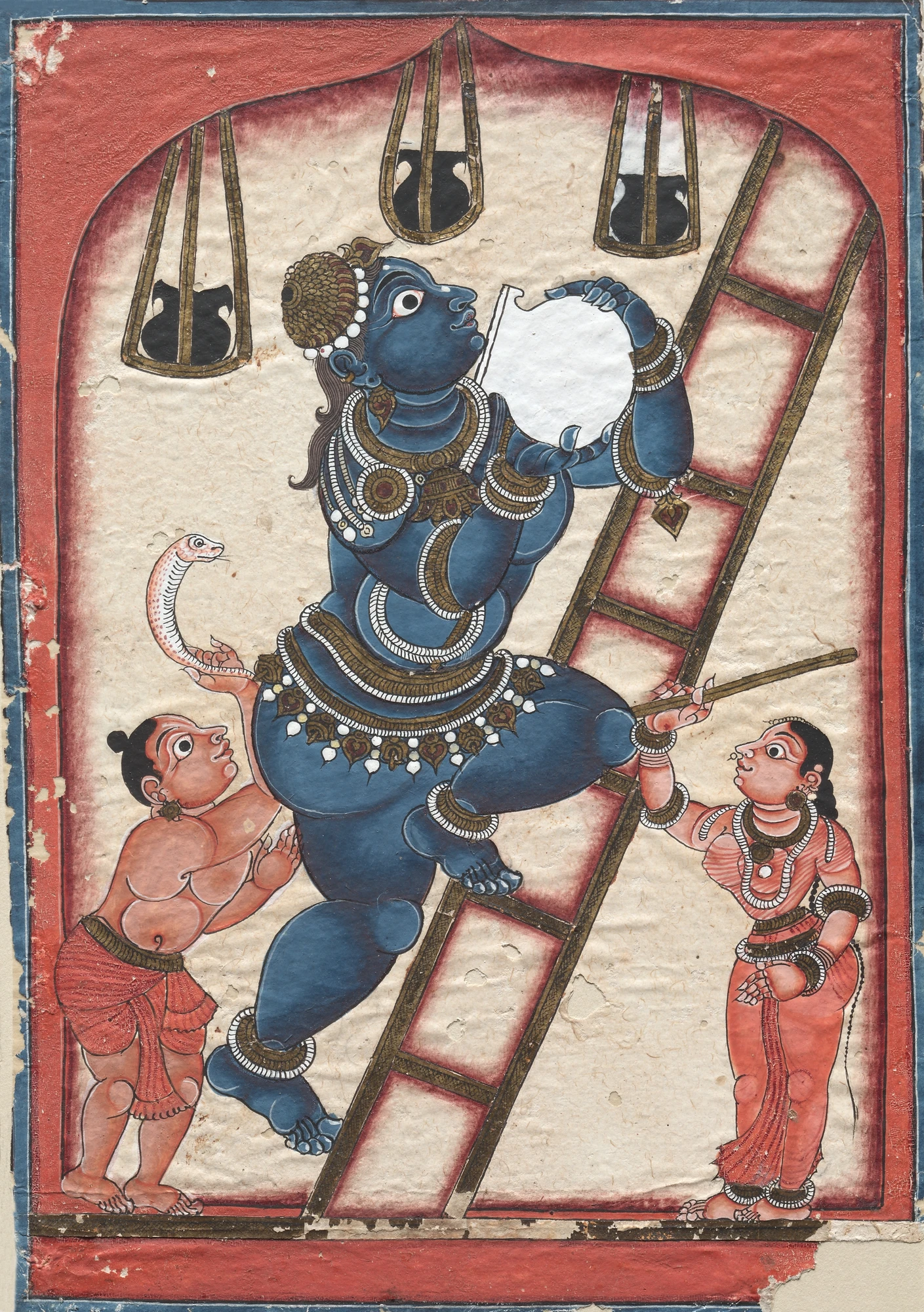
Between miracles, he stole butter. Whole paintings are devoted to the crime.
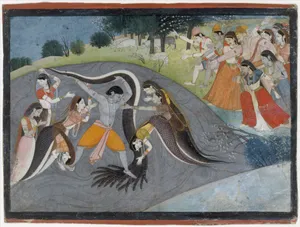
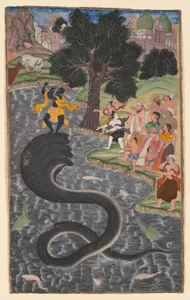
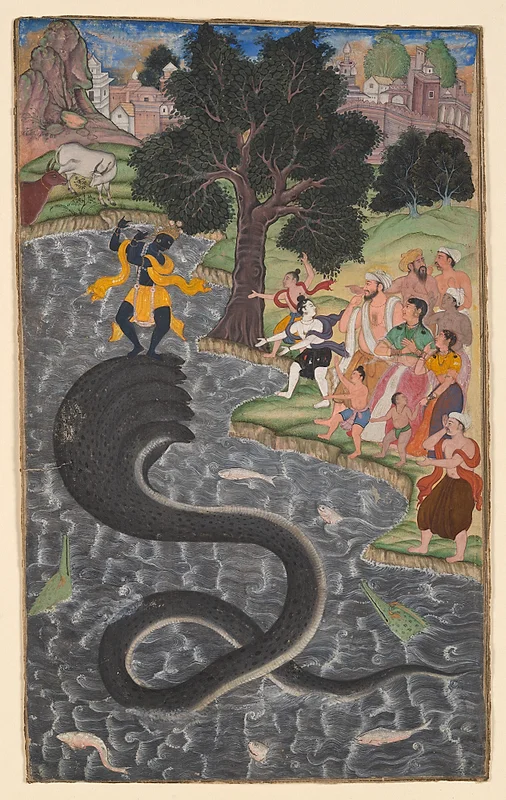
And when a poison-serpent named Kaliya made the river deadly, the boy didn't slay him — he danced on his hoods until the serpent surrendered, then let him go. Mercy, performed as choreography.
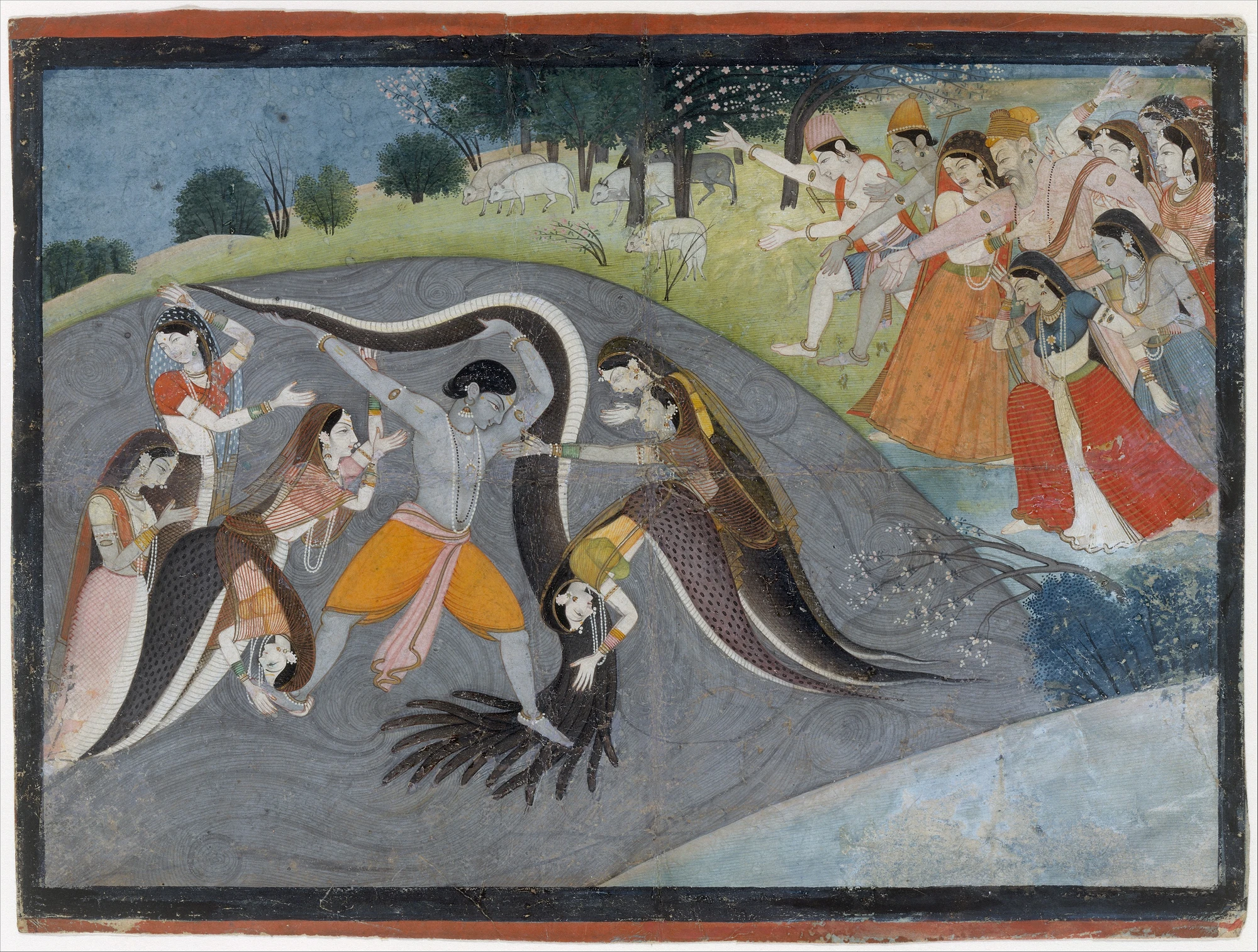
Painters could not leave this moment alone. Two centuries earlier, the same dance on the same serpent had been painted in the imperial workshop of the Mughal emperor Akbar — a Muslim court, at the height of its power, commissioning the boyhood miracles of a Hindu god in gold and lapis. Tolerance, in this period, was an art commission.
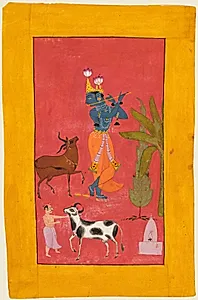
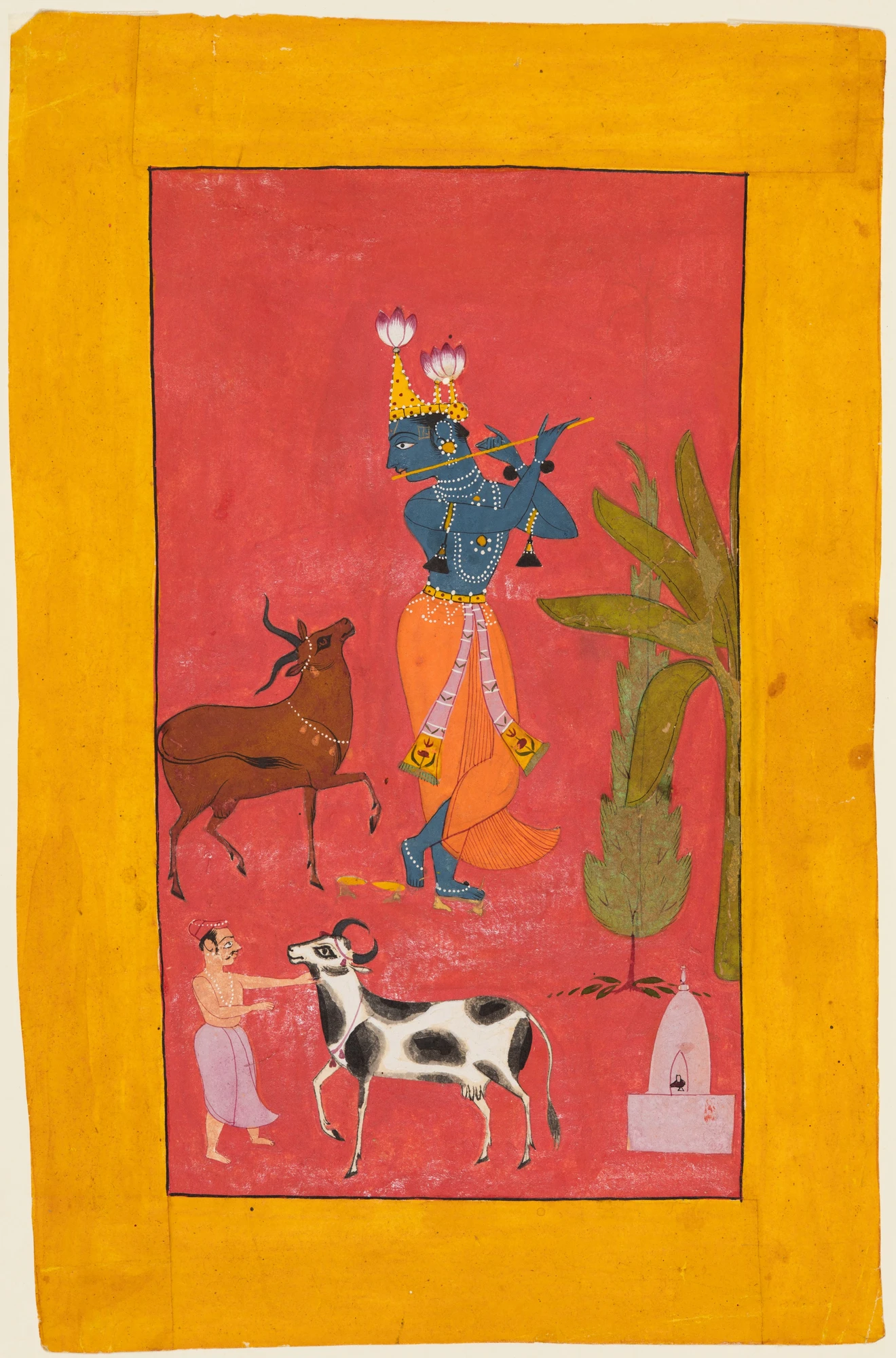
The child grew into the flute-player of Vrindavan, and Indian painting found its favorite subject: longing.
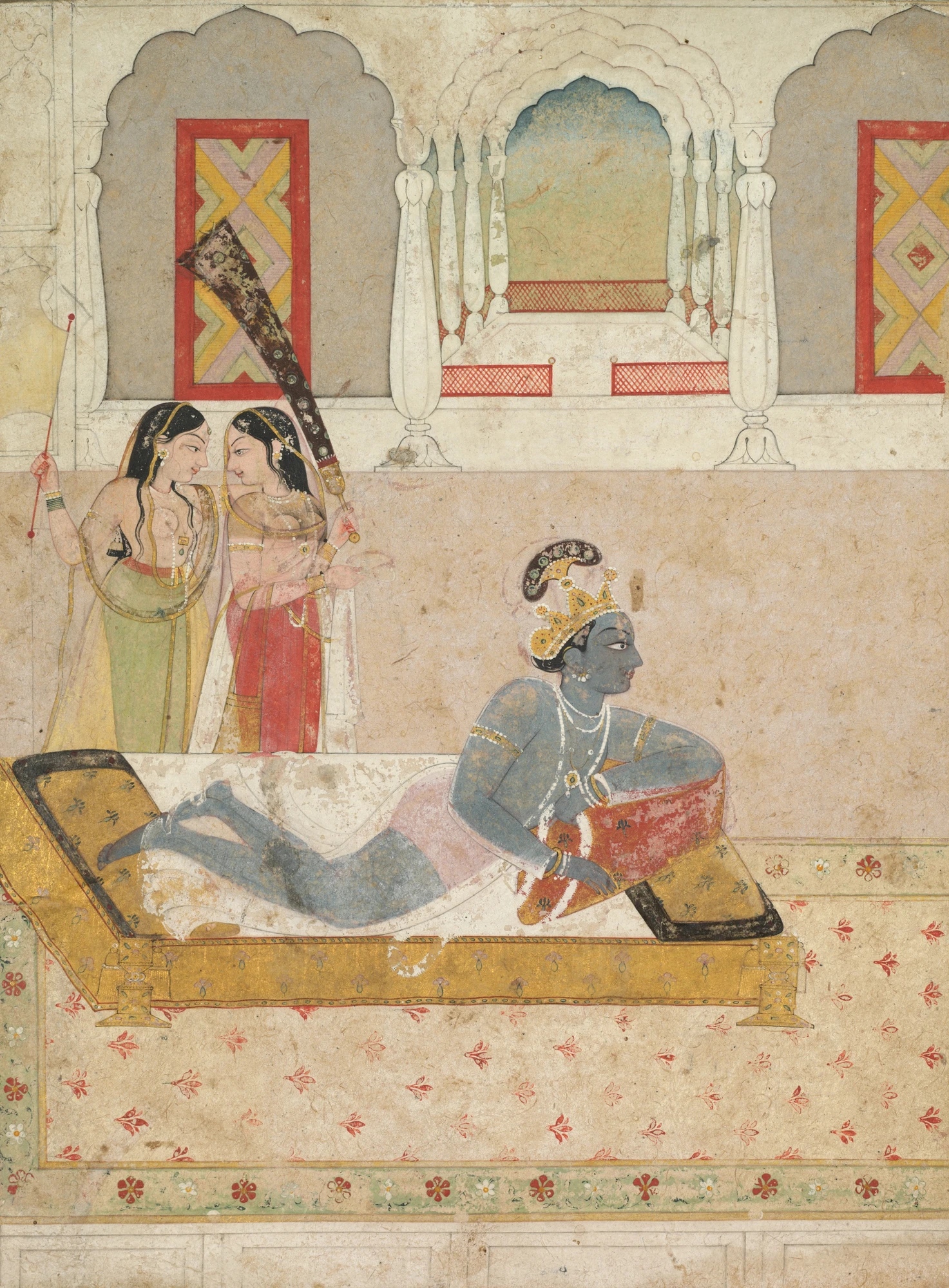
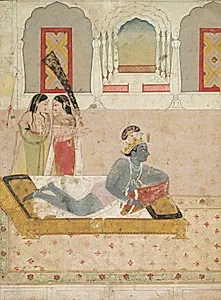
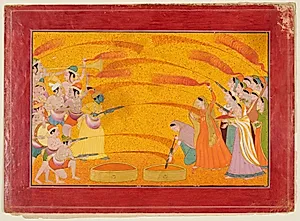
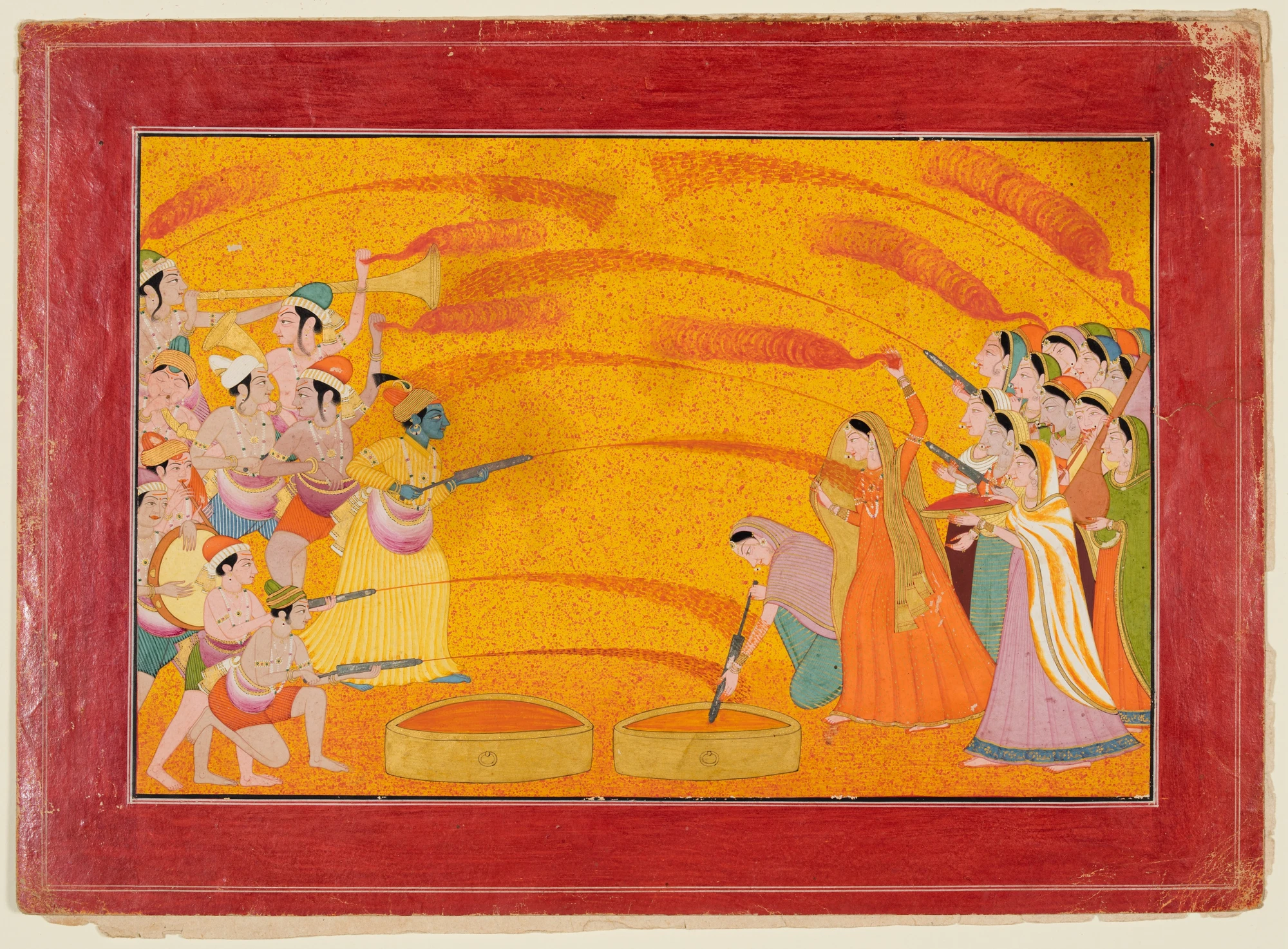
The Guler painter gives Krishna a bower, moonlight, and an empty seat beside him. Everyone looking at this page in 1750 knew exactly how that wait felt. That is the secret of Krishna's hold on Indian art: the divine written in the grammar of human love — including its festivals. Holi, the festival of thrown colors, is his.
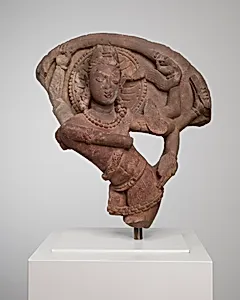
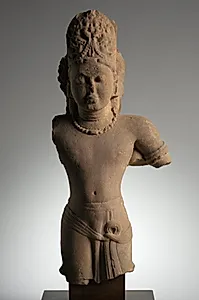
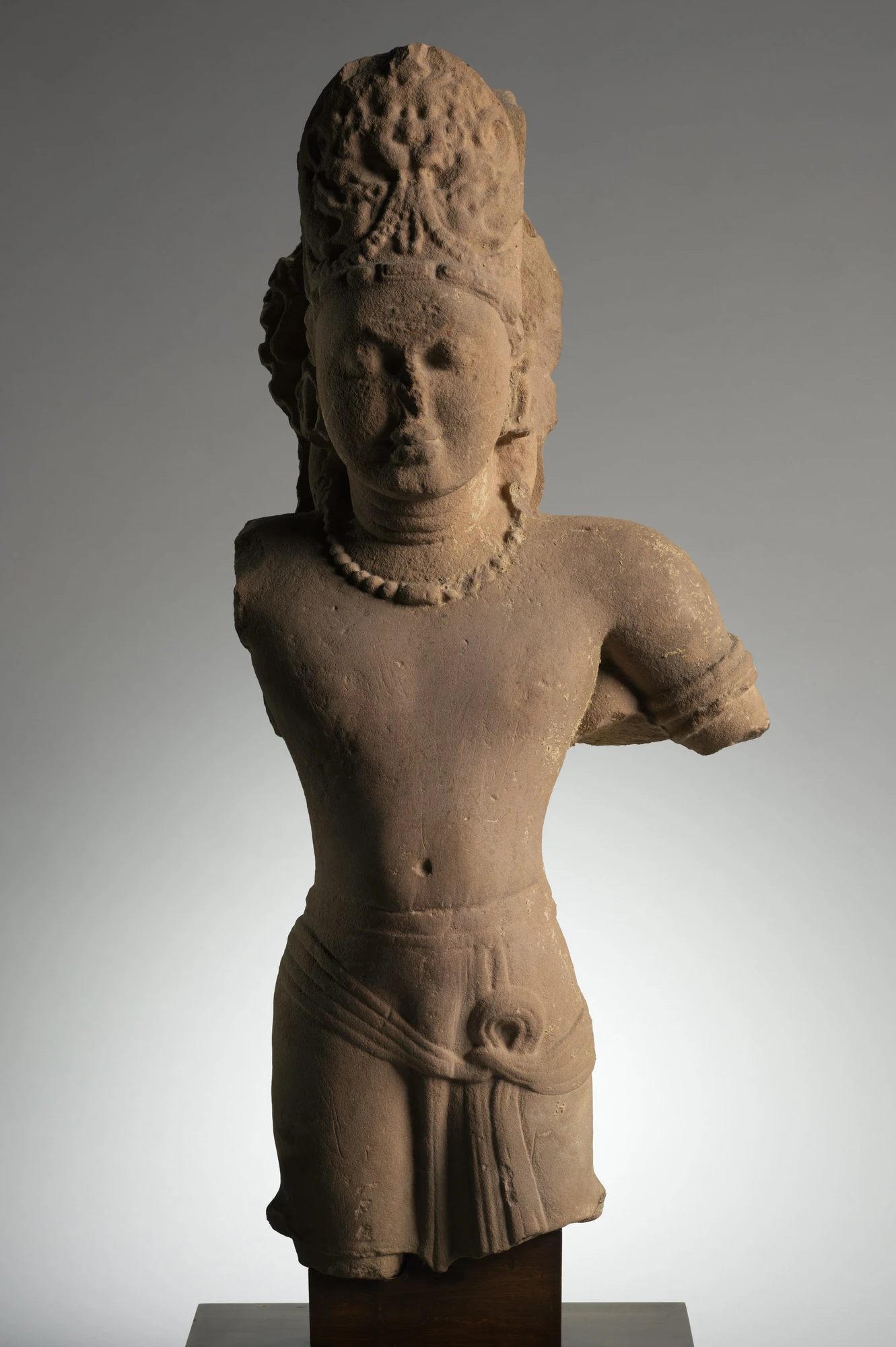
Behind all of Krishna's mischief stands Vishnu — the god whose job is to keep the universe running. This sandstone head-and-torso from the Gupta period is among the oldest works in the exhibition: fifteen centuries old, and the expression is pure administrative calm.
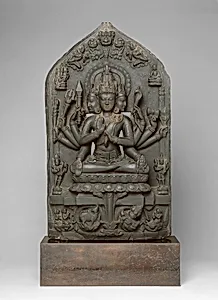
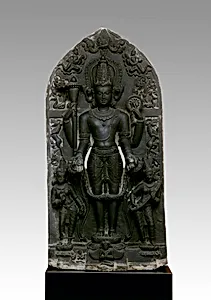
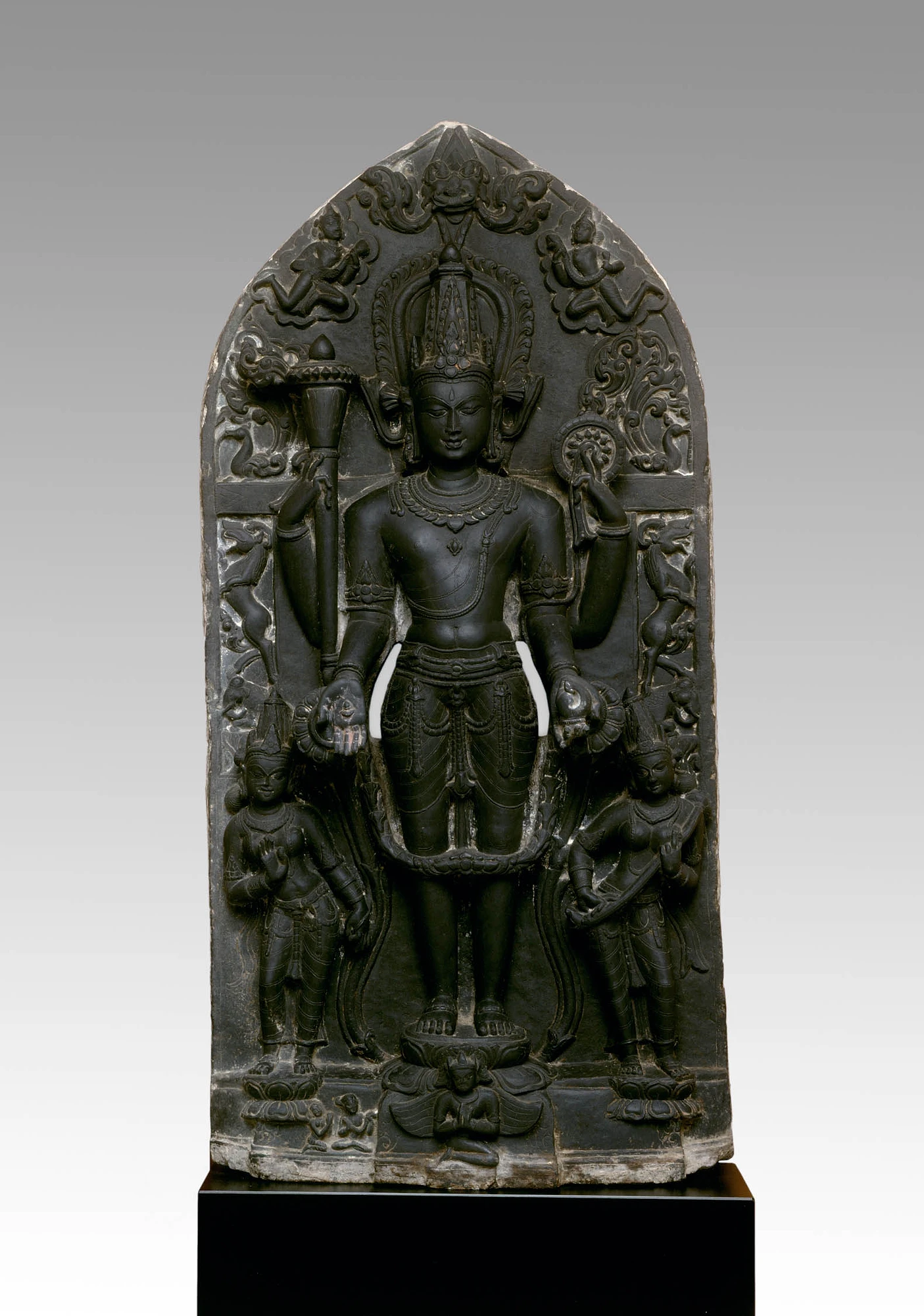
His most audacious rescue was performed as a lawyer's trick. A demon king had conquered everything; Vishnu appeared as a dwarf and politely asked for three paces of land. Granted. The dwarf became cosmic — one stride covered the earth, the second the heavens, and the third had nowhere left to land but the demon's own head. The Pala sculptors carved him mid-stride.
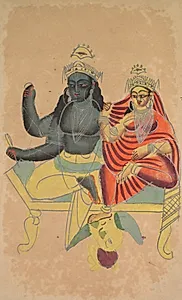
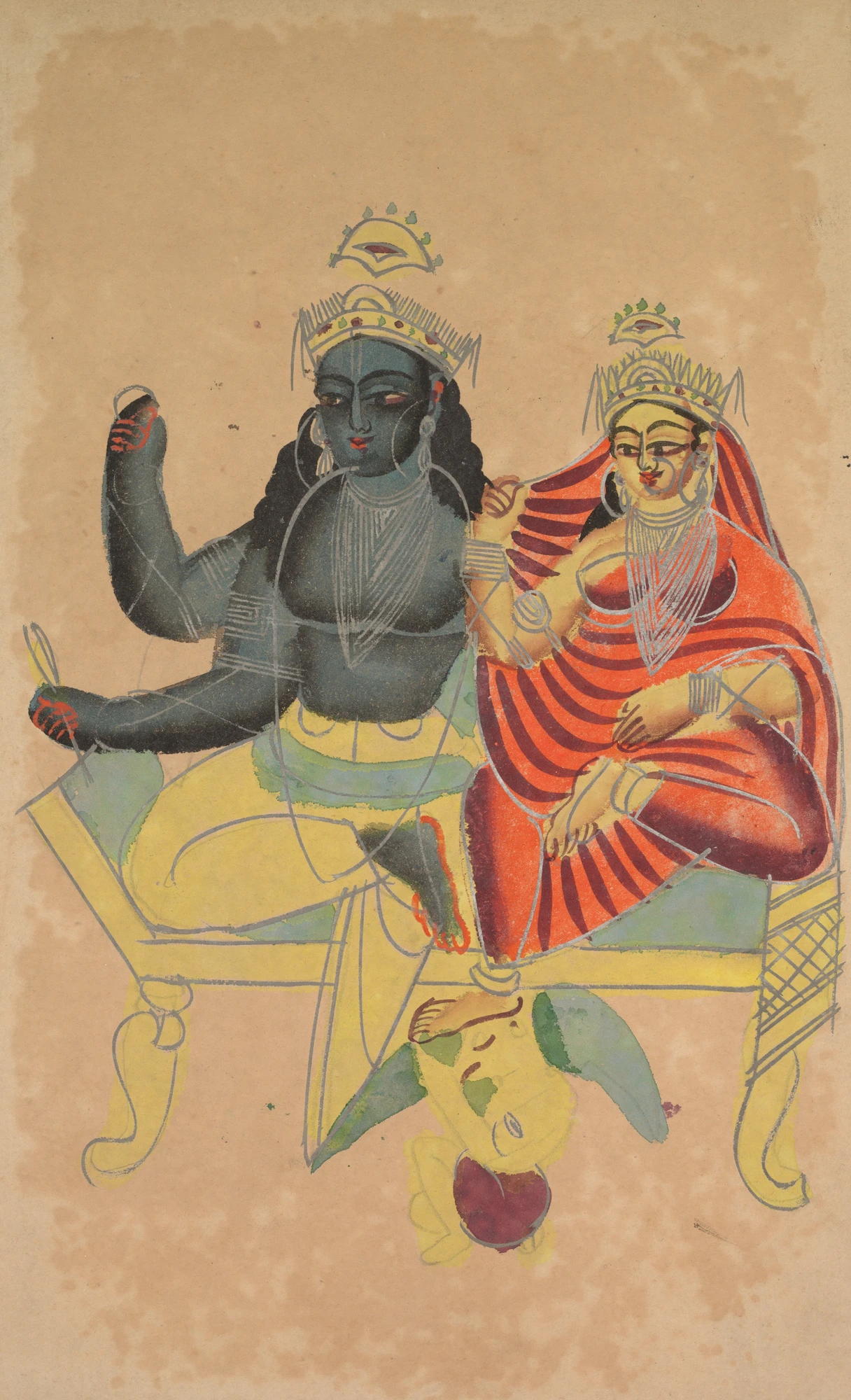
Eight centuries later, bazaar painters in Kolkata were still painting him — faster, cheaper, for pilgrims who wanted a god to take home. The Kalighat style: a masterpiece in six brushstrokes.
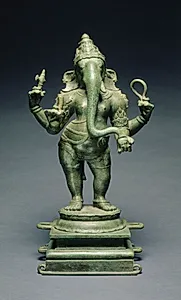
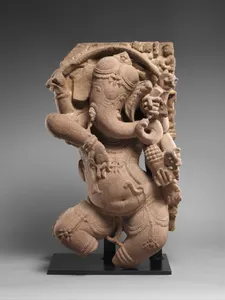
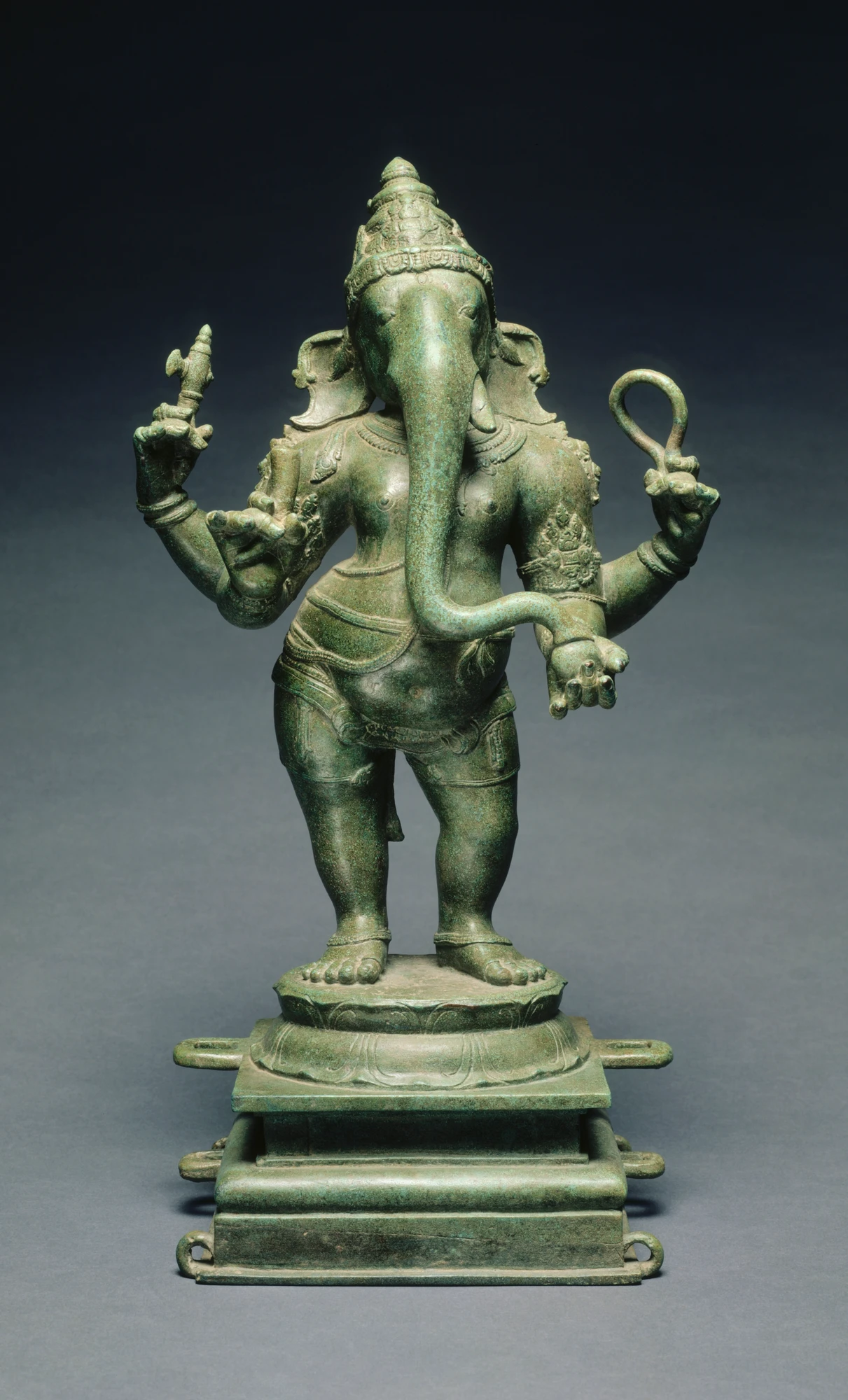
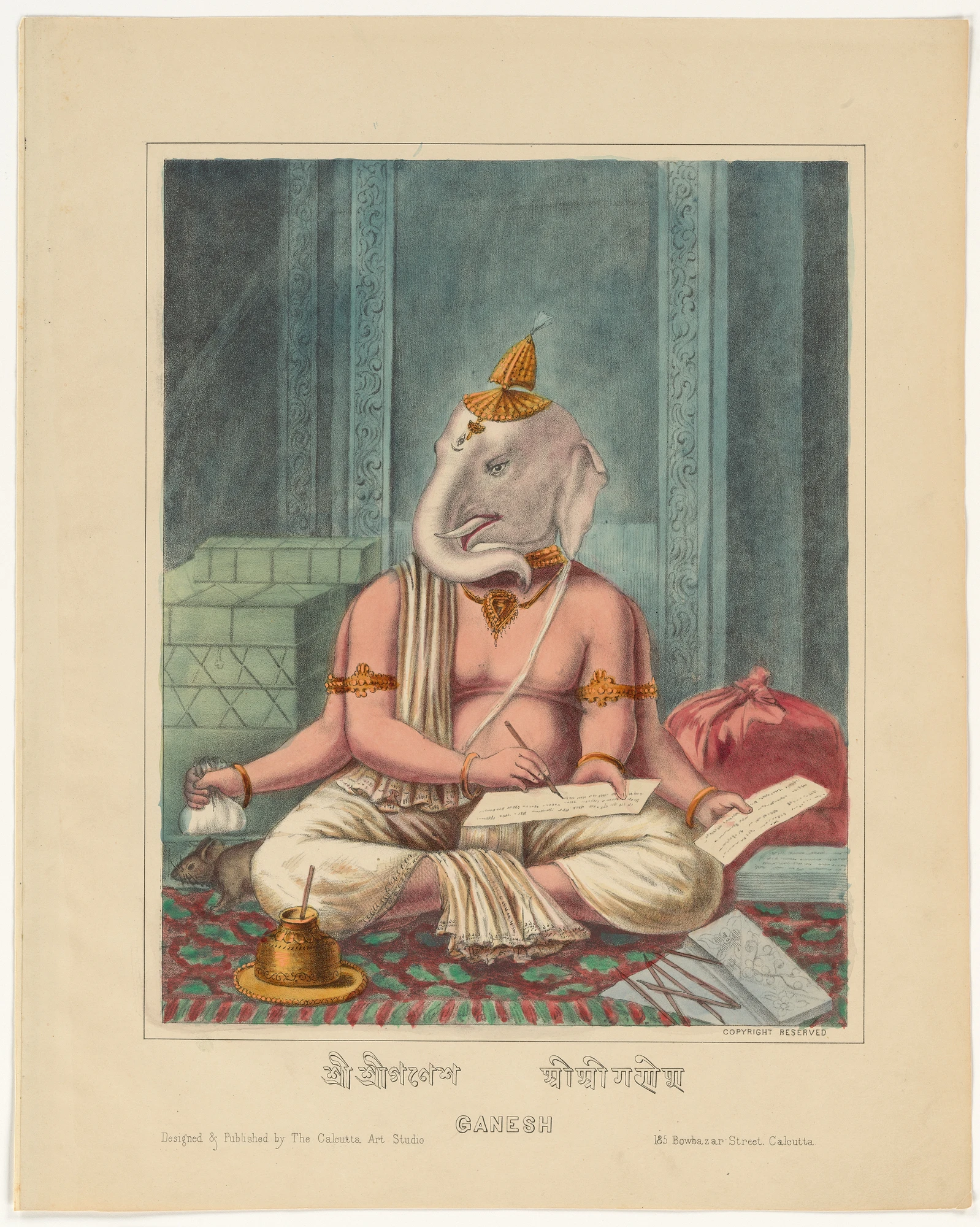
No Hindu ritual begins with the great cosmic gods. It begins with Ganesha — elephant-headed, pot-bellied, remover of obstacles, the deity you consult before journeys, weddings, exams, and new ledger books.
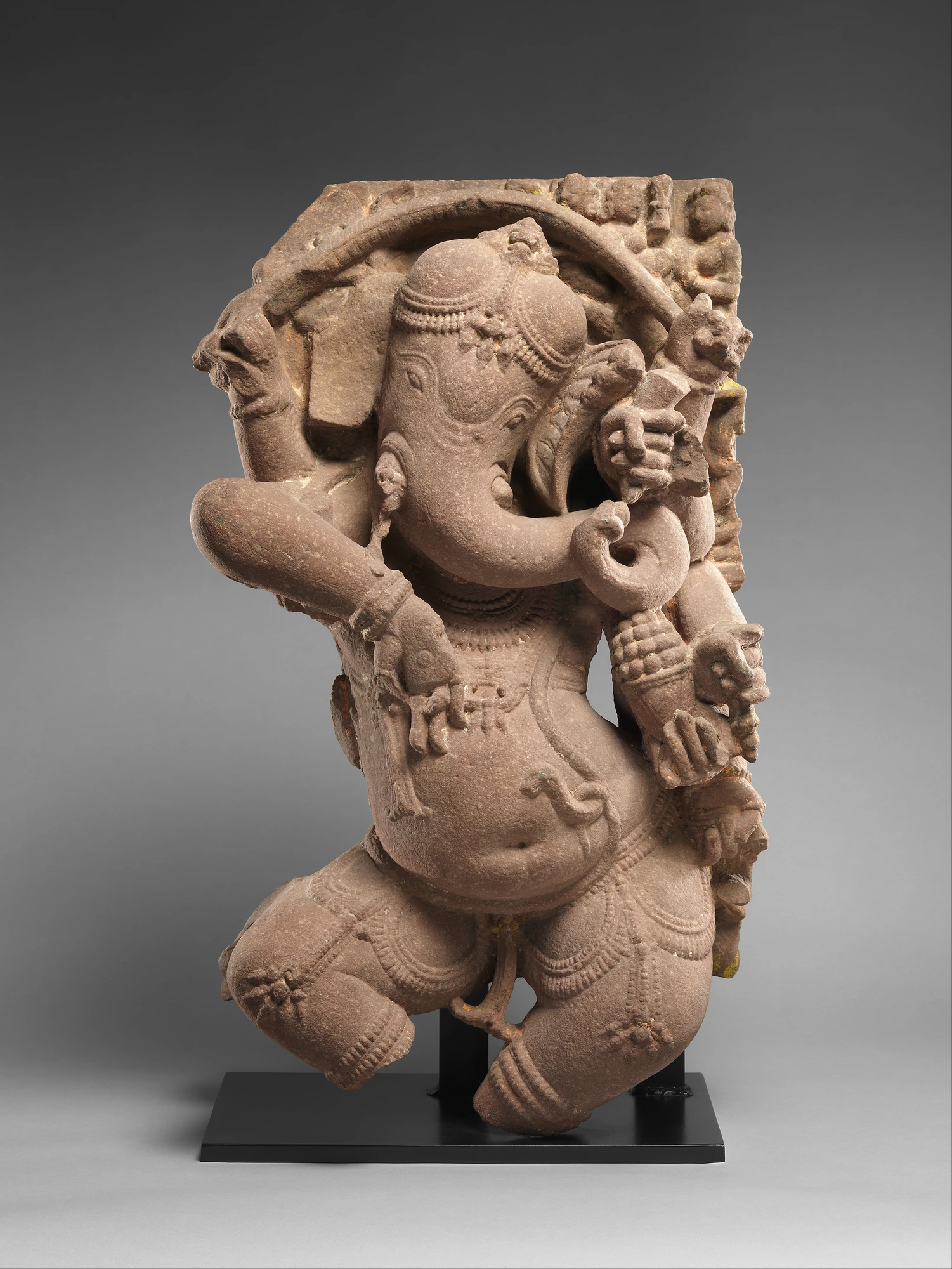
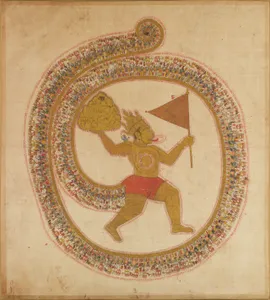
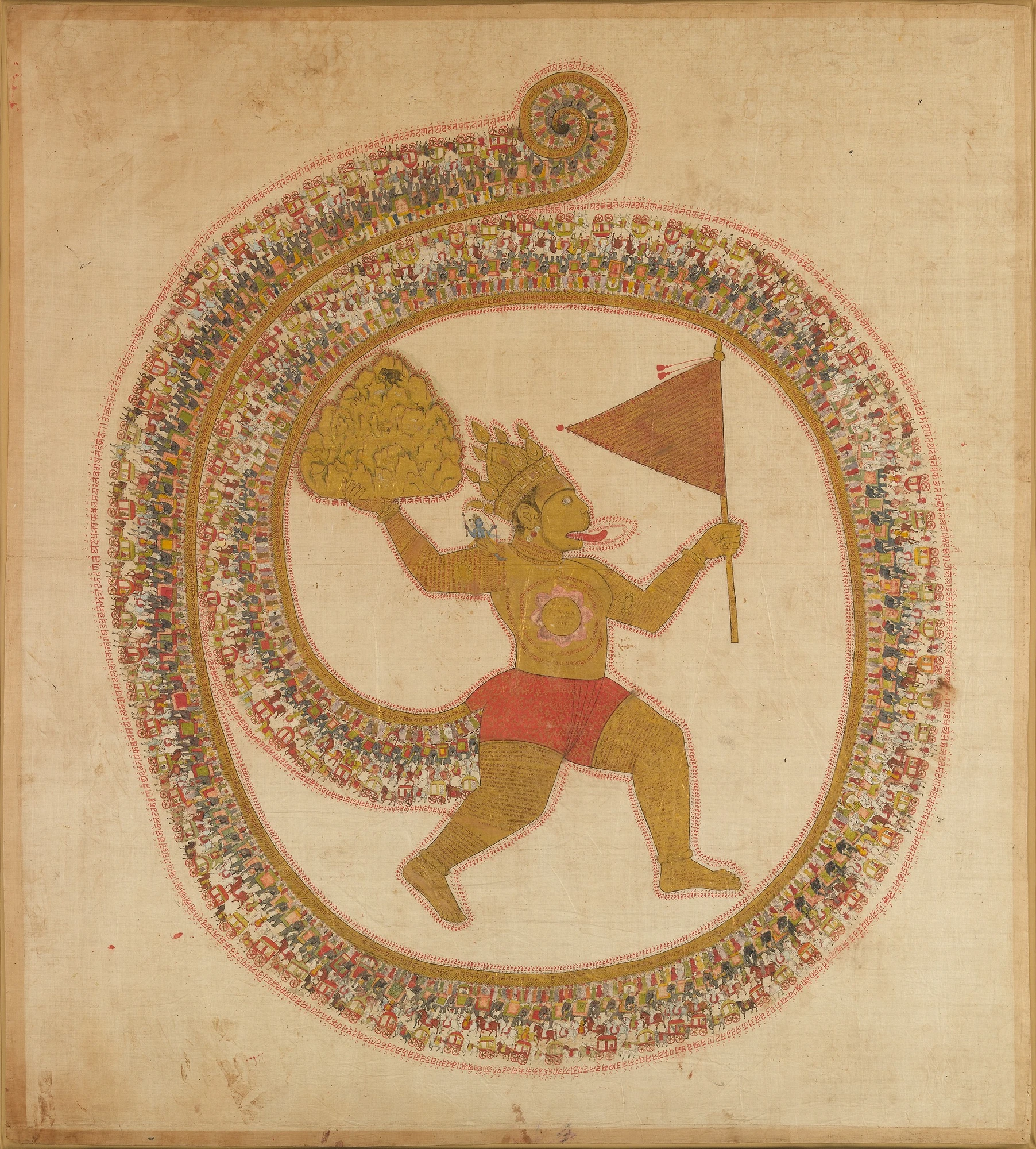
And beside him, Hanuman — the monkey general whose devotion outruns his precision. Sent to fetch a life-saving herb from a Himalayan mountainside, he couldn't identify the plant. So he brought the mountain.
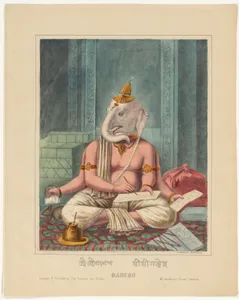
All of these gods converge in the Mahabharata — at roughly 100,000 verses, the longest epic poem on earth, about ten times the Iliad and Odyssey combined. Tradition says it needed a divine stenographer: Ganesha agreed to take dictation, and when his pen failed mid-flow, he snapped off one of his own tusks and kept writing. That is why his images have one broken tusk — the working scar of world literature.
The epic fed painters for centuries. In Maharashtra, the Paithan school turned it into bold, flat, almost poster-like pages for traveling storytellers who narrated as the audience looked.
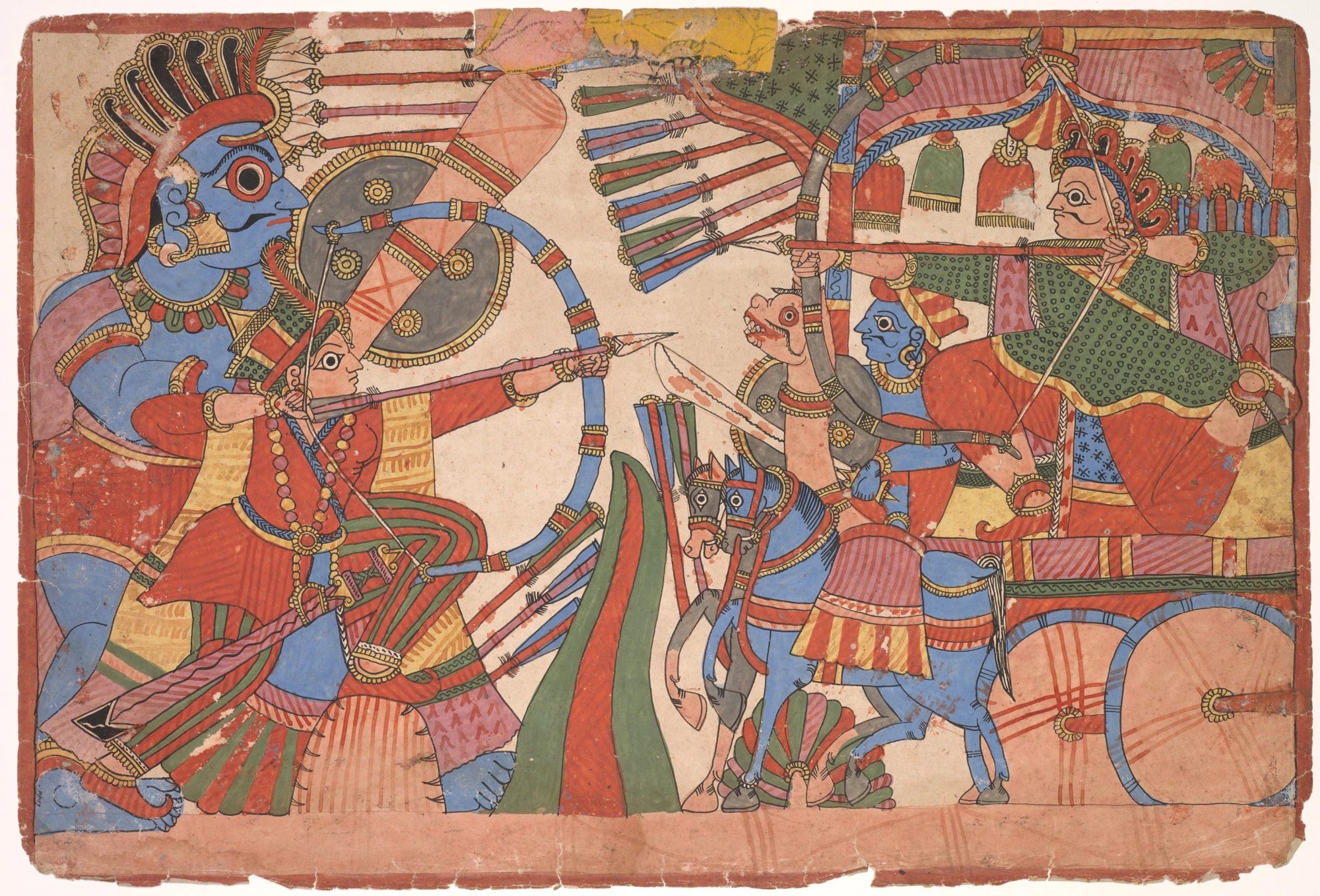
At the Mughal-influenced courts, the same epic went luxurious — Draupadi's rescue rendered in gold and fine line.
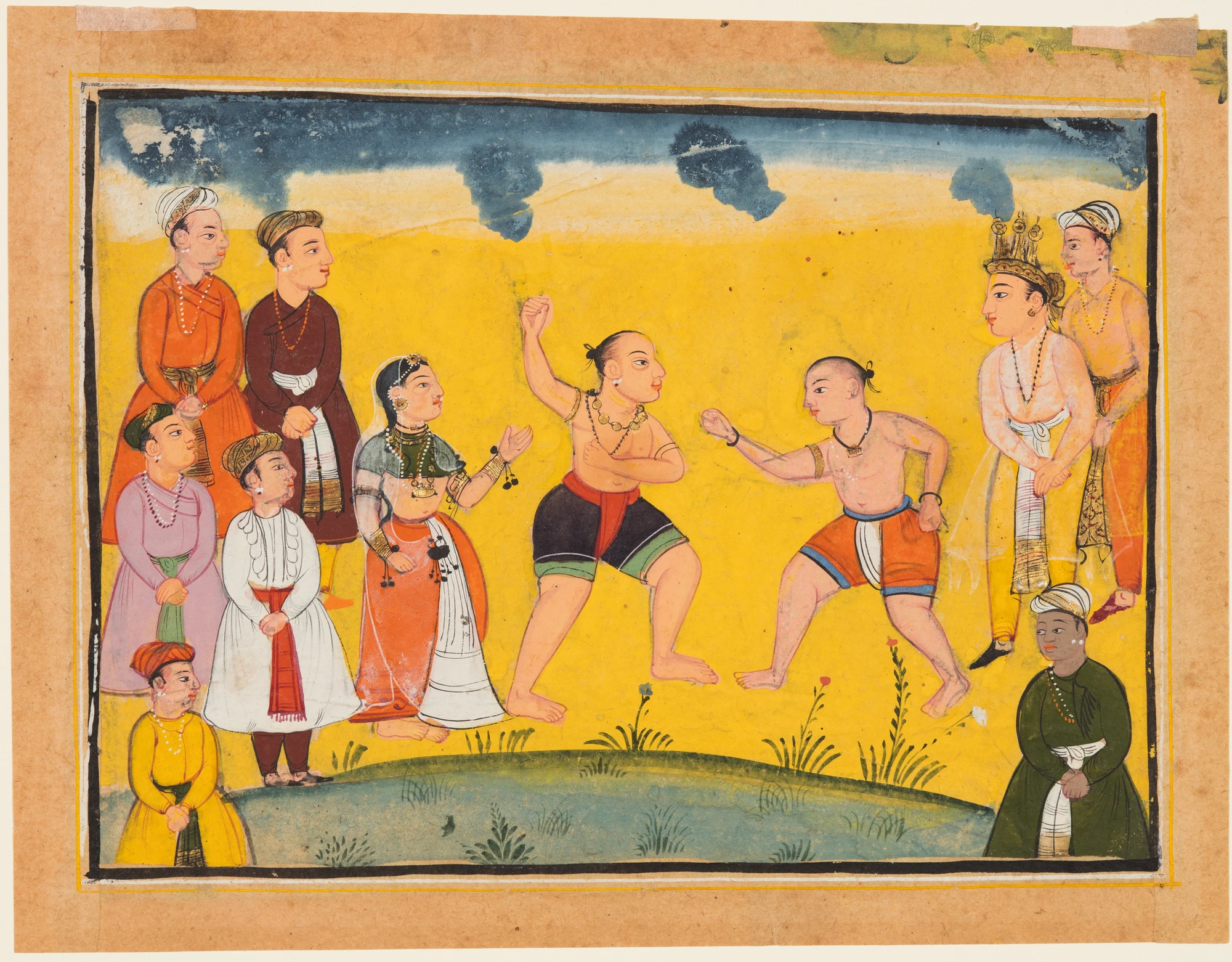
Fourteen centuries separate the oldest and youngest works here, and not one of them was made as "art" in the museum sense. They were made to be carried in processions, dictated to, prayed past, thrown colors at, taken home from pilgrimages. The gods in this exhibition are among the very few from the ancient world who never needed rediscovering — Durga still gets her festival every autumn, Holi still stains whole cities, and Nataraja still dances, in Tamil temples and outside a particle accelerator in Geneva.
The museum label says "12th century." The worshipper says "Tuesday."
This exhibition presents 27 works from The Metropolitan Museum of Art (New York), the Cleveland Museum of Art, and the Art Institute of Chicago.
Curator
Vasily Gnuchev
Start Date
8/27/2026
End Date
8/27/2027
Visibility
Public
Chloritic schist