
Arts of Asia — Page 152
9,604 artworks · Art Institute of Chicago
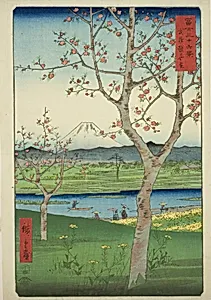
The Outskirts of Koshigaya in Musashi Province (Musashi Koshigaya zai), from the series "Thirty-six Views of Mount Fuji (Fuji sanjurokkei)"
Utagawa Hiroshige, 1858
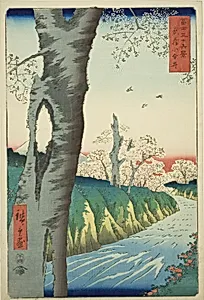
Koganei in Musashi Province (Musashi Koganei), from the series "Thirty-six Views of Mount Fuji (Fuji sanjurokkei)"
Utagawa Hiroshige, 1858
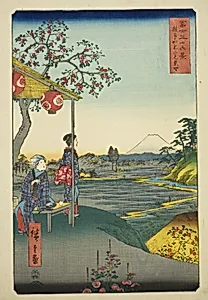
View of Mount Fuji from a Teahouse at Zoshigaya (Zoshigaya Fujimi chaya), from the series "Thirty-six Views of Mount Fuji (Fuji sanjurokkei)"
Utagawa Hiroshige, 1858
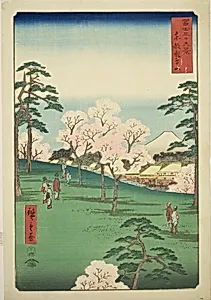
Asuka Hill in the Eastern Capital (Toto Asukayama), from the series "Thirty-six Views of Mount Fuji (Fuji sanjurokkei)"
Utagawa Hiroshige, 1858
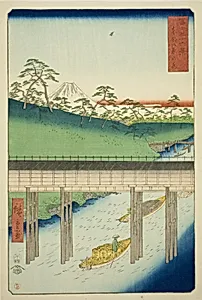
Ochanomizu in the Eastern Capital (Toto Ochanomizu), from the series "Thirty-six Views of Mount Fuji (Fuji sanjurokkei)"
Utagawa Hiroshige, 1858
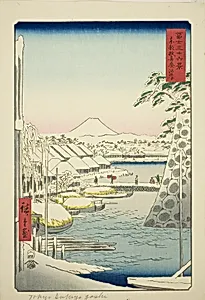
The Riverbank at Sukiya in the Eastern Capital (Toto Sukiyagashi), from the series "Thirty-six Views of Mount Fuji (Fuji sanjurokkei)"
Utagawa Hiroshige, 1858
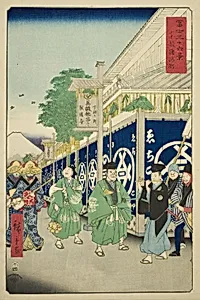
The Suruga District in the Eastern Capital (Toto Suruga-cho), from the series "Thirty-six Views of Mount Fuji (Fuji sanjurokkei)"
Utagawa Hiroshige, 1858
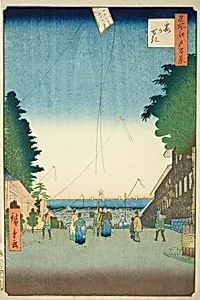
Kasumigaseki, from the series "One Hundred Famous Views of Edo (Meisho Edo hyakkei)"
Utagawa Hiroshige, 1857
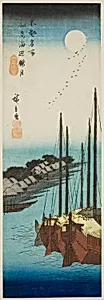
Misty Moont over the Shore at Tsukuda Island (Tsukudajima kaihen oborozuki), from the series "Famous Places in the Eastern Capital (Toto meisho)"
Utagawa Hiroshige, c. 1835/44
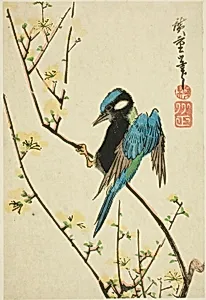
Java sparrow on cherry branch
Utagawa Hiroshige, c. 1830/44
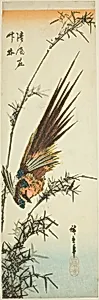
Pheasant and bamboo
Utagawa Hiroshige, 1840s
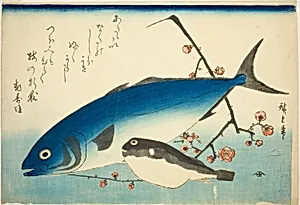
Yellowtail, blowfish, and plum branch
Utagawa Hiroshige, c. 1840/42
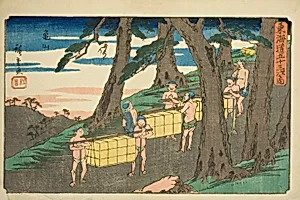
Kameyama, from the series "Fifty-three Stations of the Tokaido (Tokaido gojusan tsugi no uchi)," also known as the Gyosho Tokaido
Utagawa Hiroshige, c. 1841/44
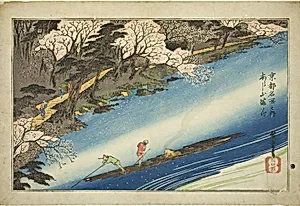
Cherry Blossoms in Full Bloom at Arashiyama (Arashiyama manka), from the series "Famous Places in Kyoto (Kyoto meisho no uchi)"
Utagawa Hiroshige, c. 1834
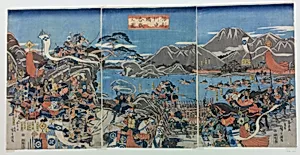
The battle of Kawanakajima in Shinano Province.
Utagawa Hiroshige, c.1843
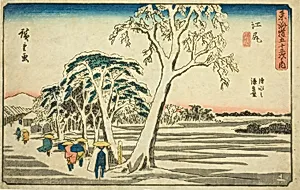
Ejiri: Distant View of Shimizu Harbor in Clear Weather after Snow (Ejiri, Shimizu no minato enbo, yukibare), from the series "Fifty-three Stations of the Tokaido (Tokaido gojusan tsugi no uchi)," also known as the Gyosho Tokaido
Utagawa Hiroshige, c. 1841/44
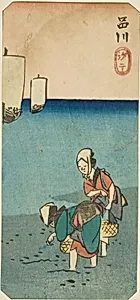
Low Tide at Shinagawa (Shinagawa shiohi), section of a sheet from the series "Cutouts of Famous Places in Edo (Harimaze Koto meisho)"
Utagawa Hiroshige, 1852
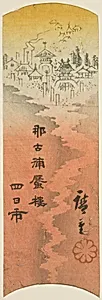
Yokkaichi, section of sheet no. 10 from the series "Cutout Pictures of the Tokaido (Tokaido harimaze zue)"
Utagawa Hiroshige, c. 1848/52
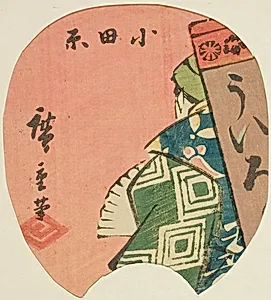
Odawara, section of sheet no. 3 from the series "Cutout Pictures of the Tokaido (Tokaido harimaze zue)"
Utagawa Hiroshige, c. 1848/52
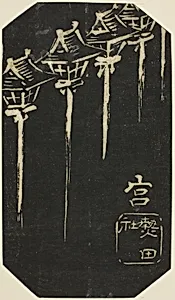
Miya, section of sheet no. 10 from the series "Cutout Pictures of the Tokaido (Tokaido harimaze zue)"
Utagawa Hiroshige, c. 1848/52
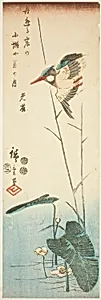
Kingfisher above a Yellow-flowered Water Plant
Utagawa Hiroshige, 1853, third month
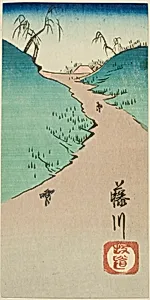
Hill at Fujikawa (Fujikawa sakamichi), section of sheet no. 10 from the series "Cutouts of the Fifty-three Stations (Gojusan tsugi harimaze)"
Utagawa Hiroshige, 1852
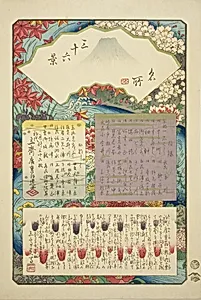
Title page for the series "Thirty-six Views of Mount Fuji (Meisho sanjurokkei)"
Utagawa Hiroshige, 1859
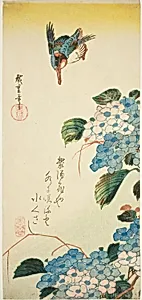
Kingfisher and hydrangea
Utagawa Hiroshige, 1830s
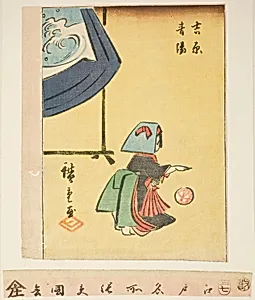
New Year in Yoshiwara (Yoshiwara seiyo), section of a sheet from the series "Cutout Pictures of Famous Places in Edo (Edo meisho harimaze zue)"
Utagawa Hiroshige, 1857
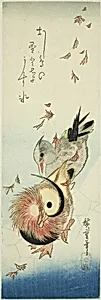
Mandarin ducks crossing icy pond amid falling leaves
Utagawa Hiroshige, 1830s
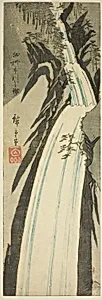
Nunobiki Waterfall in Settsu Province (Sesshu Nunobiki no taki), from an untitled series of views of the provinces
Utagawa Hiroshige, 1854
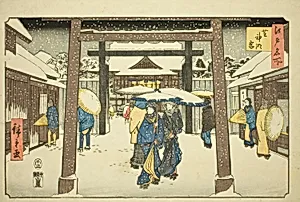
Shinmei Shrine in Shiba (Shiba Shinmeigu), from the series "Famous Places in Edo (Edo meisho)"
Utagawa Hiroshige, 1858
![The Night Attack, Part 4 [sic; actually 5]: The Retreat across Ryogoku Bridge (Youchi yon, Ryogoku hikitori), from the series "The Revenge of the Loyal Retainers (Chushingura)" by Utagawa Hiroshige](https://images.artheonmuseum.org/aic/thumb/the-night-attack-part-4-sic-actually-5-the-aic-89735.webp)
The Night Attack, Part 4 [sic; actually 5]: The Retreat across Ryogoku Bridge (Youchi yon, Ryogoku hikitori), from the series "The Revenge of the Loyal Retainers (Chushingura)"
Utagawa Hiroshige, c. 1834/39
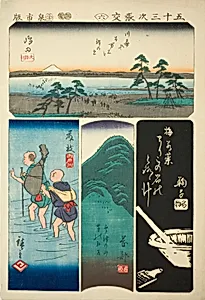
Shimada, Fujieda, Okabe, and Mariko, no. 6 from the series "Cutouts of the Fifty-three Stations (Gojusan tsugi harimaze)"
Utagawa Hiroshige, 1852
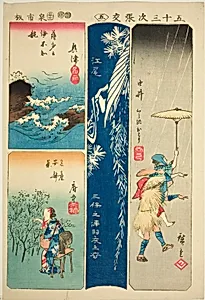
Okitsu, Ejiri, Yui, and Fuchu, no. 5 from the series "Cutouts of the Fifty-three Stations (Gojusan tsugi harimaze)"
Utagawa Hiroshige, 1852
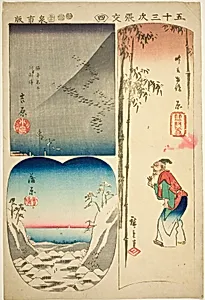
Yoshiwara, Hara, and Kambara, no. 4 from the series "Cutouts of the Fifty-three Stations (Gojusan tsugi harimaze)"
Utagawa Hiroshige, 1852
Offering Colza at the Kameido Tenjin Shrine (Kameido Tenjin natane no jinji), section of a sheet from the series "Cutout Pictures of Famous Places in Edo (Edo meisho harimaze zue)"
Utagawa Hiroshige, 1857
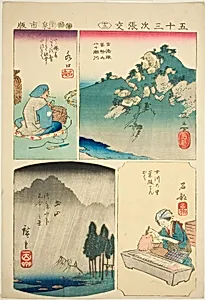
Sakanoshita, Minakuchi, Tsuchiyama, and Ishibe, no. 13 from the series "Cutouts for the Fifty-three Stations (Gojusan tsugi harimaze)"
Utagawa Hiroshige, 1852
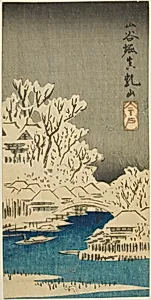
Sanya Canal and Matsuchi Hill (Sanyabori Matsuchiyama), section of a sheet from the series "Cutouts of Famous Places in Edo (Harimaze Koto meisho)"
Utagawa Hiroshige, 1852
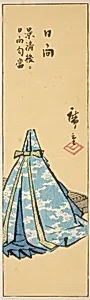
Hyuga, section of sheet no. 18 from the series "Cutout Pictures of the Provinces (Kunizukushi harimaze zue)"
Utagawa Hiroshige, 1852
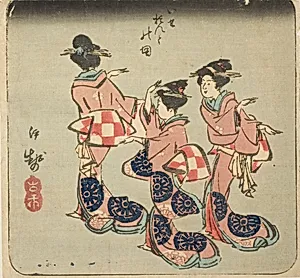
Ise, section of sheet no. 3 from the series "Cutout Pictures of the Provinces (Kunizukushi harimaze zue)"
Utagawa Hiroshige, 1852
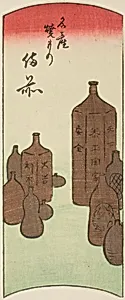
Bizen, section of sheet no. 14 from the series "Cutout Pictures of the Provinces (Kunizukushi harimaze zue)"
Utagawa Hiroshige, 1852
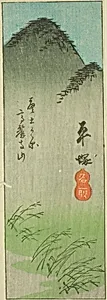
Hiratsuka, section of sheet no. 2 from the series "Cutout Pictures of the Tokaido (Tokaido harimaze zue)"
Utagawa Hiroshige, c. 1848/52
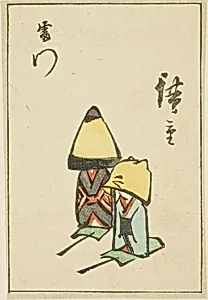
Thunder Gate (Kaminarimon), section of a sheet from the series "Cutout Pictures of Famous Places in Edo (Edo meisho harimaze zue)"
Utagawa Hiroshige, 1857
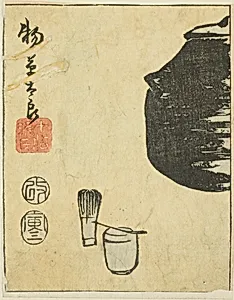
Monogusa Taro, section of a sheet from the series "Reflections of Dramas in Cutouts (Harimaze joruri kagami)"
Utagawa Hiroshige, 1854
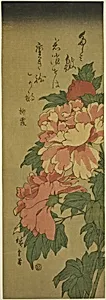
Peonies
Utagawa Hiroshige, c. 1843/47
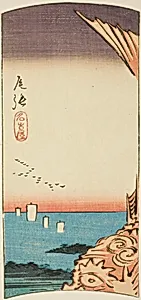
Nagoya in Owari Province, section of sheet no. 4 from the series "Cutout Pictures of the Provinces (Kunizukushi harimaze zue)"
Utagawa Hiroshige, 1852
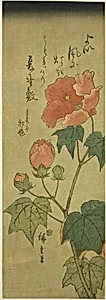
Hibiscus
Utagawa Hiroshige, c. 1843/47
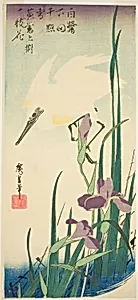
White heron and iris
Utagawa Hiroshige, c. 1832/34
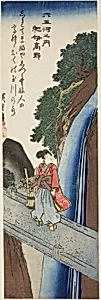
Koya Jewel River in Kii Province (Kii Koya), from the series "Six Jewel Rivers (Mu Tamagawa no uchi)"
Utagawa Hiroshige, c. 1835/39
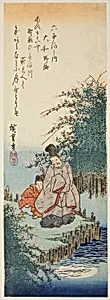
Noji Jewel River in Yamato Province (Yamato Noji), from the series "Six Jewel Rivers (Mu Tamagawa no uchi)"
Utagawa Hiroshige, c. 1835/39
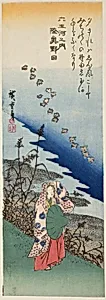
Noda Jewel River in Mutsu Province (Mutsu Noda), from the series "Six Jewel Rivers (Mu Tamagawa no uchi)"
Utagawa Hiroshige, c. 1835/39