Ctrl K
1817–1878
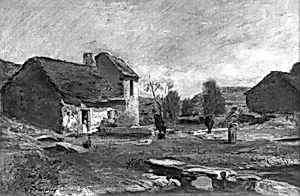
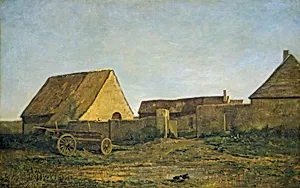
Charles-François Daubigny was born on February 15, 1817, in Paris into a family of artists, with his father, Edmé-François Daubigny, a classical landscape painter, and his uncle, Pierre Daubigny, a miniaturist, providing his initial artistic training. He further studied under Jean-Victor Bertin, Jacques Raymond Brascassat, and Paul Delaroche at the École des Beaux-Arts, though he quickly moved beyond academic constraints after apprenticing as an engraver and traveling to Italy in 1835 to study Old Masters. Debuting at the Paris Salon in 1838, Daubigny supported himself through book illustrations and etchings while sketching in the Forest of Fontainebleau, honing his eye for nature.
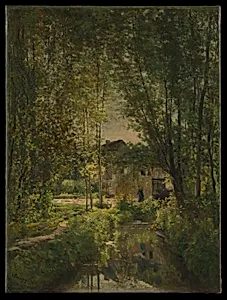
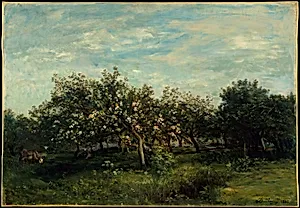
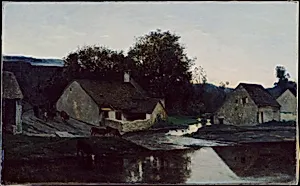
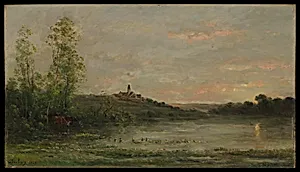
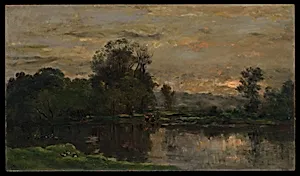
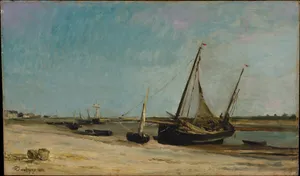
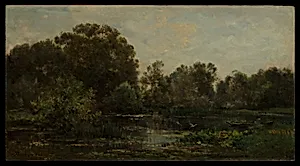
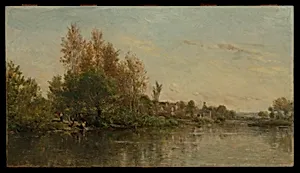
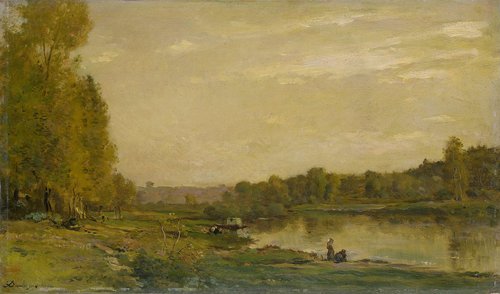
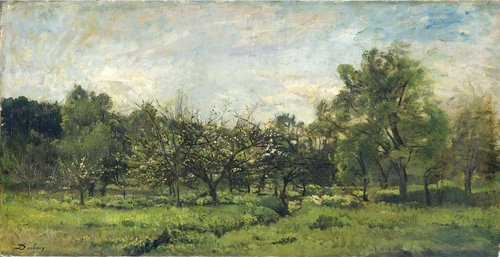
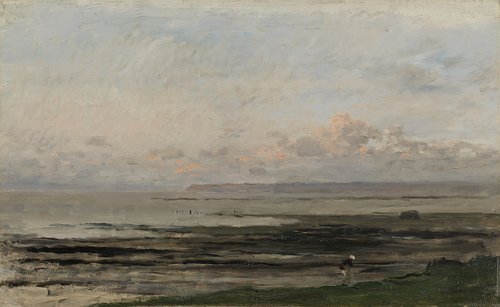
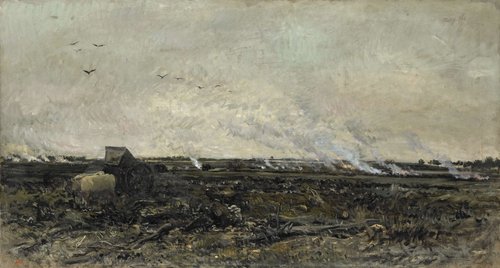
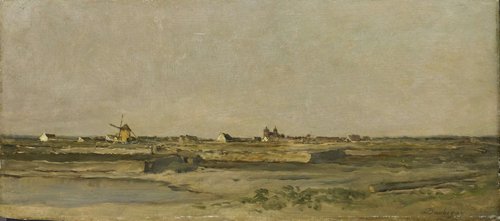
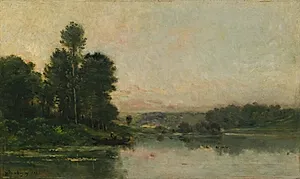
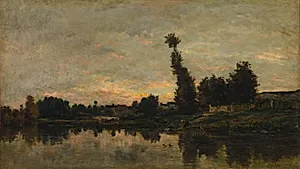
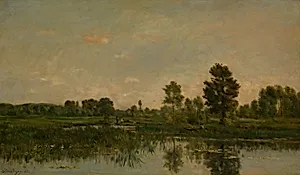
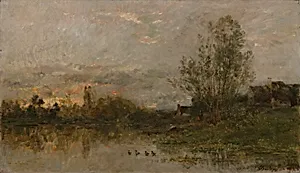
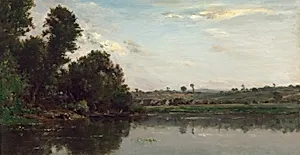
Associating with the Barbizon school after settling there in 1843, Daubigny embraced plein-air painting, emphasizing direct observation of landscapes, particularly riverscapes along the Seine and Oise. His encounter with Camille Corot in 1849—later collaborating on cliché-verre prints in 1862—refined his approach to tonal values and light, evolving from structured naturalism to looser, lyrical brushwork that captured fleeting atmospheric effects, positioning him as a key precursor to Impressionism. In 1857, he outfitted a studio-boat called *Le Botin*, allowing him to paint expansive horizontals from the water, often accompanied by his son Karl Pierre Daubigny, also a painter whose works were sometimes confused with his father's.
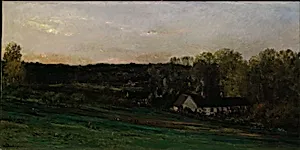
Daubigny's oeuvre includes iconic works like *The Harvest* (1851, Musée d'Orsay), *Springtime* (1857, Louvre—purchased by Napoleon III), *Banks of the Oise* (1863, Saint Louis Art Museum), and *Return of the Flock* (1878, Montreal Museum of Fine Arts), alongside series such as *Voyage en Bateau* (1862 etchings). He exhibited consistently at the Salon, served on its jury with Corot in 1866, and mentored emerging talents during visits to England and the Netherlands.
Daubigny died on February 19, 1878, in Paris, leaving a profound legacy: his fluid river scenes and boat-painting innovations inspired Claude Monet to adopt a similar floating studio, influenced Alfred Sisley and Paul Cézanne, and were admired by Vincent van Gogh. Pupils like Hippolyte Camille Delpy carried forward his motifs, cementing his bridge from Barbizon realism to Impressionist light and spontaneity.