Ctrl K
**Grégoire Huret** (Lyon, 1606–Paris, 1670) emerged as a leading French engraver and draughtsman in the Baroque era, honing his skills in his native Lyon, a vibrant hub of printing and engraving. Though the identity of his trainer remains unknown, early works bear the decorative influence of Charles Audran, evident in ornate frontispieces. By 1635, Huret relocated to Paris, settling on rue Saint-Jacques, where his marriage contract in 1646 identified him as a royal draughtsman and engraver for the Maison du Roi. His prestige culminated in admission to the Académie royale de peinture et de sculpture on August 7, 1663, as only the fourth engraver since its founding, cementing his status in official French art circles.
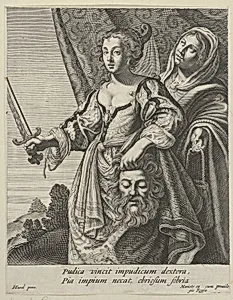
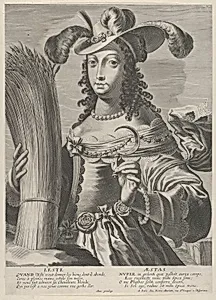
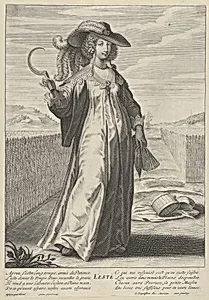
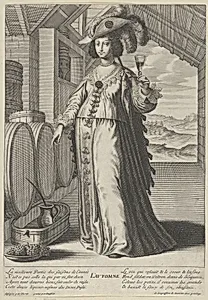
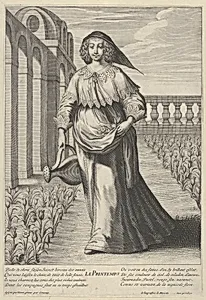
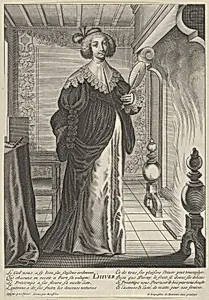
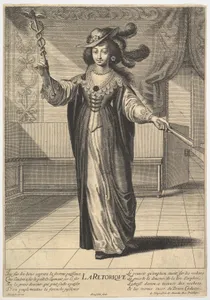
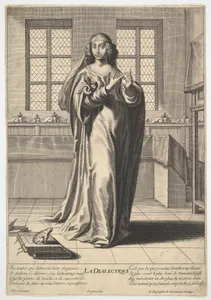
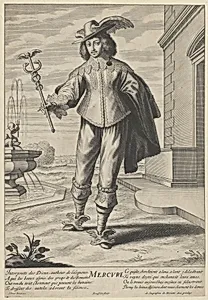
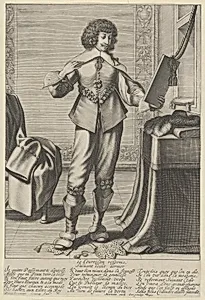
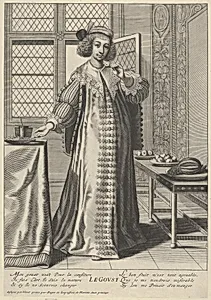
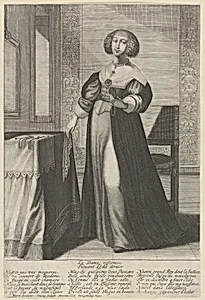
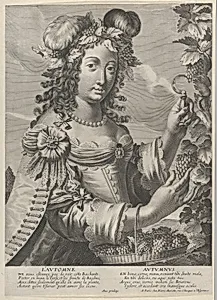
Huret's style excelled in intricate architectural perspectives, refined figures, and harmonious burin work, blending chiaroscuro and composition without rigidity, as praised by Pierre-Jean Mariette. He produced nearly 500 engravings, often original inventions rather than copies, showcasing religious scenes, portraits, and ornamental designs. Key series include the *Four Seasons* (e.g., *Summer* and *Autumn*, ca. 1620–70), published by Pierre Mariette I (1596–1657); the *Five Senses*; and *Les arts libéraux* (e.g., *Music*). Notable single sheets feature *Judith with the Head of Holofernes*, *The Vow of Louis XIII* (1638), and *Chancellor Pierre Séguier*. Many bear the imprint of publisher Pierre Mariette, whose collaboration amplified Huret's reach through lavish book illustrations and frontispieces, such as for *Traicté des cinq ordres d'architecture* (1647).
In his later years, Huret shifted toward ambitious personal projects, self-publishing the monumental *Théâtre de la Passion de Notre Seigneur Jésus Christ* (1664), a 32-plate suite depicting Christ's life with explanatory texts, and the treatise *Optique de portraiture et de peinture* (1670), which challenged Abraham Bosse's geometric perspective in favor of empirical vision—a stance that shaped Académie doctrine. His preparatory drawings, like allegories for Richelieu arms, survive in Paris collections. Huret's legacy endures as a bridge between Lyon craftsmanship and Parisian classicism, his prints prized for technical preciosity and influencing 17th-century reproductive engraving.