Ctrl K
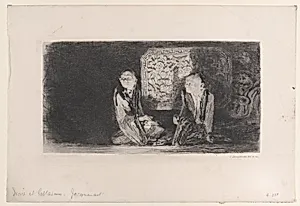
Jules-Ferdinand Jacquemart, born in Paris on September 7, 1837, was the son of Albert Jacquemart, a civil servant at the Ministry of Finances, avid art collector, and amateur artist who illustrated botanical books and wrote on art history. Growing up in this cultured environment immersed young Jacquemart in the world of images and objects, shaping his path as an engraver, watercolorist, and illustrator. Though details of his formal training remain undocumented, by 1859 he had established himself professionally, contributing etchings regularly to the prestigious *Gazette des Beaux-Arts* until his death, where he excelled in reproductive prints of old master and contemporary paintings.
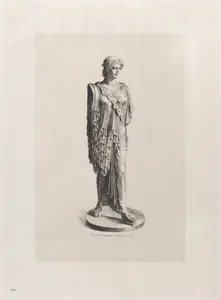
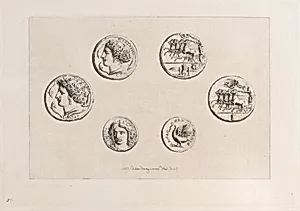
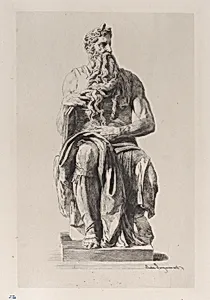
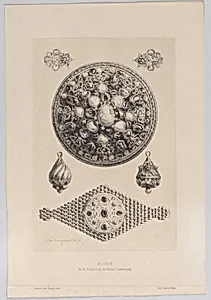
Jacquemart mastered the etching technique, earning acclaim for his precise reproductions that captured the essence of masterpieces while showcasing his own virtuosity in line and tone. His works often featured landscapes, still lifes, and scenes infused with an interest in Oriental art, reflecting travels to the Near and Far East. Notable among his etchings is an early 1859 plate depicting Oriental motifs, and his contributions graced publications like Théophile Gautier's *Émaux et Camées* (Charpentier's Japanese-paper edition), later referenced in Oscar Wilde's *The Picture of Dorian Gray*. These prints not only disseminated art to a wider audience but also highlighted Jacquemart's skill in translating painterly effects into intaglio.
In his later years, Jacquemart expanded into watercolor, co-founding the Société des Aquarellistes Français in 1879 alongside luminaries like Eugène Lami, Gustave Doré, and Eugène Isabey. At the society's debut exhibition at Durand-Ruel, he presented nine works, including the evocative *Les Platanes en Hiver*. Institutions like the National Gallery of Art and the Metropolitan Museum of Art hold his pieces, such as *City and Country*. Plagued by ill health, Jacquemart died in Paris on September 27, 1880, at age 43, just as photography began challenging traditional illustration. His legacy endures as a bridge between reproductive engraving and original watercolor, preserving the tactile poetry of 19th-century French graphic arts amid technological shifts.
(Word count: 348)