Ctrl K
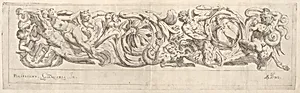
Polifilo Giancarli was an Italian ornamental designer active in Venice from around 1600 to 1625. Little is known of his early life or training, but he specialized in creating intricate decorative motifs suited to prints, friezes, and theatrical contexts. His work reflects the vibrant Venetian tradition of ornamental design during the early seventeenth century, often tied to the emerging world of opera and stage scenery.
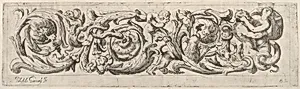
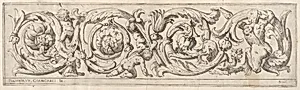
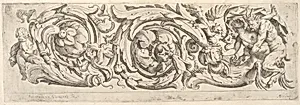
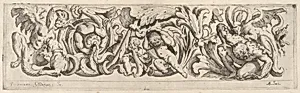
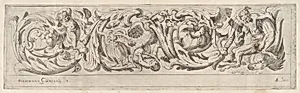
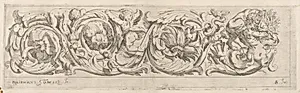
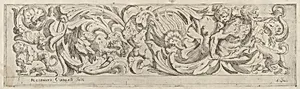
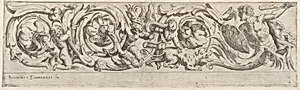
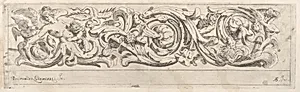
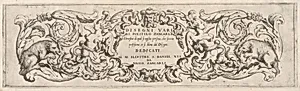
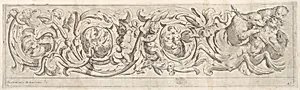
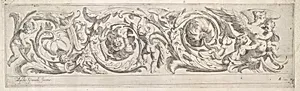
Giancarli’s most notable contribution is the series *Disegni Varii di Polifilo Zancarli* (Various Designs by Polifilo Zancarli), a collection of ornamental friezes and panels featuring grotesque figures, satyrs, dragons, and classical motifs. These designs were etched primarily by the Bolognese artist Odoardo Fialetti, who brought Giancarli’s compositions to a wider audience through detailed prints published before 1628 by Tasio Giancarli. The series exemplifies the period’s fascination with elaborate, fantastical ornamentation that could be adapted for architecture, furniture, or performance spaces.
Although biographical details remain limited, Giancarli’s influence endured through these widely circulated etchings, which later inspired further engravings by artists such as Luca Ciamberlano. His association with opera designs highlights his role in bridging fine art and the performing arts in Baroque Venice. Today, examples of his work are preserved in major collections, including the Metropolitan Museum of Art and the British Museum, underscoring his lasting impact on the history of decorative printmaking.