Ctrl K
**Thomas Rowlandson (1757–1827)** was a leading English caricaturist and printmaker of the Georgian era, celebrated for his sharp yet often good-humored depictions of social life, politics, and human folly. Born on 13 July 1757 in London’s Old Jewry to a textile trader father who faced bankruptcy, Rowlandson spent part of his childhood in Richmond, North Yorkshire, before returning to the capital for schooling.
He attended the Soho Academy under Dr. Cuthbert Barwis and entered the Royal Academy Schools in 1772 at age fifteen. Around the same time, he studied in Paris for about two years, possibly under the sculptor Jean-Baptiste Pigalle, honing his skills in figure drawing and caricature. His early promise was evident in Royal Academy exhibitions, including a silver medal win in 1777, though he soon turned to professional printmaking after inheriting and then squandering a fortune.
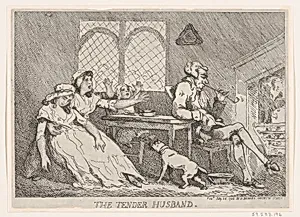
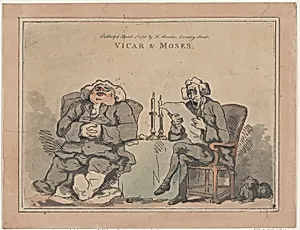
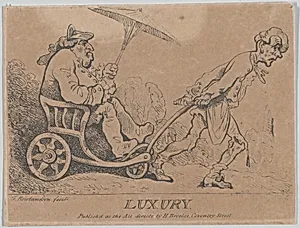
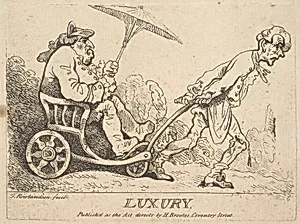
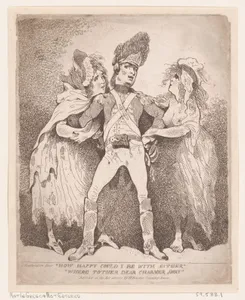
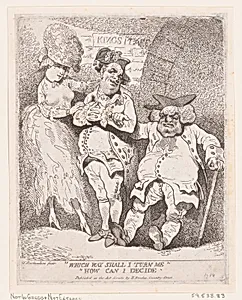
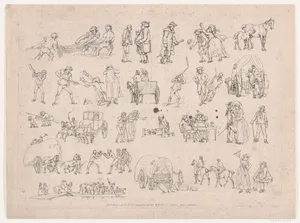
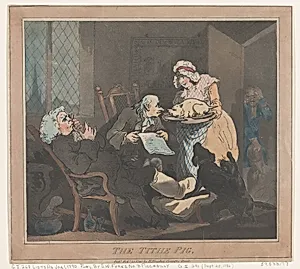
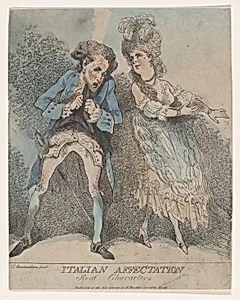
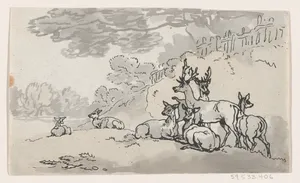
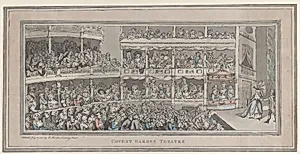
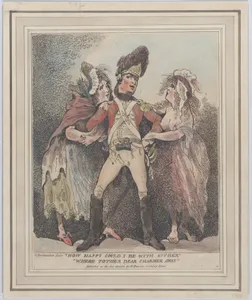
Rowlandson worked in the tradition of Georgian satirical art alongside contemporaries like James Gillray and Henry William Bunbury. His distinctive style featured fluid reed-pen outlines delicately washed with color, then etched and often aquatinted for reproduction. He excelled at lively scenes of London life—Vauxhall Gardens (exhibited 1784), election crowds, pleasure resorts, and everyday characters—while also producing political satires targeting figures such as William Pitt the Younger and Napoleon. Major works include the immensely popular *Tour of Dr. Syntax in Search of the Picturesque* (1812, with verses by William Combe) and its sequels, the *English Dance of Death* (1815–16), and illustrations for authors like Tobias Smollett, Oliver Goldsmith, and Laurence Sterne. He also created private erotica and medical-themed caricatures.
Rowlandson’s prolific output, published largely through Rudolph Ackermann, helped define the visual culture of late Georgian Britain and contributed to the enduring personification of John Bull. Though he died in relative obscurity in London on 21 April 1827, his drawings and prints remain prized for their wit, technical facility, and acute social observation, ensuring his lasting legacy in British art history.