Ctrl K
1786–1864
**Utagawa Kunisada (1786–1865)**
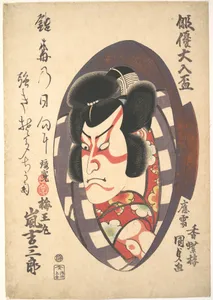
Born in 1786 in the Honjo district of Edo (modern Tokyo), Utagawa Kunisada hailed from a family with a hereditary ferry-boat service that provided financial stability, allowing him to pursue art from a young age. His father, an amateur poet of note, died shortly after his birth, leaving young Sumida Shōgorō (Kunisada's childhood name) to nurture his evident talent for drawing. Around 1800, at age 14 or 15, his early sketches caught the eye of Utagawa Toyokuni I, the preeminent master of kabuki actor prints and founder of the influential Utagawa school. Kunisada apprenticed under Toyokuni I, adopting the name "Kunisada" in line with master-apprentice tradition—the "Kuni" derived from Toyokuni's name. He later studied painting styles with Hanabusa Itchō and his successor Hanabusa Ikkei around 1824–1825, broadening his technical range.
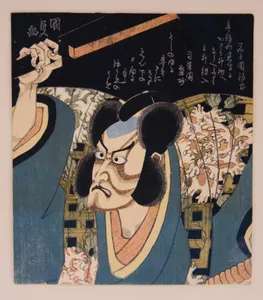
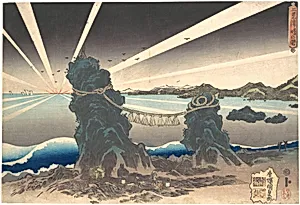
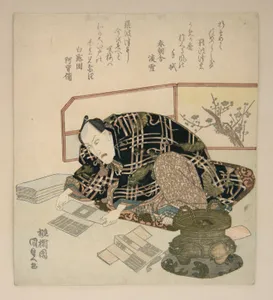
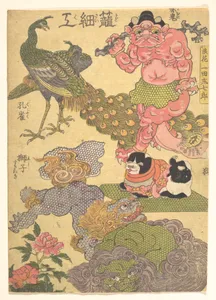
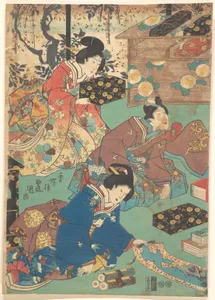
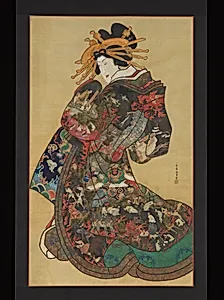
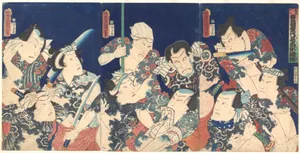
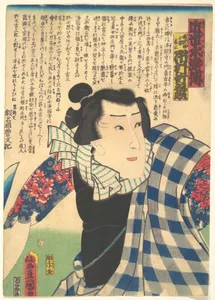
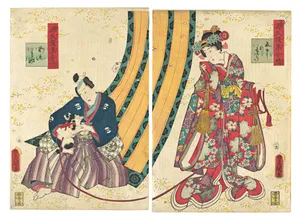
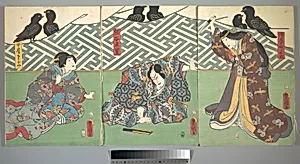
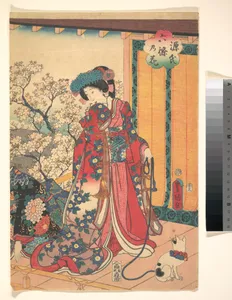
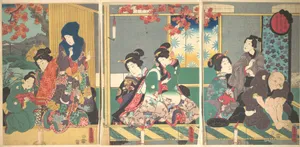
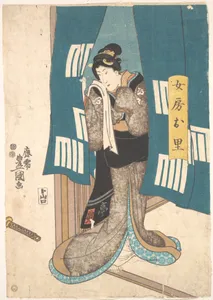
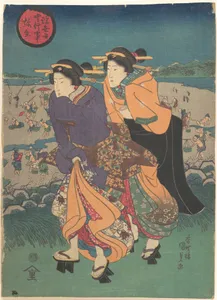
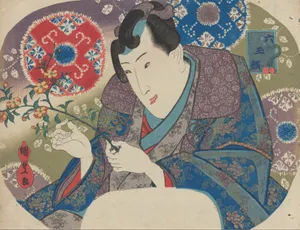
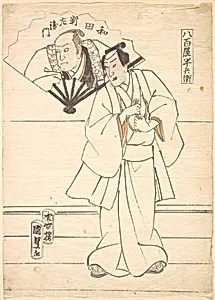
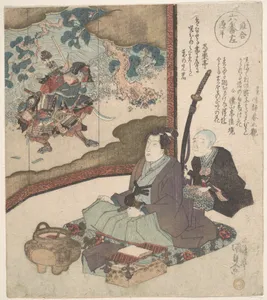
A titan of ukiyo-e woodblock prints, Kunisada worked squarely in the Utagawa school tradition, dominating 19th-century Japanese printmaking with over 20,000 designs—more than any contemporary. His oeuvre spanned kabuki actor portraits (yakusha-e, comprising 60% of his output), bijin-ga (beautiful women, 15%), sumo wrestlers, shunga erotica, and illustrations for popular literature like *The Tale of Genji*, on which he held a near-monopoly from 1835 to 1850. Debuting with an illustrated book in 1807 and actor prints by 1808, early hits included *The Hours of the Yoshiwara* (c. 1818) and urban scene pentaptychs from 1809. Masterpieces feature his lavish *Nise Murasaki Inaka Genji* series, a parody of *The Tale of Genji*, alongside evocative bijin like *Twilight Snowfall at Ueno* (c. 1850) and seascapes such as *Dawn at Futamigaura* (c. 1830). A trendsetter attuned to public tastes, he evolved bold, fashion-forward styles, using studio names like Gototei (nodding to his family's ferry) and Kochōrō.
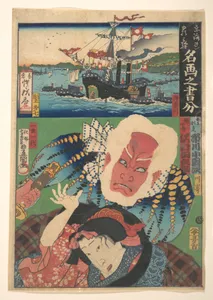
In 1844–1845, Kunisada boldly assumed the name Toyokuni III, sidelining Toyokuni II and signaling his supremacy in the Utagawa lineage; his principal pupil became Kunisada II, with others like Toyohara Kunichika and Utagawa Chikanobu carrying his torch. Amid Tenpō Reforms censorship, he collaborated defiantly with Hiroshige and Kuniyoshi on series like *Restaurants of Edo* (1852) and *The Fifty-Three Stations from Two Brushes* (1855), even overlaying figures on Hiroshige's Tōkaidō landscapes. Kunisada's commercial dominance eclipsed Hokusai, Hiroshige, and Kuniyoshi in his era, selling thousands and shaping late Edo visual culture. Dying in 1865 in his birth neighborhood at age 79, his legacy endures as ukiyo-e's bestselling master, blending technical virtuosity with mass appeal—once dismissed as "decadent" abroad, now celebrated for innovation.
![Shanaō [Yoshitsune] Learns Martial Arts in Sōjōgatani (Shanaō Sōjōgatani ni heijutsu o manabu zu)](https://images.artheonmuseum.org/met/as/thumb/shanao-yoshitsune-learns-martial-arts-in-sojogatani-shanao-sojogatani-ni-heijuts-58263.webp)