Ctrl K
1748–1810
Abraham Louis Rodolphe Ducros, born on July 21, 1748, in Moudon, Switzerland, was the son of Jean-Rodolphe Du Cros, a writing and drawing master who taught at Yverdon College after the family relocated there. Destined initially for commerce following his father's death in 1764, Ducros pursued art passionately. He trained for two years (1769–1771) under Chevalier Nicolas-Henri-Joseph de Fassin at a private academy in Geneva, copying Flemish and Dutch masters like Jacob van Ruisdael and Philips Wouwermans, and likely traveled to Flanders with his teacher. Influenced by the Flemish tradition, he developed a fascination for en plein air sketching and natural phenomena, befriending painters like Pierre-Louis De la Rive before departing for Rome in 1776.
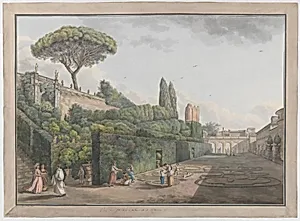
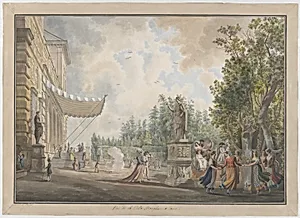
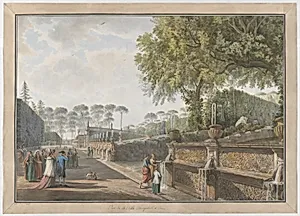
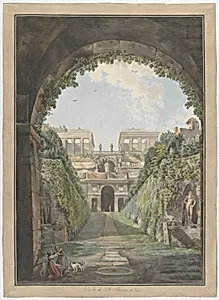
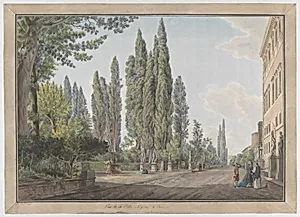
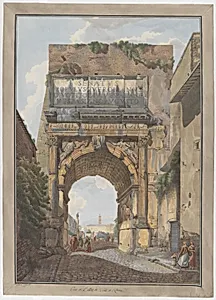
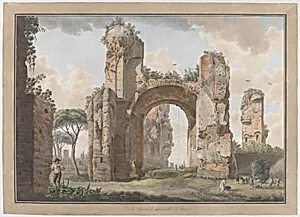
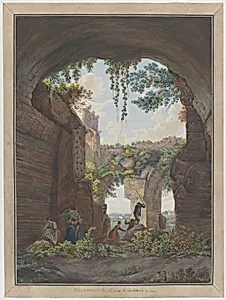
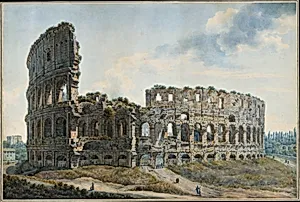
Settling in Rome from 1777 to 1793, Ducros became a leading vedutista, specializing in large-scale watercolors of ancient ruins, topographical landscapes, and dramatic seascapes that catered to Grand Tour patrons. He collaborated closely with engraver Giovanni Volpato on series like the 24 hand-colored "Views of Rome and the Surrounding Countryside" (1780s), including "Ruins of the Basilica of Maxentius" (c. 1779) and interiors of the Museo Pio-Clementino (published 1792). In 1778, he produced nearly 300 watercolors during a voyage to Sicily, Naples, and Malta for Dutch patrons, now in Amsterdam's Rijksmuseum. Standout works include "The Colosseum, Rome" (Metropolitan Museum of Art), "Pius VI Visiting the Pontine Marshes" (1783), "The Arch of Constantine, Rome," and "Night Storm at Cefalù" (c. 1800–1805), blending Claude Lorrain's luminous foliage with Piranesi's monumental scale and pre-Romantic sublime effects like storms and eruptions, enhanced by gouache and gum for oil-like durability.
Expelled from the Papal States in 1793 amid Jacobin suspicions, Ducros painted Abruzzo valleys and Neapolitan views, including Vesuvius and shipyards for King Ferdinand IV, before a second Malta trip (1800–1801) yielding "View of the Grand Harbour, Valletta." Returning to Switzerland in 1807, he taught in Lausanne, exhibited in Bern, and was appointed professor at the Bern Academy in 1809, dying of apoplexy on February 18, 1810, before assuming the post. A pioneer in elevating watercolor to fine art, Ducros's topographical precision and atmospheric drama influenced Romantic landscapists like J.M.W. Turner, with works cherished in collections from the Yale Center for British Art to Lausanne's Musée cantonal des Beaux-Arts.