Ctrl K
1620–1691
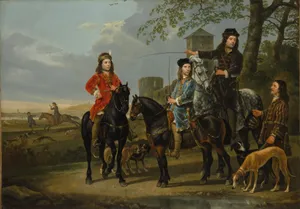
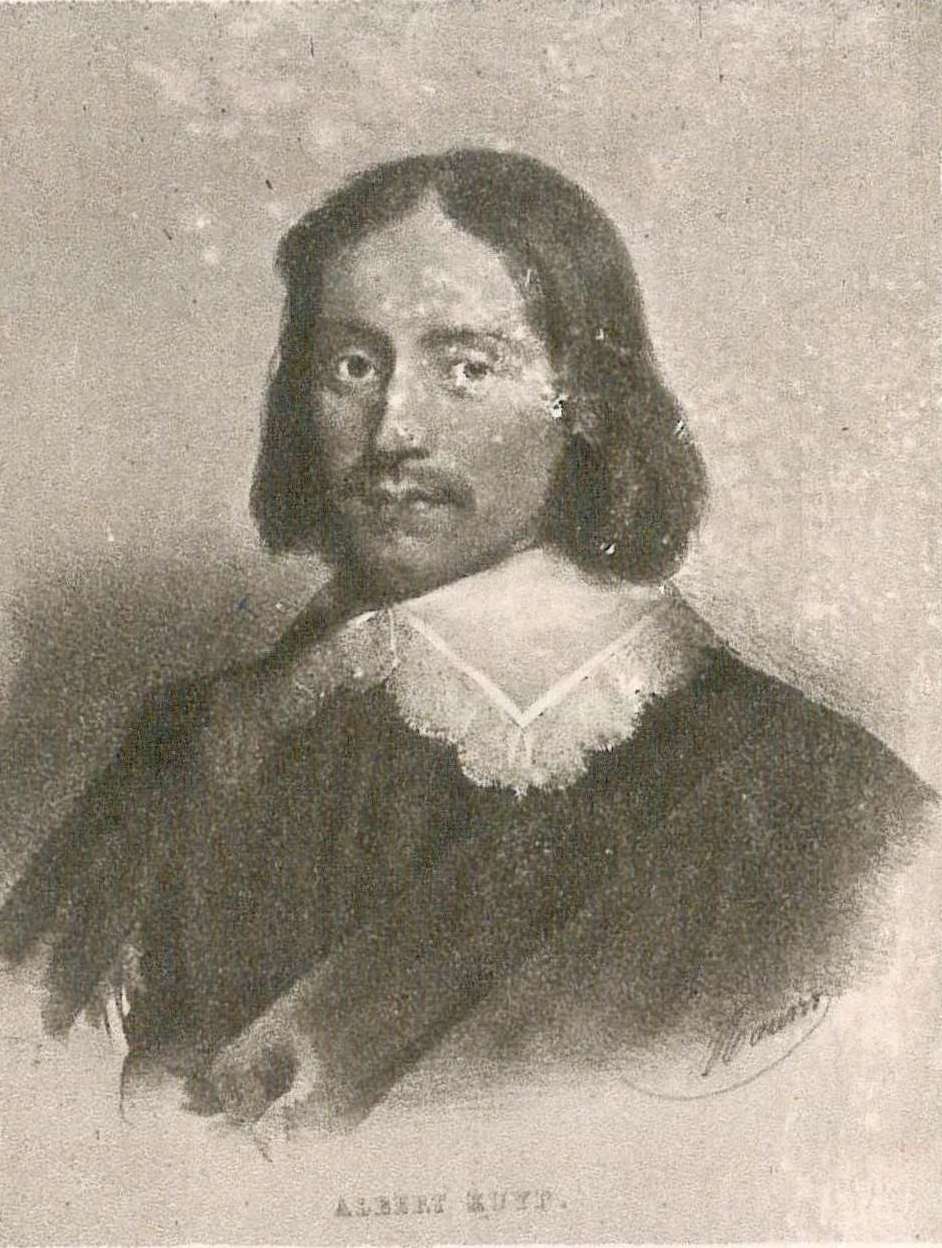
Aelbert Cuyp (1620–1691), a leading figure of the Dutch Golden Age, was born and died in Dordrecht, Netherlands, where he spent his entire life. The son of portraitist and animal painter Jacob Gerritsz Cuyp (1594–1652), Aelbert came from a family of artists—his uncle Benjamin Gerritsz Cuyp and grandfather Gerrit Gerritsz Cuyp were stained-glass designers—and studied under his father, with whom he frequently collaborated on paintings, often adding landscape backgrounds to Jacob's portraits. Early influences included the tonal landscapes of Jan van Goyen and the luminous effects of Jan Both, who introduced Italianate elements inspired by Claude Lorrain, though Cuyp never traveled abroad.
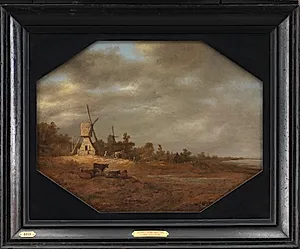
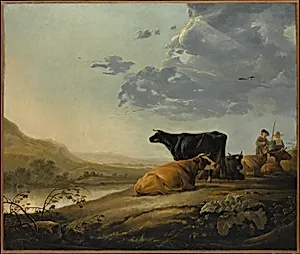
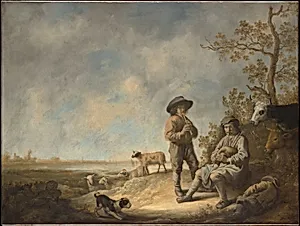
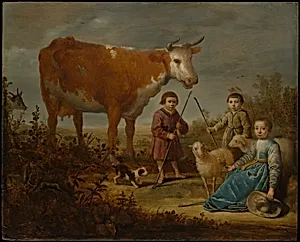
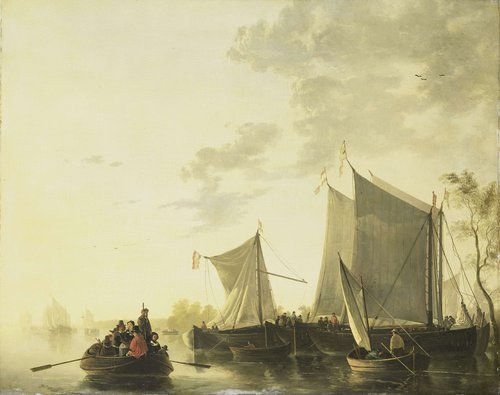
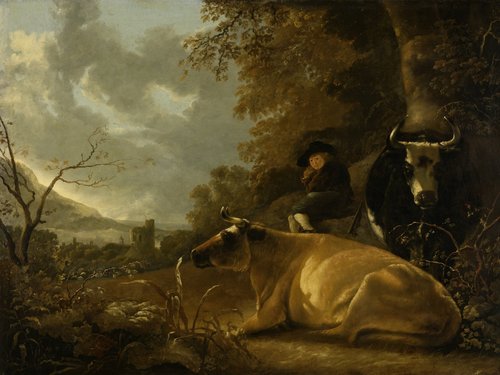
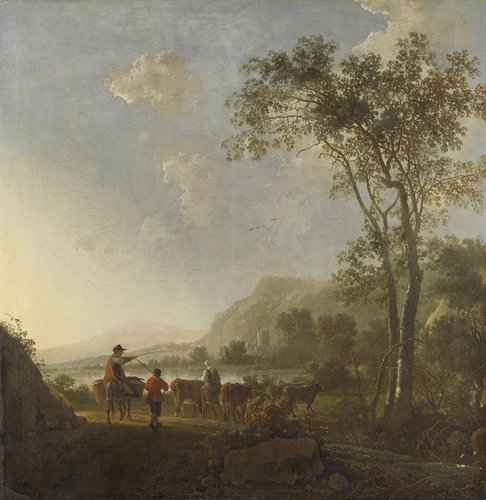
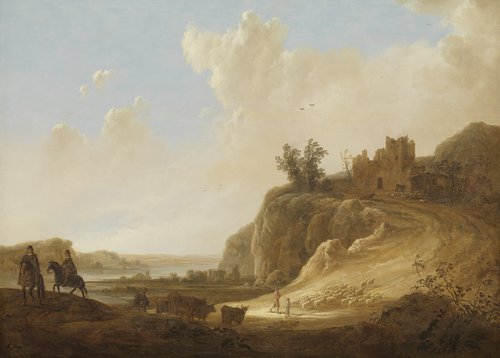
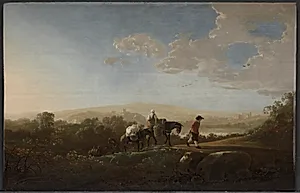
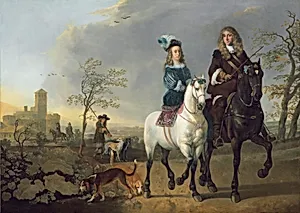
Cuyp's style evolved through distinct phases, blending Dutch realism with Italianate warmth. His early works from the 1640s, in the van Goyen tradition, featured broken brushwork and subdued tones in river scenes like *River Scene, Two Men Conversing* (1641). By the mid-1640s, adopting Both's contre-jour lighting, he mastered golden-hour effects—raking sunlight illuminating cattle, herdsmen, and expansive river valleys—creating poetic atmospheres of tranquility and prosperity that evoke southern Europe in Dutch settings. Figures and animals grew prominent under his father's influence, with richly glazed mediums enhancing luminosity on cows' hides and grassy expanses. Cuyp worked in the Italianate landscape tradition, excelling as a draftsman who sketched en plein air along Dutch rivers and the Rhine for studio reuse.
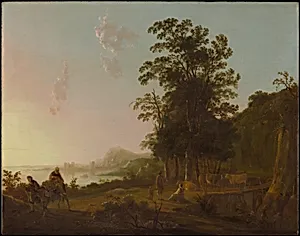
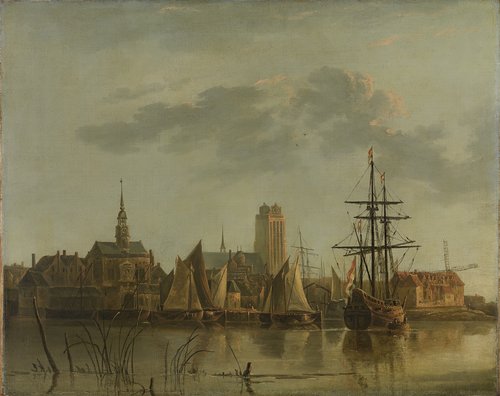
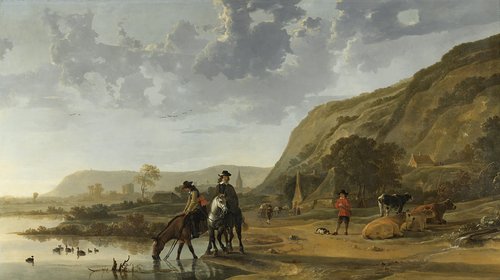
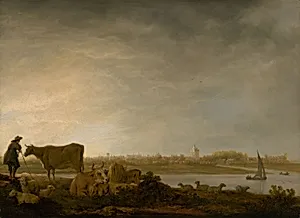
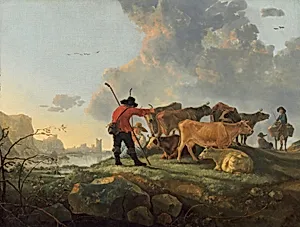
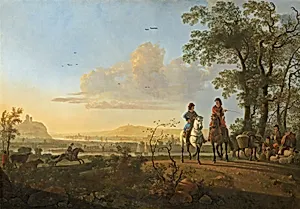
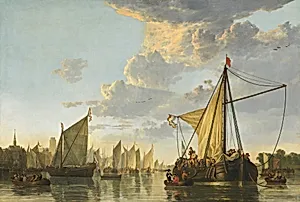
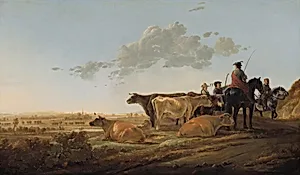
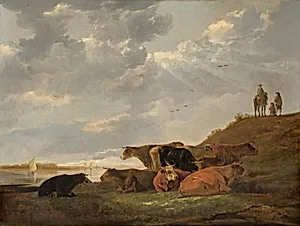
Among his masterpieces are *The Maas at Dordrecht* (c. 1650, National Gallery of Art), a serene panorama of his hometown's riverfront bathed in sunset glow; *A Herdsman with Five Cows by a River* (mid-1640s, National Gallery, London); and *Herdsmen Tending Cattle* (1655/1660, National Gallery of Art), showcasing languid livestock in warm light. Other notables include *River Landscape with Riders* (c. 1653–1657) and *The Large Dort* (1650s).
In 1658, Cuyp married wealthy widow Cornelia Boschman, after which his output dwindled as he embraced civic roles as deacon and elder in the Reformed Church, reflecting his devout Calvinism. His legacy endures in light-drenched landscapes that anticipated impressionistic techniques, inspiring imitators like Abraham van Calraet and English painters, cementing his status as the Dutch Claude Lorrain.