Ctrl K
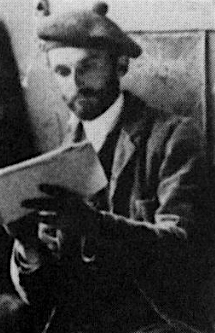
1857–1922
Arthur Wesley Dow (1857–1922) was an American artist, printmaker, and educator whose ideas about composition and design exerted an outsized influence on American modernism, reaching well beyond anything his own paintings and prints might have achieved on their own. Born in Ipswich, Massachusetts, he studied in Boston and then in Paris at the Académie Julian, where he absorbed the academic training of the day. But it was his encounter with Japanese woodblock prints — particularly through close study of the collection at the Museum of Fine Arts, Boston, under the guidance of Ernest Fenollosa — that transformed his artistic philosophy.
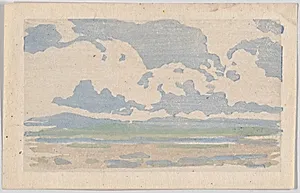
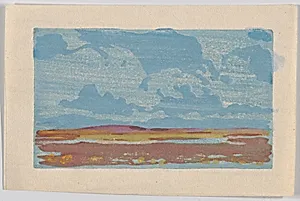
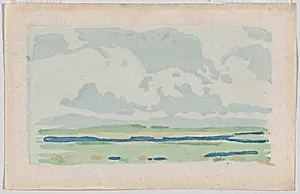
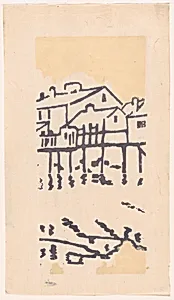
Drawing on the principles of Japanese art, Dow developed a theory of composition built around three elements: line, notan (the dark-light harmony of a design), and color. He believed that these formal elements, rather than the faithful imitation of nature, were the foundation of all visual art. He articulated these ideas in his influential textbook Composition (1899), which went through numerous editions and was adopted widely in American art schools for decades. The book's emphasis on abstract formal relationships over literal representation helped prepare the ground for the American abstract art movements that would follow.
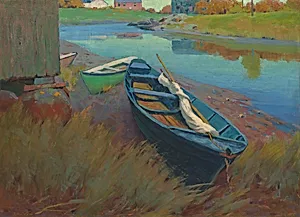
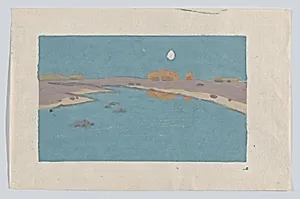
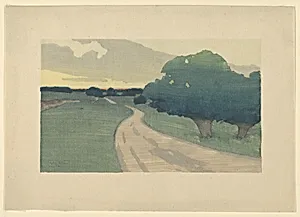
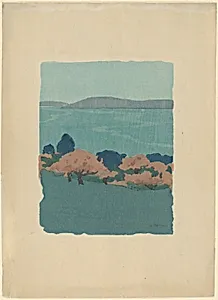
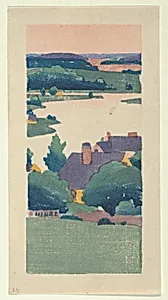
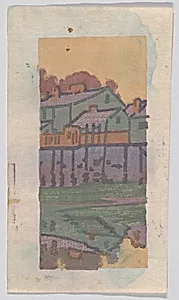
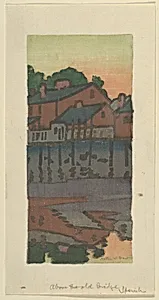
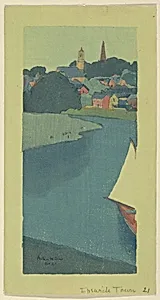
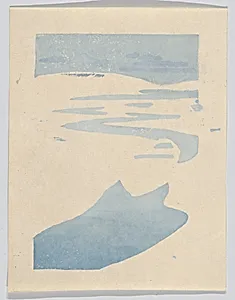
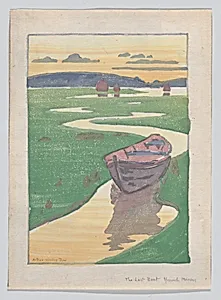
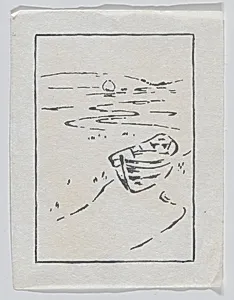
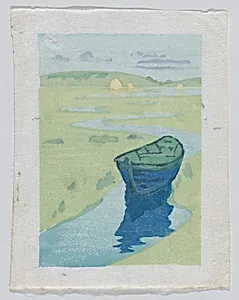
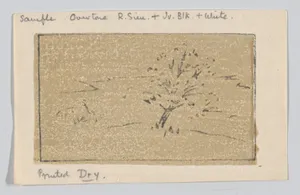
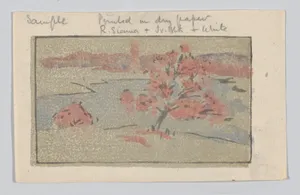
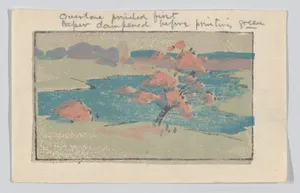
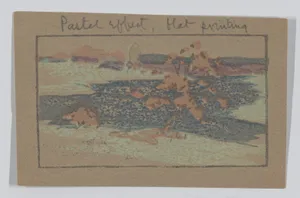
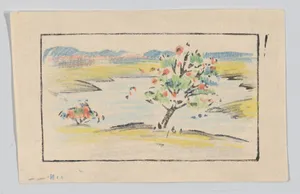
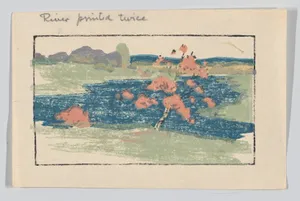
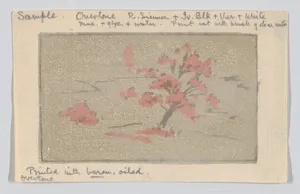
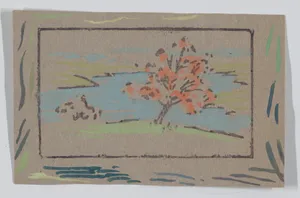
As a printmaker, Dow worked primarily in woodblock, often returning to the landscapes of his native Ipswich and Cape Cod with a keen attention to simplified form, harmonious tone, and the quiet beauty of the natural world. His prints, paintings, and photographs share a meditative quality — a search for essential form beneath surface appearance. He taught at the Pratt Institute in Brooklyn and later at Teachers College, Columbia University, where his students included Georgia O'Keeffe, whose mature work bears the unmistakable imprint of his lessons.
Dow's legacy is as much pedagogical as it is artistic. By fusing East Asian aesthetic philosophy with Western art education, he helped chart a course toward American modernism that valued formal invention alongside expressive authenticity. His prints and writings remain touchstones for understanding the intellectual currents that shaped early twentieth-century American art.