Ctrl K
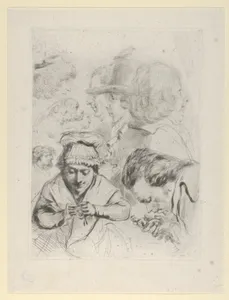
1747–1825
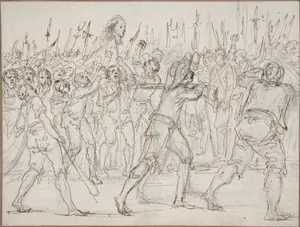
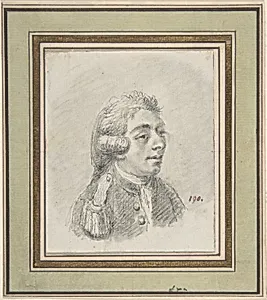
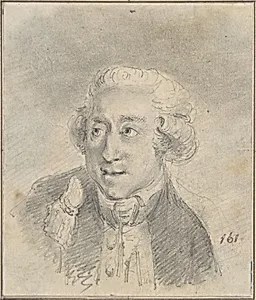
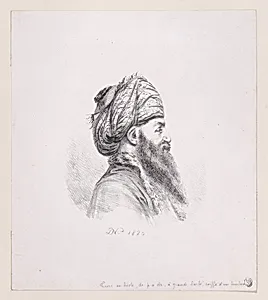
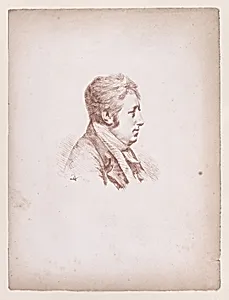
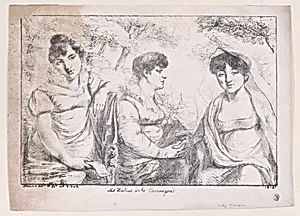
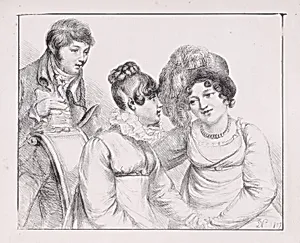
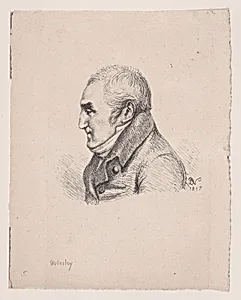
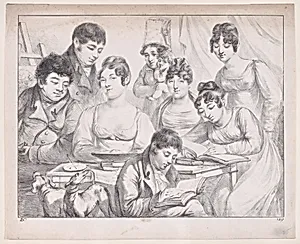
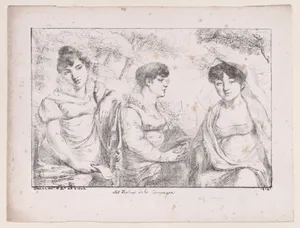
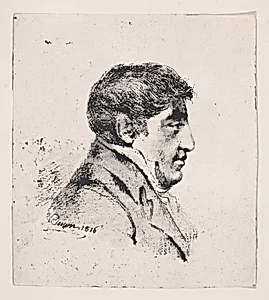
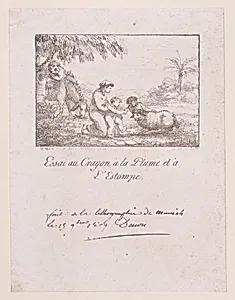
Dominique Vivant, Baron Denon (1747–1825), was a multifaceted French artist, diplomat, and archaeologist whose life bridged the Ancien Régime, Revolution, and Napoleonic Empire. Born on January 4, 1747, in Givry near Chalon-sur-Saône to a family of minor nobility originally surnamed "de Non," he was sent to Paris at eighteen to study law. Instead, he pursued art, studying painting under Noël Hallé and honing skills in drawing and etching, possibly first learned in Lyon. Abandoning jurisprudence, he wrote the comedy *Le Bon Père* (or *Julie et le Bon Père*, 1769) and entered aristocratic circles, managing Madame de Pompadour's collection of engraved gems for Louis XV. Admitted to the Académie royale de peinture et de sculpture in 1787 as an engraver, Denon worked in the tradition of that institution, excelling in etching, mezzotint, and later lithography—one of the first to introduce it in France in 1809.
Denon's diplomatic postings fueled his artistic output. In Naples (1778–1785) as secretary and chargé d'affaires, he etched portraits like that of Lady Hamilton and studied ancient monuments at Pompeii and Herculaneum. He published the erotic novel *Point de lendemain* (1777) and illustrated *Voyage en Sicile* (1788). Saved from the guillotine during the Terror by Jacques-Louis David, with whom he designed republican costumes, Denon joined Napoleon's 1798 Egyptian campaign. There, he sketched under fire, producing hundreds of drawings for his seminal *Voyage dans la basse et la haute Égypte* (1802), which ignited Egyptomania across Europe. Other notable works include his engraved portrait of Voltaire (1775), erotic *L’Oeuvre priapique* (1793), and designs for revolutionary attire.
Appointed director-general of the Musée Napoléon (Louvre) in 1802, Denon transformed it into the world's richest collection, orchestrating acquisitions from conquered lands in Italy, Spain, and beyond—often personally selecting masterpieces amid campaigns. He oversaw Sèvres porcelain, Gobelins tapestries, and medal minting, earning Napoleon's title of Baron in 1812. His unfinished *Monuments des arts du dessin* appeared posthumously in 1829. Denon died on April 27, 1825, in Paris; his vast personal collection, including Etruscan vases and paintings by Watteau and Raphael, was auctioned in 1826–1827.
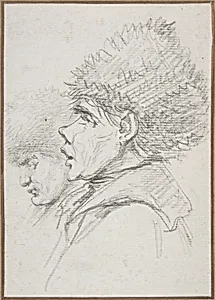
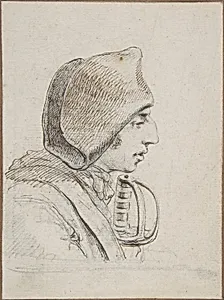
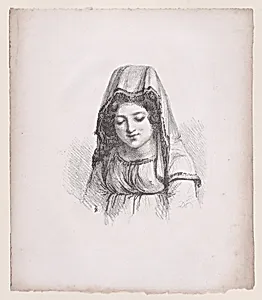
Denon's legacy endures in the Louvre's Denon Wing and his pioneering chronological arrangement of art by schools and periods, influencing modern museums. A polymath "Eyes of Napoleon," he elevated French cultural prestige through 51 known works in our collection, blending neoclassical precision with antiquarian passion.