Ctrl K
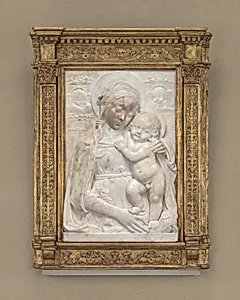
1442–1497
**Benedetto da Maiano** (1442–1497) was a leading Italian sculptor and architect of the Early Renaissance, renowned for his mastery of marble and his ability to blend narrative detail with elegant decoration. Born in the village of Maiano near Fiesole, he began his career collaborating with his elder brother, the architect and intarsia specialist Giuliano da Maiano. At around age thirty he trained under the sculptor Antonio Rossellino, from whom he learned advanced marble techniques and soon surpassed his teacher in fame.
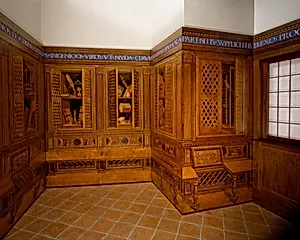
His early specialization in wood inlay and mosaic work included contributions to the celebrated Studiolo of Federico da Montefeltro. An invitation to the court of King Matthias Corvinus of Hungary prompted a decisive shift toward more durable marble after some inlaid pieces were damaged in transit. This transition marked the beginning of his most significant sculptural output.
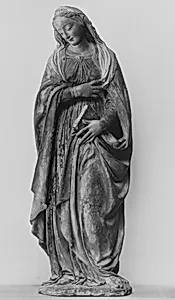
Among his major works are the marble pulpit in Santa Croce, Florence—widely regarded as his masterpiece, featuring vivid scenes from the life of St. Francis—and the 1474 bust of Pietro Mellini, now in the Bargello. He collaborated with his brother on projects such as the altar in the Chapel of Santa Fina at San Gimignano (1475) and the framework for the doorway of the Palazzo Vecchio (1480). As an architect he designed the Palazzo Strozzi in Florence (begun 1489) and created the tomb of Filippo Strozzi in Santa Maria Novella. Later commissions took him to Naples, where he completed works at Sant’Anna dei Lombardi and executed an Annunciation at Monte Oliveto.
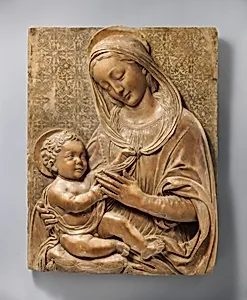
Benedetto’s sculptures are characterized by decorative elegance, realistic detail, and a refined sense of narrative, qualities that placed him among the foremost Florentine artists of the fifteenth century. His influence extended through both his architectural designs and his sculptural innovations, securing his place in the canon of Early Renaissance masters. He died in Florence on 24 May 1497 at the age of fifty-five.