Ctrl K
1549–1610
Occupations
Ambrogio Brambilla (active 1575–1599) was an Italian engraver and cartographer primarily active in Rome during the late Renaissance, a period when the Eternal City was experiencing renewed vigor under the Counter-Reformation papacy. Though born in Milan, Brambilla established himself in Rome by 1579, becoming a member of the prestigious Congregazione dei Virtuosi al Pantheon, the guild of artists associated with the Pantheon. His work encompassed both antiquarian reconstructions of ancient Roman monuments and vedute (views) of contemporary Rome, serving the city's thriving market for prints that documented its classical past and Baroque present for collectors, scholars, and visitors from across Europe.
Ambrogio Brambilla was born in Milan but had relocated to Rome by the late 1570s. In 1579, he is documented as a member of the Congregazione dei Virtuosi al Pantheon, a guild of artists that provided both professional support and social prestige. Membership in this organization indicates Brambilla had established himself within Rome's artistic community and achieved recognition from his peers.
Rome in the late sixteenth century presented extraordinary opportunities for printmakers specializing in architectural and topographical subjects. The city was experiencing significant urban development under papal patronage, with new churches, palaces, and public spaces transforming the urban fabric. Simultaneously, intense interest in Rome's classical past drove demand for prints depicting ancient monuments. Visitors on the Grand Tour, scholars studying antiquity, and collectors throughout Europe sought images of both ancient and modern Rome, creating a substantial market for skilled engravers like Brambilla.
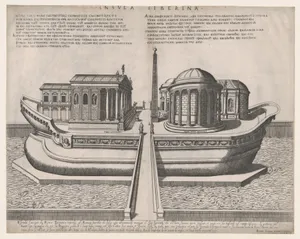
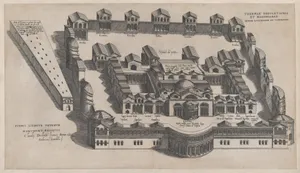
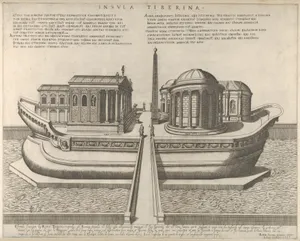
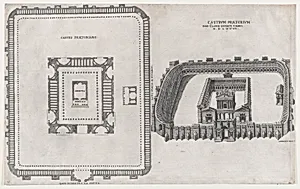
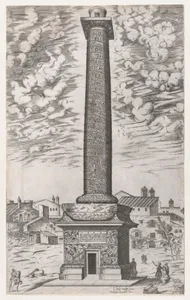
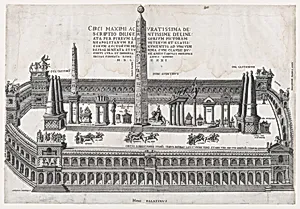
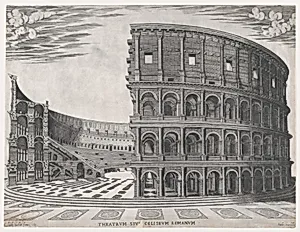
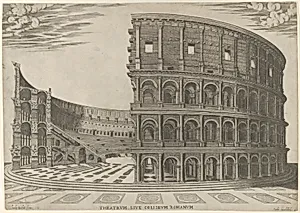
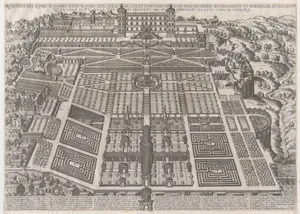
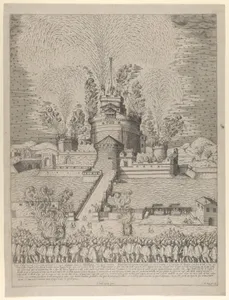
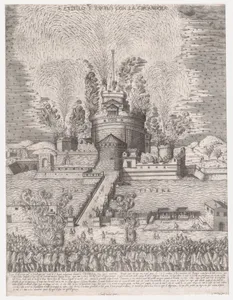
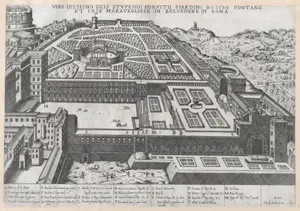
Brambilla's most successful works were prints depicting scenographic reconstructions of ancient Roman monuments and contemporary vedute. In 1579, he created notable engravings including the Belvedere Courtyard of the Vatican (designed by Bramante in the early sixteenth century) and the Girandola di fuochi artificiali a Castel Sant'Angelo (Fireworks Display at Castel Sant'Angelo), documenting one of Rome's spectacular public celebrations. These works demonstrated his ability to capture both architectural grandeur and festive urban life.
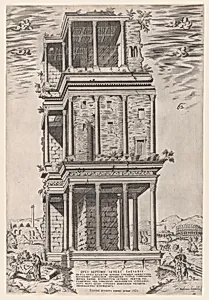
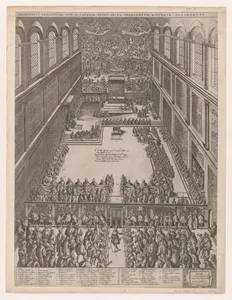
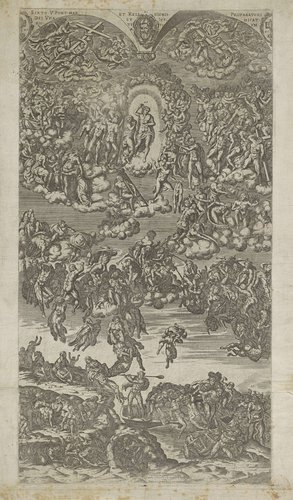
In 1582, Brambilla produced an important engraving of the Sepulchre of Lucius Septimius, known as the Septizodium, an ancient Roman monument that had largely disappeared but was reconstructed through antiquarian scholarship. Such imaginative reconstructions served scholarly purposes while also appealing to popular fascination with Rome's imperial past. In 1589, he engraved the Last Judgment after a relief sculpture in wax on slate by Giacomo Vivio, itself based on Michelangelo's monumental fresco in the Sistine Chapel. This multilayered reproductive process—engraving after sculpture after painting—demonstrates the complex chains of transmission through which famous Renaissance works circulated.
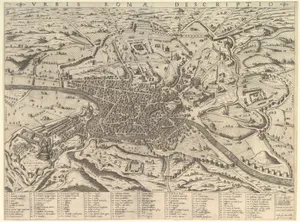
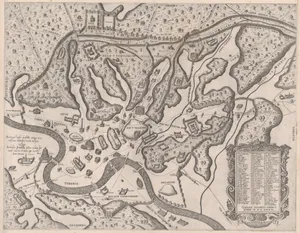
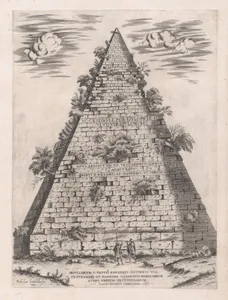
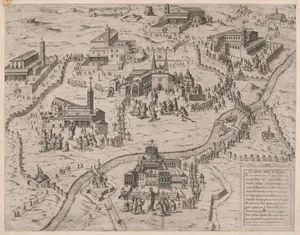
Brambilla's oeuvre expanded to include various types of prints. He produced vedute of significant Roman buildings including churches like the Gesù (the mother church of the Jesuits, completed in 1580) and the Tomb of Pope Julius II by Michelangelo. He created views showing both ancient Rome and its hills from various perspectives, and contemporary Rome as seen from the west, providing comprehensive visual documentation of the city.
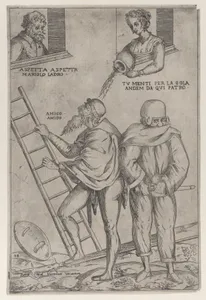
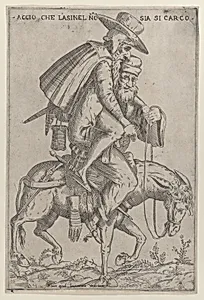
Beyond architectural subjects, Brambilla also produced prints depicting popular games and street scenes, documenting the everyday life of Rome's inhabitants. These genre subjects appealed to different audiences than his architectural views, showing the vitality of Roman popular culture alongside its monumental architecture and classical heritage.
Later sources record Brambilla's activity extending beyond engraving to include poetry, sculpture in bronze, painting, and architecture. This diversification was not unusual for Renaissance and Baroque artists, who often worked across multiple media. However, it's unclear whether Brambilla achieved significant accomplishment in these other fields or whether they remained secondary to his primary identity as an engraver and printmaker.
Brambilla remained active in Rome at least until 1599, though documentation of his later career is limited. The historical record contains some uncertainty about his dates, with some sources suggesting he lived from 1549 to 1629 (which would make him eighty at death), while others indicate he was active 1579–1599. The latter dating appears more reliable based on documented guild membership and dated prints.
Artheon Research Team
Last updated: 2025-11-09
Biography length: ~798 words
Wikidata (CC0); Getty ULAN (ODC-By)