Ctrl K
1886–1951
Byron Dingman (1886–1951) was an American artist whose career, though sparsely documented in personal terms, gained significance through his contributions to the Index of American Design, a New Deal-era Federal Art Project under the Works Progress Administration (WPA). Active primarily in the late 1930s and early 1940s, Dingman produced meticulous renderings of everyday American folk art objects, preserving their craftsmanship for posterity. Little is known of his early life or formal training, as biographical details remain elusive in art historical records.
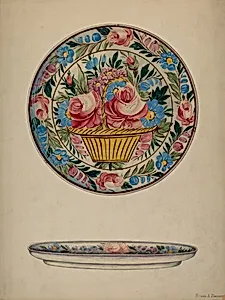
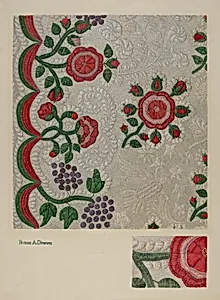
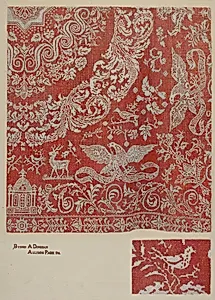
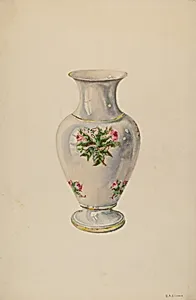
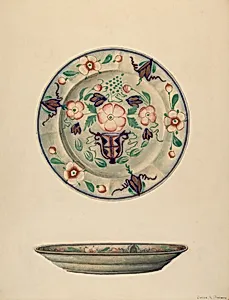
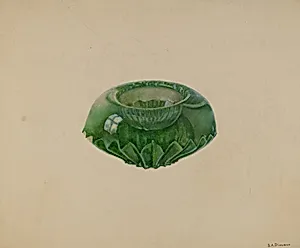
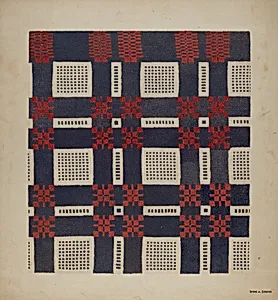
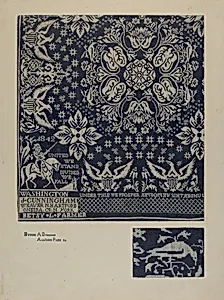
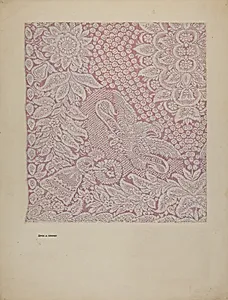
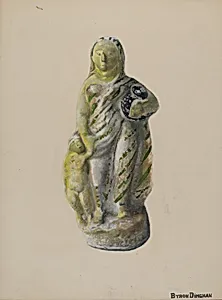
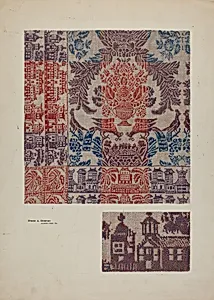
Dingman's artistic style was characterized by precise, vividly colored watercolors, gouache, graphite, and pen-and-ink drawings that captured the intricate details of vernacular American design. Working in the tradition of the Index of American Design, he focused on domestic artifacts reflecting regional folk traditions, such as handwoven textiles, quilts, and ceramics. His technique emphasized texture, pattern, and functionality, rendering objects with a documentary fidelity that highlighted their cultural value without romanticization. This approach aligned with the project's mission to catalog and celebrate pre-industrial American craftsmanship amid the Great Depression.
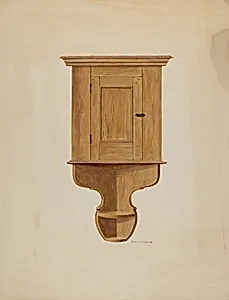
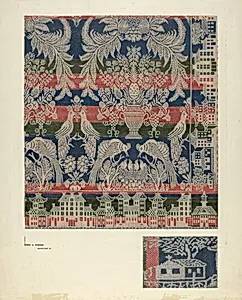
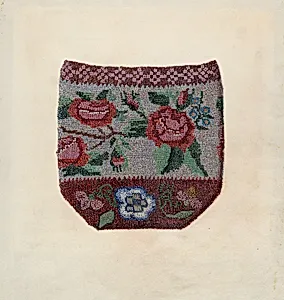
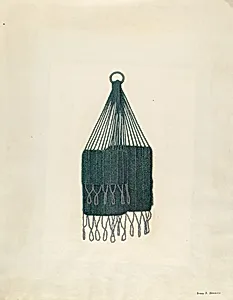
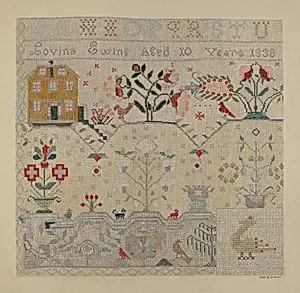
Among his major works are *Corner Cupboard* (c. 1941), a detailed depiction of Pennsylvania German furniture; *Quilt* (c. 1941) and *Coverlet* (c. 1941), showcasing patchwork and woven patterns; *Vase* (c. 1938) and *Plate* (c. 1938), illustrating slipware pottery; and *Sampler* (c. 1938), a needlework homage. The National Gallery of Art holds all 16 of his known contributions to the Index, including beaded bags and salt dips, underscoring their archival importance.
Dingman's legacy endures through these renderings, which educated generations on America's diverse design heritage and influenced mid-20th-century interest in folk art revival. By transforming utilitarian objects into celebrated art, he bridged craft and fine art, ensuring that humble quilts and crocks found a place in the canon of American visual culture.