Ctrl K
1789–1850
**Charles Joseph Hullmandel** (15 June 1789 – 15 November 1850) was a pioneering British lithographer, printer, and artist who played a central role in establishing and advancing lithography in Britain during the first half of the nineteenth century. Born in Queen Street, Mayfair, London, to a German-speaking musician and composer father, Nicolas-Joseph Hüllmandel, and a French noble mother, Camille-Aurore du Cazan, he grew up in a culturally rich household shaped by his parents’ continental European roots. As a young man, Hullmandel trained as an artist and spent several years living and working across Europe, where he developed his skills in drawing and printmaking.
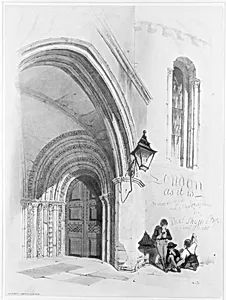
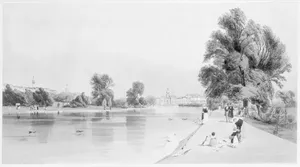
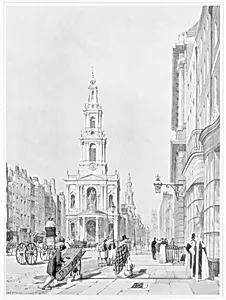
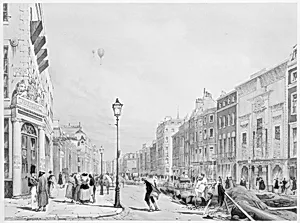
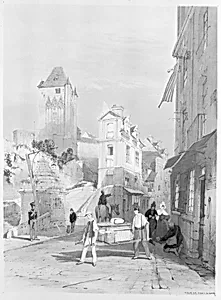
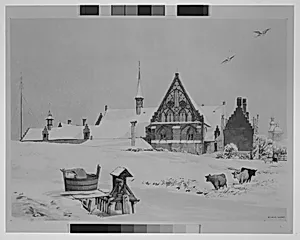
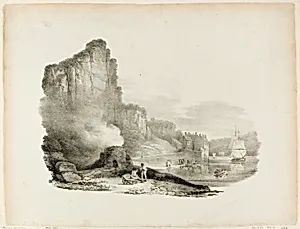
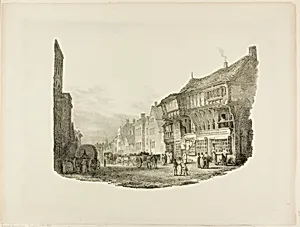
His introduction to lithography came during a visit to Munich, where he met Alois Senefelder, the inventor of the process. This encounter profoundly influenced his career. Upon returning to London, Hullmandel established the city’s first dedicated lithographic printing press around 1819 on Great Marlborough Street. He quickly became one of Britain’s foremost practitioners, publishing his own instructional works, including a translation of *Manual of Lithography* (1820) and his influential *The Art of Drawing on Stone* (1824). Hullmandel experimented extensively with chemistry—consulting Michael Faraday—to refine techniques for tonal effects and error correction. He developed the lithotint process, which allowed for subtle gradations and wash-like effects that closely mimicked Romantic landscape paintings.
Hullmandel’s studio produced thousands of prints, collaborating with leading artists such as James Duffield Harding, Samuel Prout, and William Westall on projects like *Britannia delineata* (1822–23). His early publication *Twenty-Four Views of Italy* (1818) showcased his own drawings, while later works included the first British color lithographs in George Alexander Hoskins’s *Travels in Ethiopia* (1835). In 1843 he formed a partnership with Joseph Fowell Walton, operating as Hullmandel & Walton. He lived with his sister Adelaide and her partner, the artist Valentine Bartholomew, until his death from a stroke. Hullmandel was buried in Highgate Cemetery.
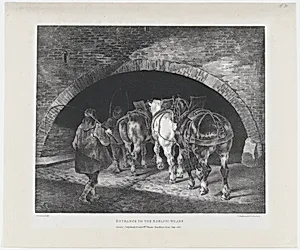
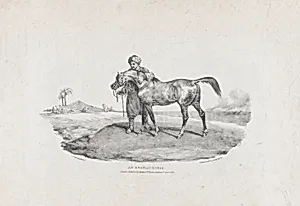
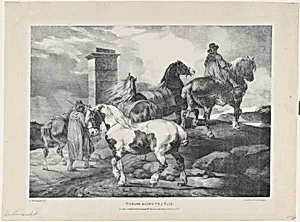
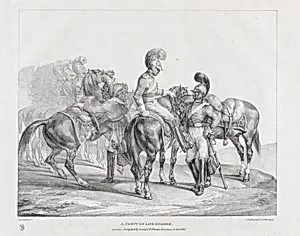
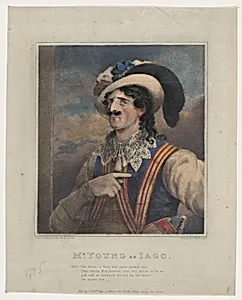
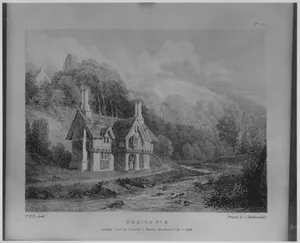
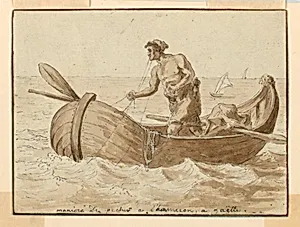
His innovations dramatically reduced the cost of reproducing artwork compared to traditional copperplate engraving, making high-quality prints widely accessible and fueling the explosion of illustrated publications in the Victorian era. Today, his name appears on countless lithographs, and his technical contributions remain foundational to the history of printmaking. With twenty-two works represented in the museum’s collection, Hullmandel’s legacy endures as a bridge between fine art and reproducible media.
![The Coal Waggon [sic.]](https://images.artheonmuseum.org/met/dp/thumb/the-coal-waggon-sic-358007.webp)