Ctrl K

1776–1837
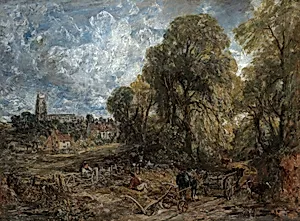
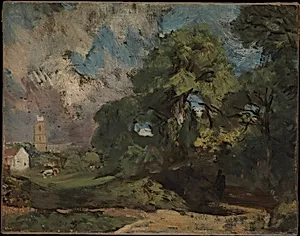
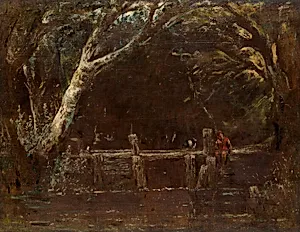
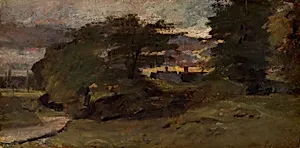
John Constable (1776-1837) was an English landscape painter whose naturalistic depictions of the Suffolk countryside revolutionized landscape painting and established him, alongside J.M.W. Turner, as one of England's greatest artists. His work pioneered the direct observation of nature that would later influence the French Barbizon school and, ultimately, Impressionism. Born in East Bergholt, Suffolk, to a prosperous corn merchant family, Constable was expected to join the family business operating mills at Flatford and Dedham. However, his passion for art prevailed, and in 1799 he entered the Royal Academy Schools in London. The landscapes of his childhood—the Stour Valley and its mills, locks, and agricultural workers—would become his lifelong subject, earning the region the designation 'Constable country.' Constable rejected the idealized, classical landscapes fashionable in his time, declaring himself a 'natural painter' devoted to truthful representation. His scientific attention to atmospheric effects, particularly clouds and changing weather, combined with what he called 'feeling'—an emotional intensity rooted in deep attachment to his native landscape. His technique was revolutionary: broken color applied with visible brushwork, white highlights flicking across surfaces to capture light on water, and oil sketches painted directly from nature. When 'The Hay Wain' (1821) was exhibited in Paris in 1824, it electrified French artists including Eugène Delacroix, who documented Constable's 'broken color and flickering light' in his journals. Despite recognition in France, Constable struggled for acceptance in England, only achieving full Royal Academy membership at age 52, months after his beloved wife Maria's death. His late works grew darker and more dramatic, incorporating symbolic elements like rainbows as signs of hope. Today his oil sketches are particularly admired for their freedom and spontaneity, anticipating Impressionism by decades.
Constable entered the Royal Academy Schools in 1799 after persuading his father to allow him to pursue art rather than join the family milling business.
He studied life drawing at the Academy while developing his distinctive approach to landscape, beginning to exhibit there in 1802 with 'Dedham Vale.'
During these years, he copied Old Masters, particularly Claude Lorrain, while insisting on direct observation of his native Suffolk scenery.
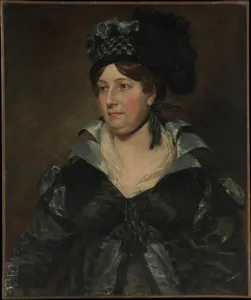
Financial struggles led him to supplement his income with portrait commissions, though landscape remained his true passion—'my mistress,' as he called it.
Constable's marriage to Maria Bicknell in 1816, after a seven-year engagement opposed by her family, coincided with his artistic maturity.
He began creating large-scale canvases he called 'six-footers,' ambitious landscapes depicting the Stour Valley with unprecedented detail and emotional intensity.
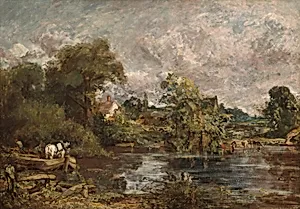
'The White Horse' (1819) brought his first significant success, leading to his election as Associate of the Royal Academy.
'The Hay Wain' (1821) achieved international recognition when exhibited in Paris in 1824, winning a gold medal and profoundly influencing French artists including Delacroix.
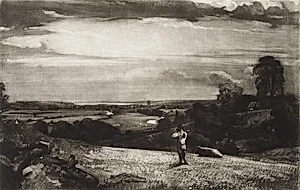
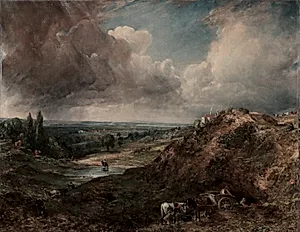
During summers in Hampstead, he created over 100 oil sketches of clouds and atmospheric effects, combining scientific observation with artistic expression.
Maria's death from tuberculosis in November 1828, leaving Constable with seven children, marked a turning point. His later works became darker and more dramatically expressive.
He was finally elected to full Royal Academy membership in February 1829, at age 52—a recognition he felt came too late to share with Maria.
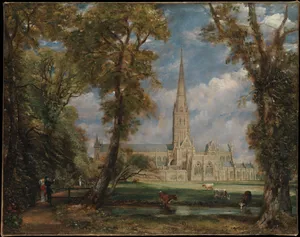
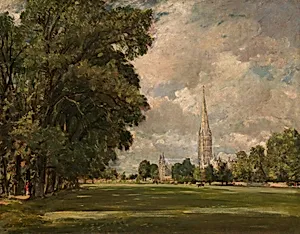
'Salisbury Cathedral from the Meadows' (1831), his final six-footer, features a rainbow symbolizing hope despite its stormy atmosphere—a meteorological impossibility that reveals his increasingly symbolic approach.
His public lectures on landscape painting at the Royal Institution (1833, 1836) articulated his artistic philosophy, championing direct observation while acknowledging the role of emotion and memory.
He died in his Bloomsbury studio in March 1837 and was buried beside Maria at Hampstead Parish Church.