Ctrl K
1829–1963
Elkington & Co. was the Birmingham firm that transformed the production of decorative metalwork by commercializing electroplating — a process that made silver-quality objects accessible to a vastly wider public. The company was established by George Richards Elkington (1801–1865) and his cousin Henry Elkington during the 1830s, initially trading as G. R. Elkington & Co. A crucial turning point came in 1840, when the firm acquired the rights to a silver electroplating process developed by John Wright, a Birmingham surgeon who had discovered the valuable properties of potassium cyanide solutions for depositing silver onto base metals. The Elkingtons patented Wright's process as British Patent 8447, securing control over what would become one of the century's most commercially significant manufacturing innovations.
In 1841, the firm opened an electroplating works on Newhall Street in Birmingham's Jewellery Quarter, and the following year Josiah Mason, a pen manufacturer, joined as a partner, briefly making the business Elkington, Mason & Co. The partnership with Mason ended in 1861, and the firm operated as Elkington & Co. from that point until 1963. By the mid-1860s the company employed nearly a thousand workers, and by 1880 it had expanded to the Newhall Street site alongside six additional factories, firmly establishing itself as the world's leading silver and electroplate manufacturer.
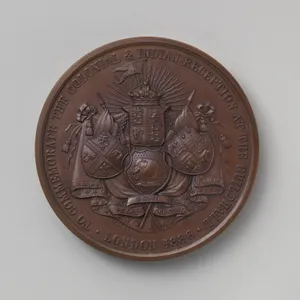
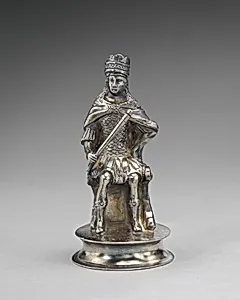
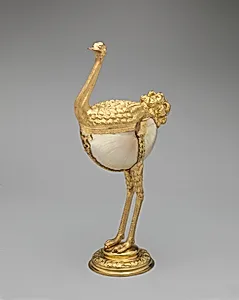
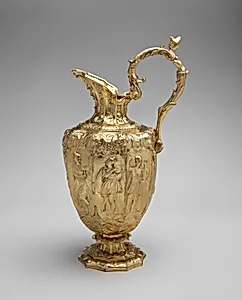
Beyond sheer scale, Elkington & Co. distinguished itself through artistic ambition. The firm was among the earliest British manufacturers to produce silver in the Japonaiserie style that swept the decorative arts world in the 1870s and 1880s. Frederick Elkington commissioned designs from Christopher Dresser, one of the most advanced industrial designers of the Victorian era, whose work for the firm produced strikingly geometric and functional forms that anticipated twentieth-century modernism. Elkington's products appeared in the great international exhibitions of the Victorian period and were collected by major institutions and private patrons across Europe and North America.
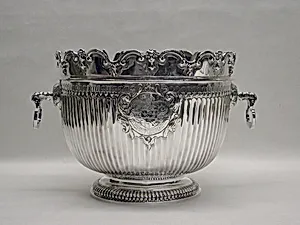
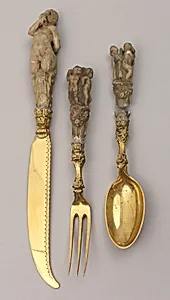
The company's legacy is inseparable from the democratization of decorative silver during the nineteenth century. By lowering the cost of silver-surfaced tableware, Elkington & Co. brought what had once been exclusively aristocratic luxury goods into middle-class homes worldwide. The firm was acquired by British Silverware Ltd. in 1963, but Elkington-marked pieces remain highly sought after by collectors, and examples of their work are held in the collections of leading museums internationally.