Ctrl K
1824–1898
Eugène Louis Boudin was born on July 12, 1824, in Honfleur, Normandy, the son of a harbor pilot. When his family relocated to Le Havre, his father opened a stationery and picture-framing shop, and it was there that the young Boudin first encountered working artists. Artists such as Constant Troyon and Jean-François Millet recognized his talent and urged him toward a career in art. In 1850, a municipal scholarship enabled Boudin to travel to Paris, where he studied in the studio of Eugène Isabey and spent long hours as a copyist at the Louvre.
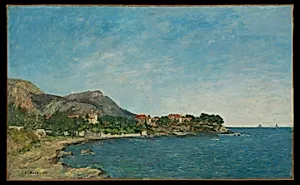
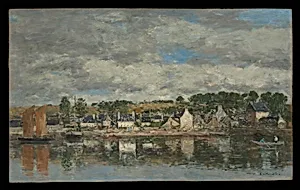
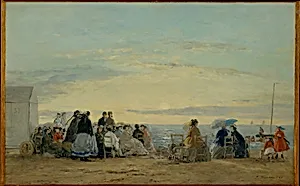
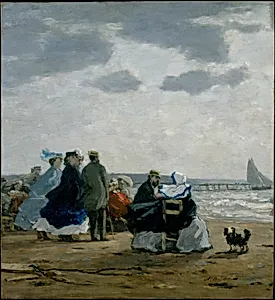
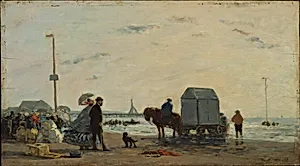
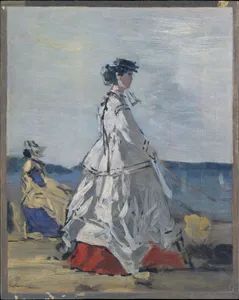
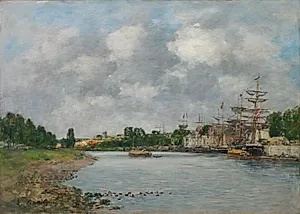
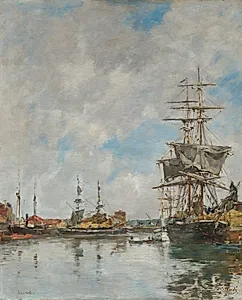
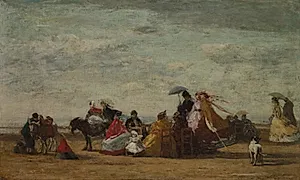
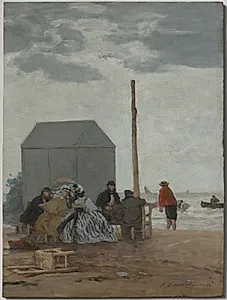
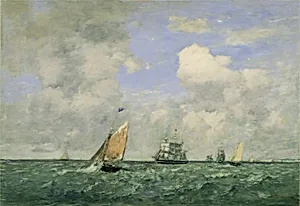
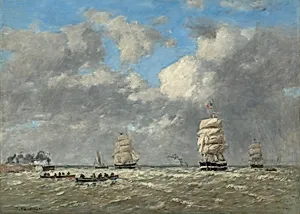
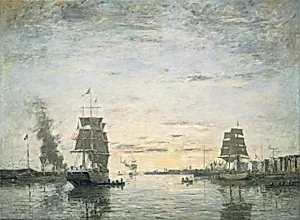
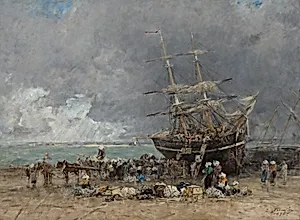
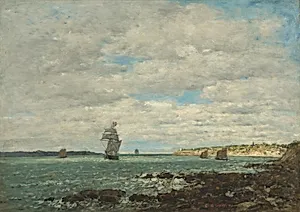
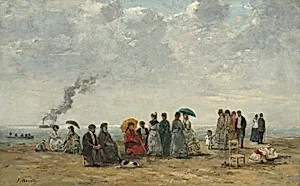
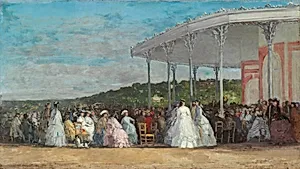
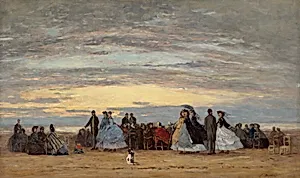
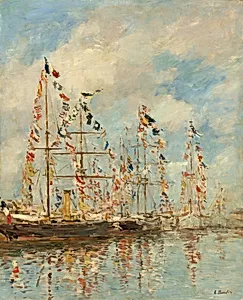
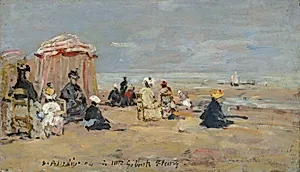
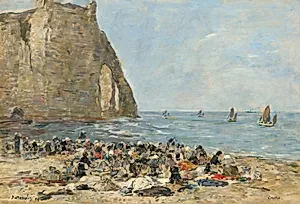
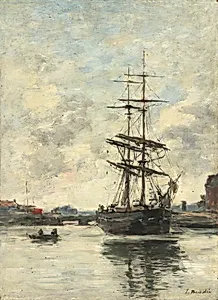
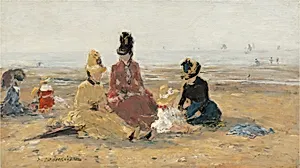
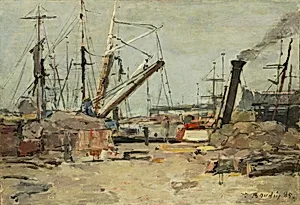
Boudin became one of the earliest and most dedicated practitioners of plein air painting, completing his canvases entirely on location. His subjects were the harbors, beaches, and wide Normandy skies he had known since childhood. Camille Corot famously called him "the king of the skies," recognizing his unmatched ability to render the ever-changing drama of cloud and atmosphere. He produced more than three hundred paintings of fashionable bourgeois holidaymakers on the beaches of Trouville and Deauville.
No account of Boudin's legacy is complete without his transformative influence on Claude Monet. Around 1857–1858, Boudin befriended the sixteen-year-old Monet in Le Havre and persuaded him to take up landscape painting. Monet later wrote, "I consider Eugène Boudin to be my master... I owe everything to Boudin." Boudin participated in the landmark First Impressionist Exhibition of 1874.
Boudin earned a gold medal at the 1889 Exposition Universelle and was made a Knight of the Légion d'honneur in 1892. His place in art history is secure: as the essential bridge between the Barbizon School and the Impressionists, the painter who taught a generation to look honestly at light, sky, and sea.