Ctrl K
1469–1543
Francesco Granacci (1469–1543) was an Italian Renaissance painter active primarily in his native Florence. Born in Villamagna near Volterra, he trained in the workshop of Domenico Ghirlandaio, where he formed a lifelong friendship with Michelangelo. The two young artists also spent time in Lorenzo de’ Medici’s sculpture garden near the convent of San Marco, absorbing the ideals of classical antiquity and humanist learning that shaped Florentine art at the turn of the sixteenth century.
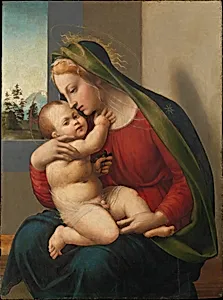
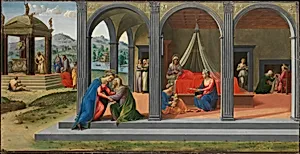
Granacci’s earliest paintings reveal the strong influence of his master Ghirlandaio as well as Filippino Lippi, who may have been his first teacher. Works such as the *Madonna and Child with Saints Michael and John the Baptist* (Staatliche Museen, Berlin), the *Adoration of the Child* (Honolulu Museum of Art), and panels from a series on the life of Saint John the Baptist (Metropolitan Museum of Art, New York) display the clear, narrative style and rich detail characteristic of late-fifteenth-century Florentine workshops. According to Giorgio Vasari, Granacci even posed as a model for one of Lippi’s figures in the Brancacci Chapel.
In 1508 Granacci traveled to Rome to assist Michelangelo on the Sistine Chapel ceiling. After returning to Florence he received important commissions for altarpieces, including the *Madonna and Child with Saints Francis and Jerome* and the *Assumption of the Virgin* (both now in the Galleria dell’Accademia). Later works, such as the *Madonna and Child with Saints Sebastian and Francis* (Museo di Santa Verdiana, Castelfiorentino) and the high altarpiece for Sant’Apollonia (panels now divided between Munich, Corsham Court, and Florence), show a more dynamic and dramatic manner influenced by Fra Bartolomeo and, according to Vasari, designs supplied by Michelangelo himself.
Granacci’s career bridged the High Renaissance and the emerging Mannerist tendencies of the 1520s and 1530s. Though he remains less celebrated than his famous contemporaries, his paintings are preserved in major collections worldwide, and his close association with Michelangelo and participation in the great decorative projects of his day secure his place in the history of Florentine art.