Ctrl K
1822–1898
Francis Frith (1822–1898) was born on 7 October 1822 in Chesterfield, Derbyshire, into a prosperous Quaker merchant family as the second child and only son of Francis Frith Sr. and Alice Walker. Educated at Quaker schools including Ackworth and Camp Hill in Birmingham from around 1828 to 1838, he apprenticed in the cutlery trade before establishing himself as a wholesale grocer in Liverpool, supplying ships. A nervous breakdown in 1843 prompted a period of recuperation, after which he entered photography around 1850 by opening the studio Frith & Hayward. A founding member of the Liverpool Photographic Society in 1853, Frith was largely self-taught, mastering the challenging wet collodion process that enabled crisp, detailed topographical views.
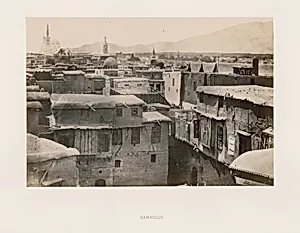
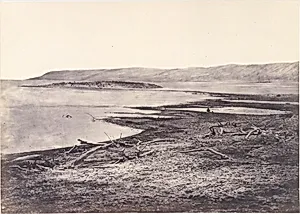
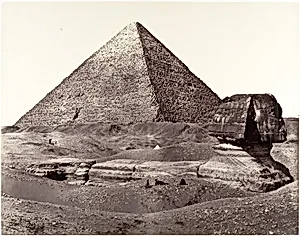
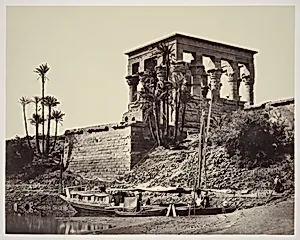
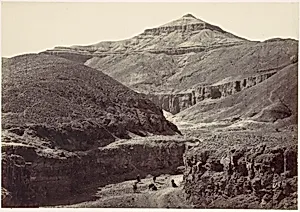
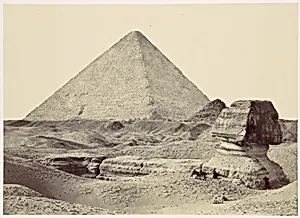
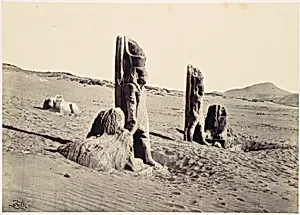
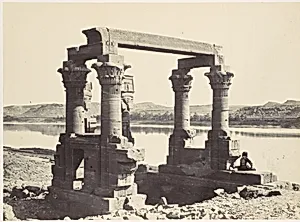
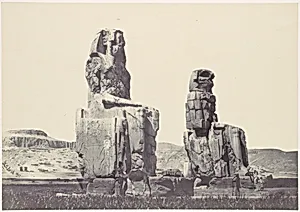
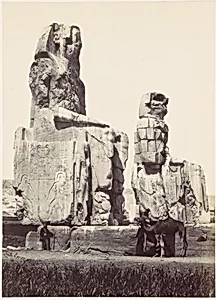
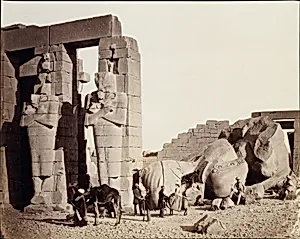
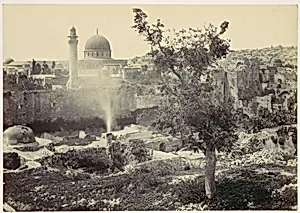
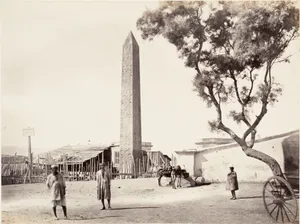
Frith's breakthrough came with three arduous expeditions to the Middle East between 1856 and 1860, where he hauled massive glass-plate cameras—up to 16 x 20 inches—through scorching deserts and bandit-prone regions, often processing plates on-site in a wicker darkroom. His pioneering images, such as *Approach to Philae* (1857), *The Great Pyramid and the Sphinx* (1858), and *The Pyramids of El-Geezeh from the South West* (1858), captured ancient monuments like Karnak, Luxor, and the Sphinx with unprecedented clarity, aligning with the Orientalist fascination for biblical lands while emphasizing documentary accuracy over artistic embellishment. These works, published in lavish albums like *Egypt, Sinai, and Palestine* (1856–1859) and *Egypt and Palestine Photographed and Described* (1858–1859), fueled Victorian tourism and established him as Europe's most prolific photographer of the region.
In 1860, having sold his grocery business, Frith founded Francis Frith & Co. in Reigate, Surrey—the world's first specialist photographic publisher—with the ambitious aim of documenting every town and village in Britain. Employing a team of photographers, the firm amassed over 330,000 negatives of more than 7,000 locations, producing stereographs, postcards, and books that democratized visual records of industrializing Britain. Married that year to Mary Ann Rosling, sister of Photographic Society treasurer Alfred Rosling, he raised five children—Mary Alice, Eustace, Francis Edgar, Mabel, and Cyril—who later managed the company until its closure in 1971. Frith's later years embraced Quaker ministry, pacifism, and writings like *A Reasonable Faith* (1884). He died on 25 February 1898 in Cannes, France, leaving a legacy as a commercial innovator whose vast archive, now digitized as The Francis Frith Collection, preserves a panoramic snapshot of 19th-century life.
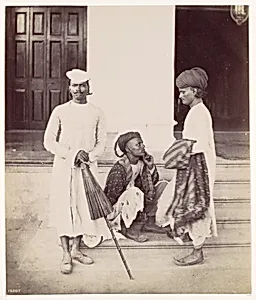
![[Six East Indian Men]](https://images.artheonmuseum.org/met/ph/thumb/six-east-indian-men-260348.webp)
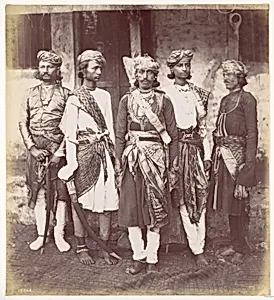
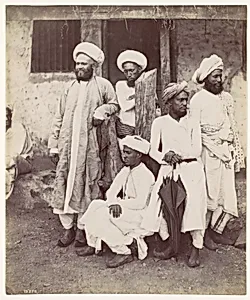
![[Four East Indian Men]](https://images.artheonmuseum.org/met/ph/thumb/four-east-indian-men-260351.webp)
![[Three East Indian Women]](https://images.artheonmuseum.org/met/ph/thumb/three-east-indian-women-260350.webp)