Ctrl K

1807–1878
**Friedrich von Nerly** (originally Christian Friedrich Nehrlich, 1807–1878) was a German Romantic painter best known for his luminous vedute of Venice, where he spent most of his adult life. Born in Erfurt to a postal official who died young, he moved at age eight to Hamburg to live with relatives. There he received early drawing instruction from his aunt and later from his uncle, the lithographer Heinrich Joachim Herterich, in whose workshop he worked.
In 1823 he became a student of the influential painter, art historian, and patron Carl Friedrich von Rumohr, who recognized his talent and supported his development. Nerly accompanied Rumohr on an extended journey that brought them to Rome by the end of 1828; he remained in Italy, adopted the Italianate surname Nerly, and briefly managed the “Cervaro” artists’ residence for the Deutscher Künstlerverein before settling permanently in Venice around 1835.
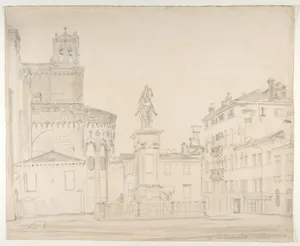
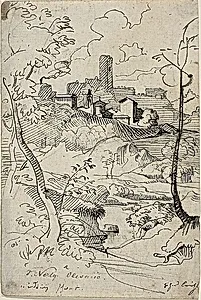
Working in the Romantic tradition, Nerly specialized in atmospheric landscapes and detailed city views, often painted en plein air. His Venetian scenes—canals, piazzas, and lagoon vistas—earned him a European reputation; notable examples include *Piazzetta in Venice by Moonlight* (1842) and winter views of the Grand Canal. In 1840 he married Agathe Alginovich; their son, Friedrich Paul Nerly, also became a painter.
In 1852 King William I of Württemberg awarded him the Knight’s Cross of the Order of the Crown, entitling him to the prefix “von.” After his death in Venice in 1878, his son donated the family’s extensive art collection to Erfurt, helping establish the Angermuseum (opened 1886). A street in his birthplace bears his name, and recent exhibitions and catalogs continue to highlight his role as one of the leading German plein-air painters of the nineteenth century.