
Ctrl K
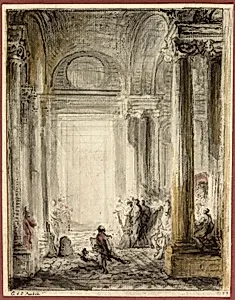
1724–1780
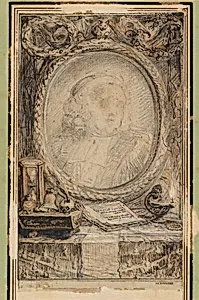
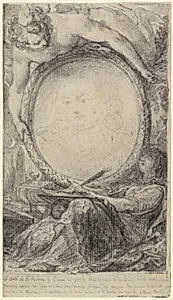
Gabriel Jacques de Saint-Aubin (14 April 1724 – 14 February 1780) was born in Paris into an artistic family — one of fourteen children of the court embroiderer and engraver G.-G. de Saint-Aubin. Art ran deep in the family: his brothers Charles Germain and Augustin de Saint-Aubin were also accomplished artists. Gabriel received his earliest training at home before entering the studios of Étienne Jeaurat and Hyacinthe Collin de Vermont. He also studied under François Boucher, the preeminent decorator of the Rococo age. Despite this rigorous preparation, Saint-Aubin's academic ambitions met repeated frustration — he failed three times to win the prestigious Prix de Rome between 1752 and 1754. Shut out of the Académie Royale, he joined the more open Guild of Saint Luke and charted his own independent course.
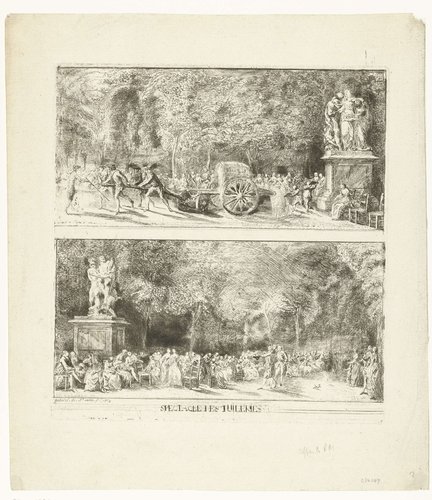
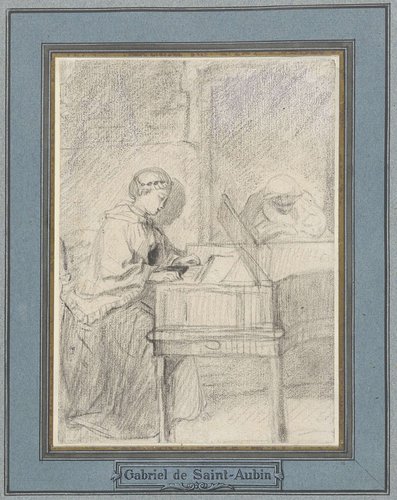
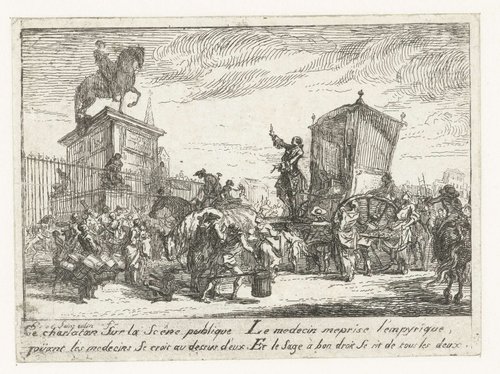
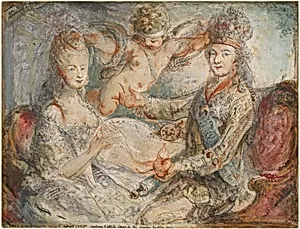
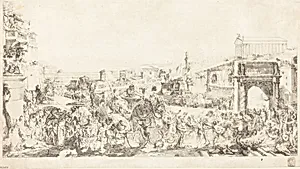
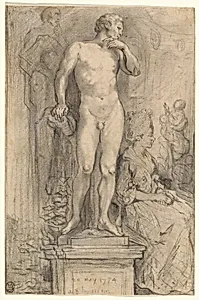
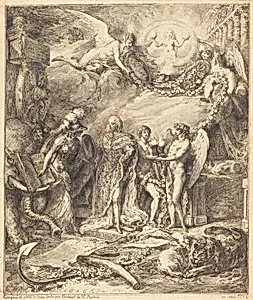
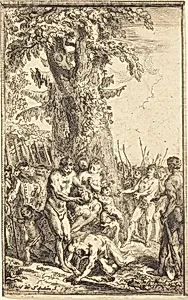
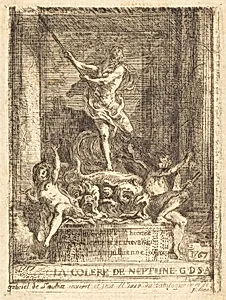
Freed from academic constraints, Saint-Aubin turned to the teeming streets of Paris for his subject matter, producing an enormous body of drawings, etchings, and watercolors that captured the city's daily rhythms with restless energy and wit. Working on a characteristically small and intimate scale, he filled sketchbooks with theatrical performances, public promenades, auction houses, and street scenes. His line was rapid yet precise, animated by a journalist's instinct for the telling detail.
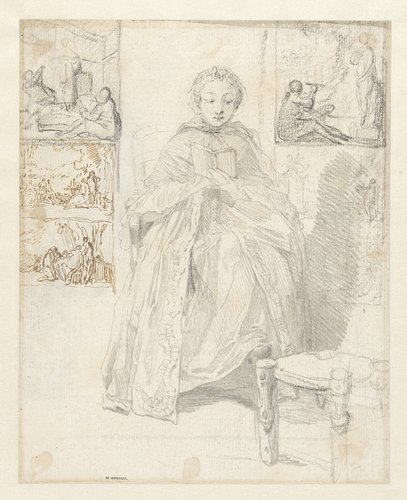
Among his most celebrated achievements are his documentary views of the Paris Salons held in the Louvre's Salon Carré. His etching Vue du Salon du Louvre en l'année 1753 captures the soaring, densely hung walls and the anticipatory energy of the crowds. Beyond full compositions, Saint-Aubin filled the margins of Salon livrets and auction catalogues with miniature sketches of works on display — it is largely through his obsessive marginal annotations that scholars today know what those landmark exhibitions looked like.
Saint-Aubin died in Paris on 14 February 1780. His drawings and prints are held by major institutions including the Metropolitan Museum of Art, the J. Paul Getty Museum, the National Gallery of Art, and the Bibliothèque nationale de France. He stands today as one of the sharpest and most affectionate witnesses to the pleasures and passions of Enlightenment Paris.
![Flight of M. de Belle-Isle, Prisoner with theAttakapas [right]](https://images.artheonmuseum.org/nga/thumb/flight-of-m-de-belle-isle-prisoner-with-nga-45658.webp)