Ctrl K
1882–1963
Georges Braque (1882–1963) was a French painter, collagist, and sculptor who, together with Pablo Picasso, invented Cubism — one of the most revolutionary developments in the history of Western art. Born in Argenteuil and raised in Le Havre, he initially trained as a house painter and decorator before studying fine art at the Académie Humbert and the École des Beaux-Arts in Paris.
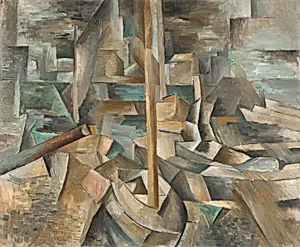
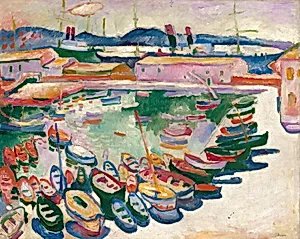
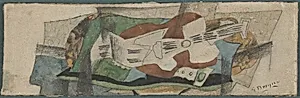
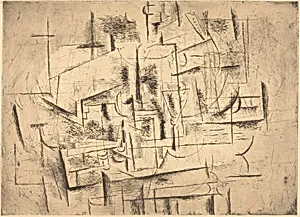
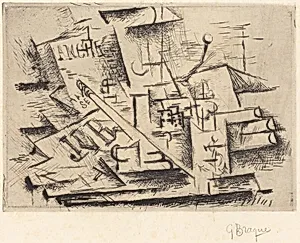
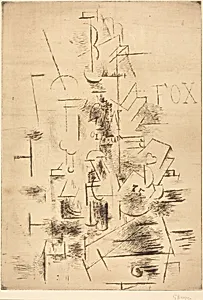
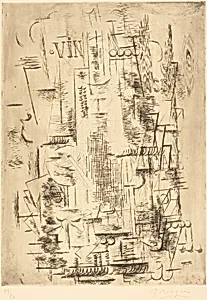
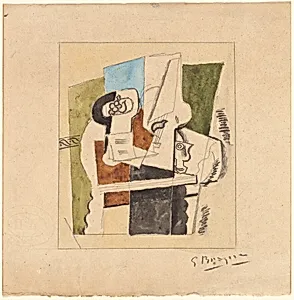
Braque's early work was influenced by Impressionism and then Fauvism, but his encounter with Cézanne's retrospective exhibition in 1907 proved transformative. His subsequent landscapes painted at L'Estaque (1908) — with their fragmented geometric forms — were described by critic Louis Vauxcelles as composed of "cubes," inadvertently naming the movement. From 1908 to 1914, Braque and Picasso worked in such close collaboration that their paintings were sometimes indistinguishable, developing Analytic Cubism's faceted forms and then Synthetic Cubism's collaged surfaces.
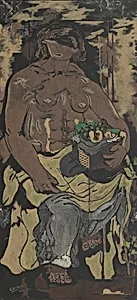
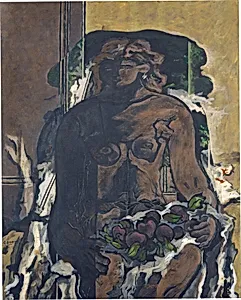
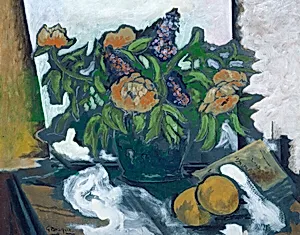
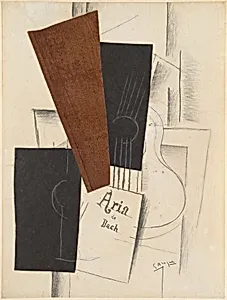
Braque introduced several innovations that became central to modern art: papier collé (pasted paper, 1912), the incorporation of sand and sawdust into paint, stenciled lettering, and trompe-l'oeil woodgrain effects. After World War I, during which he was seriously wounded, Braque developed a more personal, lyrical form of Cubism, producing richly colored still lifes, studio interiors, and his celebrated series of bird paintings that dominated his later career.
Braque received the Grand Prix at the 1948 Venice Biennale and was given a state funeral by the French Republic — the first artist so honored. His work is held by the Centre Pompidou, the Museum of Modern Art, the National Gallery of Art, the Tate, and virtually every major museum of modern art worldwide.