Ctrl K
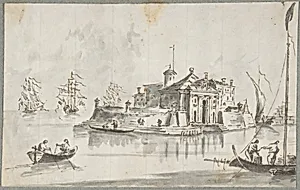
1764–1835
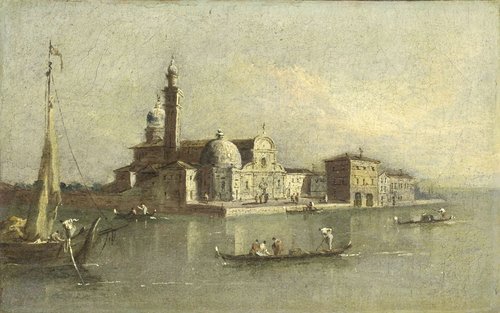
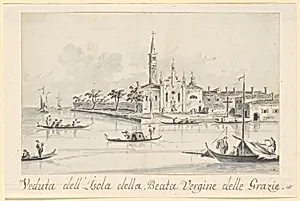
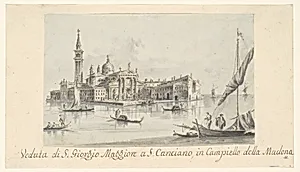
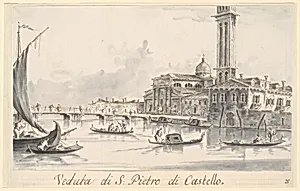
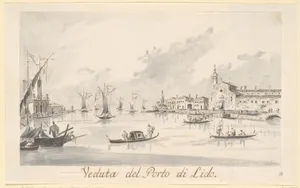
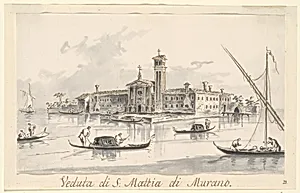
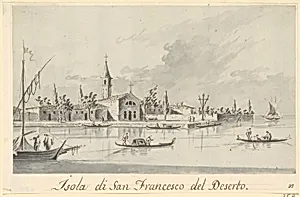
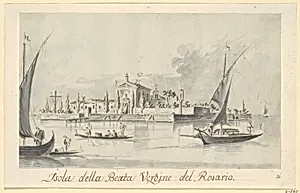
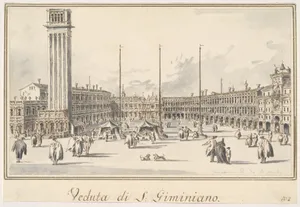
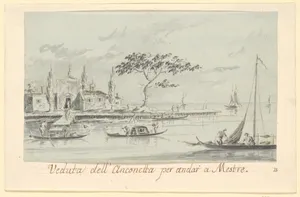
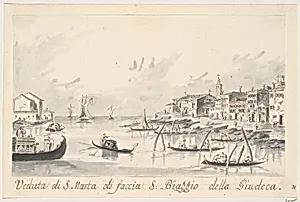
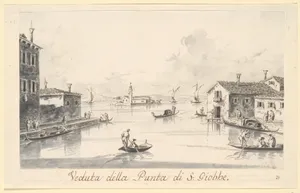
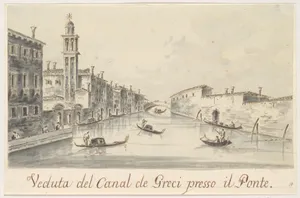
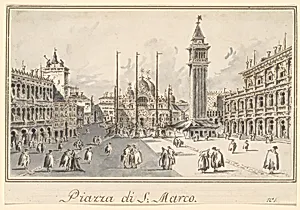
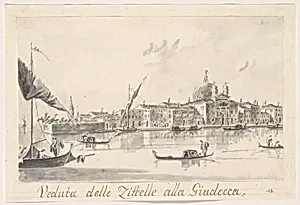
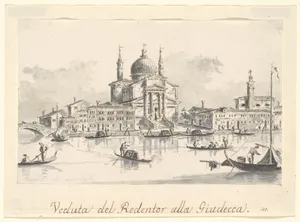
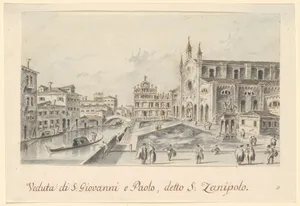
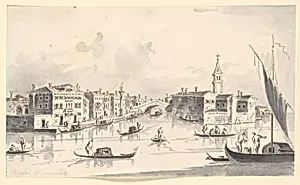
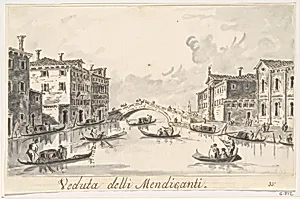
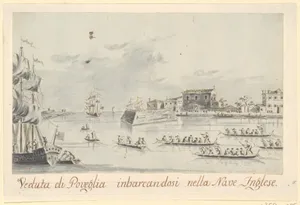
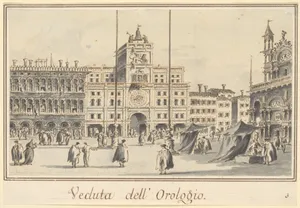
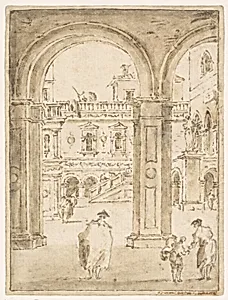
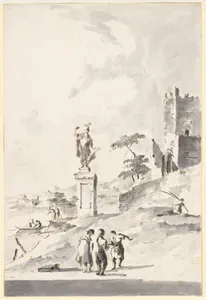
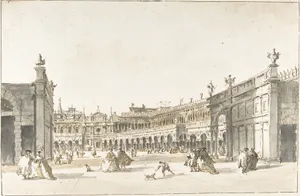
Giacomo Guardi (1764–1835) was a Venetian painter who worked in the long shadow of his celebrated father, Francesco Guardi, one of the greatest vedutisti — view painters — of the eighteenth century. Born into one of Venice's most prominent artistic families, Giacomo received his training directly from his father, absorbing both the technical methods and the characteristic style that had made Francesco famous. He continued working in the family tradition of Venetian veduta, producing views of the city's canals, lagoons, piazzas, and ceremonies for the tourist and collector market.
Like his father before him, Giacomo specialized in the loose, atmospheric style of veduta painting associated with the Guardi family — quite different from the crisp, almost architectural precision of their great contemporary, Canaletto. Where Canaletto offered topographical clarity, the Guardis favored flickering light, broken brushwork, and a dreamy, shimmering quality that captured Venice's evanescent atmosphere rather than its exact geometry. Giacomo maintained these qualities in his own work, though connoisseurs have sometimes found his touch slightly less assured than that of his father.
Working into the early decades of the nineteenth century, Giacomo witnessed Venice's dramatic transformation from an independent republic — which fell to Napoleon in 1797 — into a provincial possession first of France, then of Austria. Despite these upheavals, the demand for picturesque views of Venice among foreign visitors and collectors remained strong, and Giacomo continued to supply that market with images of the city his family had depicted across three generations.
Attributing works between Francesco and Giacomo Guardi has long been a challenge for art historians, and a number of paintings have changed attribution over the years as scholarly understanding of both artists has deepened. Giacomo's legacy is therefore somewhat intertwined with his father's, but he stands as an important figure in his own right — a skilled continuator of one of Venice's most distinctive pictorial traditions at a moment of profound historical change.