Ctrl K
1801–1901
Henry Victor Burgy (1801–1901) was a French painter whose serene landscapes capture the luminous beauty of southern France and historic châteaux in the late nineteenth century. Little is known about his early life or formal training, as biographical details remain scarce in art historical records. Active primarily in his later decades, Burgy produced works that reflect a personal affinity for coastal vistas and architectural subjects, rendered with a delicate touch suggestive of watercolor techniques. His output, though modest, gained posthumous recognition through generous bequests to major institutions.
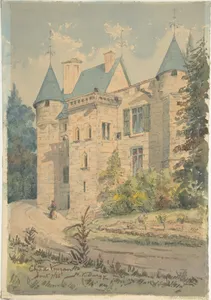
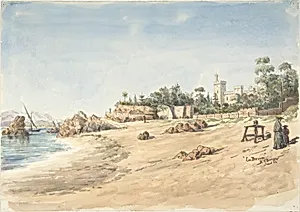
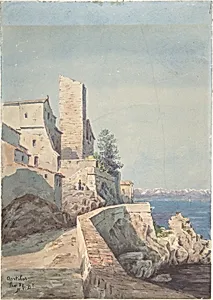
Burgy's documented oeuvre includes evocative scenes painted en plein air during his travels. In *Antibes* (1882), he depicted the fortified port town's Mediterranean shoreline under February light, signing the sheet "H.V. By." Similarly, *Château de Vouzan* (1888) portrays the Renaissance castle in Charente with meticulous attention to its towers and surrounding landscape, inscribed "Chau de Vouzan Aout 7/88" and signed "H.V. Burgy." *La Bocca*, another coastal view near Cannes, showcases his interest in the Côte d'Azur's glittering waters and promenades. These works, preserved in The Metropolitan Museum of Art's collection after his death, highlight his skill in conveying atmosphere through subtle tonal variations and precise draftsmanship.
Burgy's legacy endures through these bequests to the Met in 1901, which introduced his art to American audiences and secured its place in public collections. Though not aligned with dominant movements like Impressionism, his paintings offer intimate glimpses into nineteenth-century French provincial life, appealing to collectors of regional landscapes. Today, reproductions on platforms like Artvee and Meisterdrucke keep his visions accessible, reminding us of the quiet poetry found in overlooked corners of Europe's heritage.
All 4 artworks loaded