Ctrl K
1745–1811
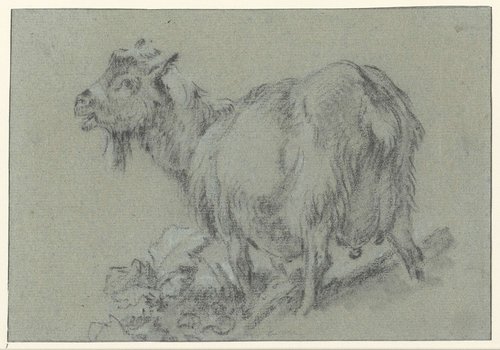
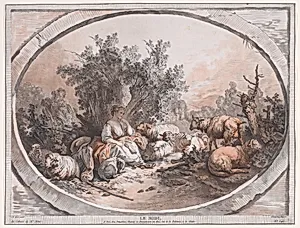
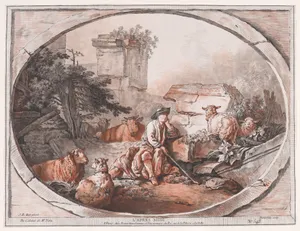
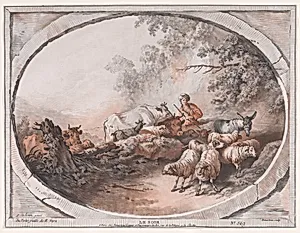
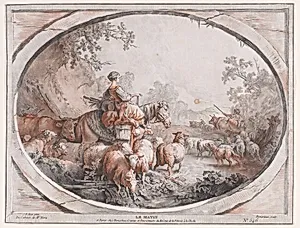
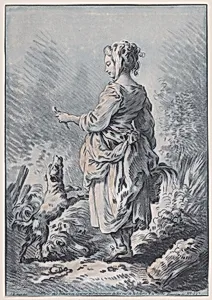
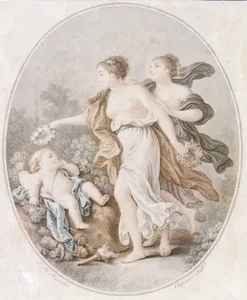
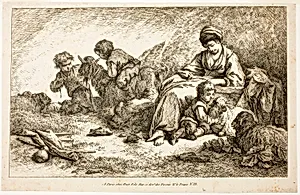
Jean-Baptiste Marie Huet (1745–1811) was born into a family of artists in Paris on October 15, 1745. The son of animal painter Nicolas Huet the Elder, with whom he first trained, Huet was also the nephew of the renowned sculptor and decorator Christophe Huet. He apprenticed under animal painter Charles Dagomer, a member of the Académie de Saint-Luc, during the 1760s, honing his skills in depicting livestock and wildlife. Around 1764, he entered the studio of Jean-Baptiste Le Prince, where he advanced in printmaking by reproducing his own paintings, and formed a key collaboration with engraver Gilles Demarteau the Elder, who reproduced many of his compositions.
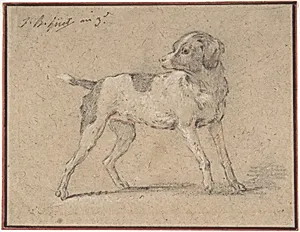
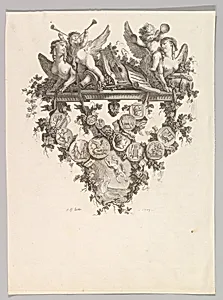
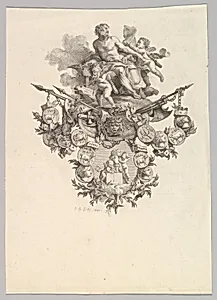
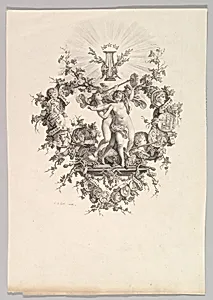
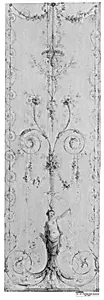
Approved by the Académie Royale in 1768 and received as a painter of animals the following year, Huet debuted at the Paris Salon in 1769 with *Dog Attacking Geese* (now in the Louvre), alongside *Fox in the Chicken-Run* (Fine Arts Museums of San Francisco) and *The Milkmaid* (Musée Cognacq-Jay)—his morceaux de réception that showcased his mastery of the Rococo petite manière. Influenced by François Boucher, Jean-Baptiste Oudry, and Dutch masters like Philips Wouwerman and Paulus Potter, Huet's style featured lively pastoral genre scenes of animals, shepherds, and rustic idylls, often set against trellised backdrops or with classical motifs. He exhibited regularly at the Salons until 1789 and again in 1800–1802, while contributing to decorative projects, including a collaborative scheme with Boucher and Jean-Honoré Fragonard for Demarteau's Paris house.
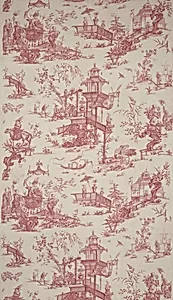
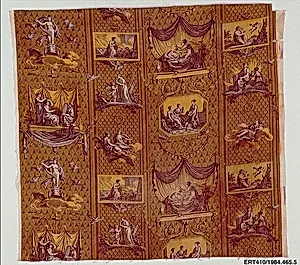
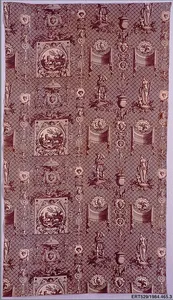
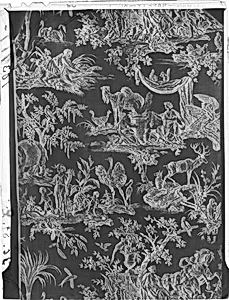
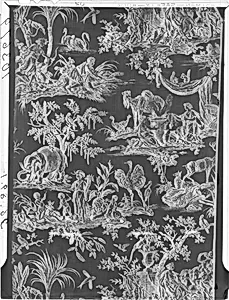
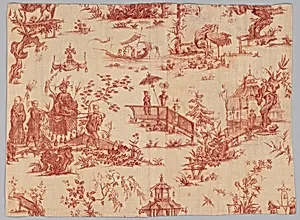
In the 1780s, Huet supplied cartoons for Beauvais tapestries and vignettes for Oberkampf's toiles de Jouy at Jouy-en-Josas, producing iconic printed cottons like pastoral scenes now in the Victoria and Albert Museum and Metropolitan Museum of Art. Appointed peintre du roi in 1794 and director of the merged Gobelins-Beauvais manufactory, he bridged Rococo elegance with Revolutionary-era practicality, even captaining the Sèvres militia. His son, Nicolas Huet the Younger, became a noted natural history illustrator under his tutelage. Huet's legacy endures in his animal studies, engravings, and textile designs, which popularized sensual, nature-inspired motifs in decorative arts across Europe, blending Enlightenment observation with galant charm.