Ctrl K
1711–1786
**Johann Martin Heinrici (1711–1786)** was a German porcelain painter, miniaturist, and engraver renowned for his exquisite decorative work on luxury objects and porcelain during the mid-eighteenth century. Born in Lindau in 1711, he became one of the leading figures in the specialized field of porcelain decoration and lacquerwork techniques adapted for European tastes.
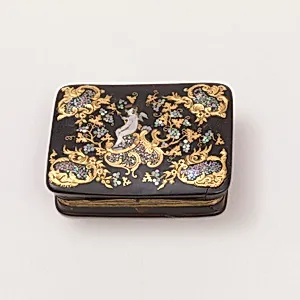
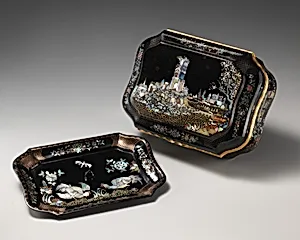
Heinrici trained and worked primarily as a porcelain painter. He was active at the prestigious Meissen porcelain manufactory from 1741 to 1756, where he contributed to high-quality pieces often featuring scenes in the manner of Watteau. He then moved to the Frankenthal porcelain factory from 1756 to 1763 before returning to Dresden. Throughout his career, he also excelled as a miniaturist and produced portraits of the ruling Saxon family. His most distinctive contribution was his mastery of the *laque burgauté* technique—originally inspired by Chinese methods—in which he inlaid mother-of-pearl, colored metals, gold, and other materials into lacquered surfaces to create delicate European landscapes and figurative scenes on small boxes and objects.
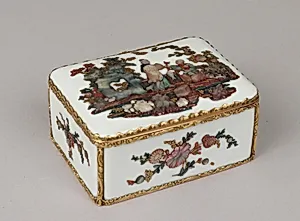
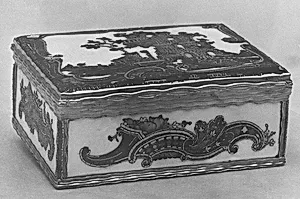
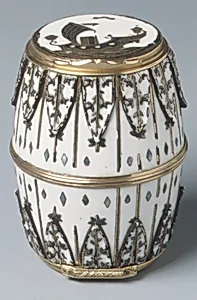
Among his notable works are finely decorated toilet boxes and snuff boxes from around 1760, such as a striking example in the Metropolitan Museum of Art featuring inlaid designs on lacquered metal. Attributions also link him to rectangular Meissen boxes painted with Watteau-style scenes. These pieces highlight his ability to blend technical precision with artistic elegance, transforming functional items into miniature works of art.
Heinrici’s legacy endures through his influence on eighteenth-century decorative arts, particularly in the porcelain and lacquer traditions of Saxony and beyond. His works are preserved in major collections, including five pieces featured in the Artheon Virtual Museum, underscoring his role in elevating the status of applied arts during the Rococo period. He died in Meissen on April 21, 1786.
All 5 artworks loaded