Ctrl K
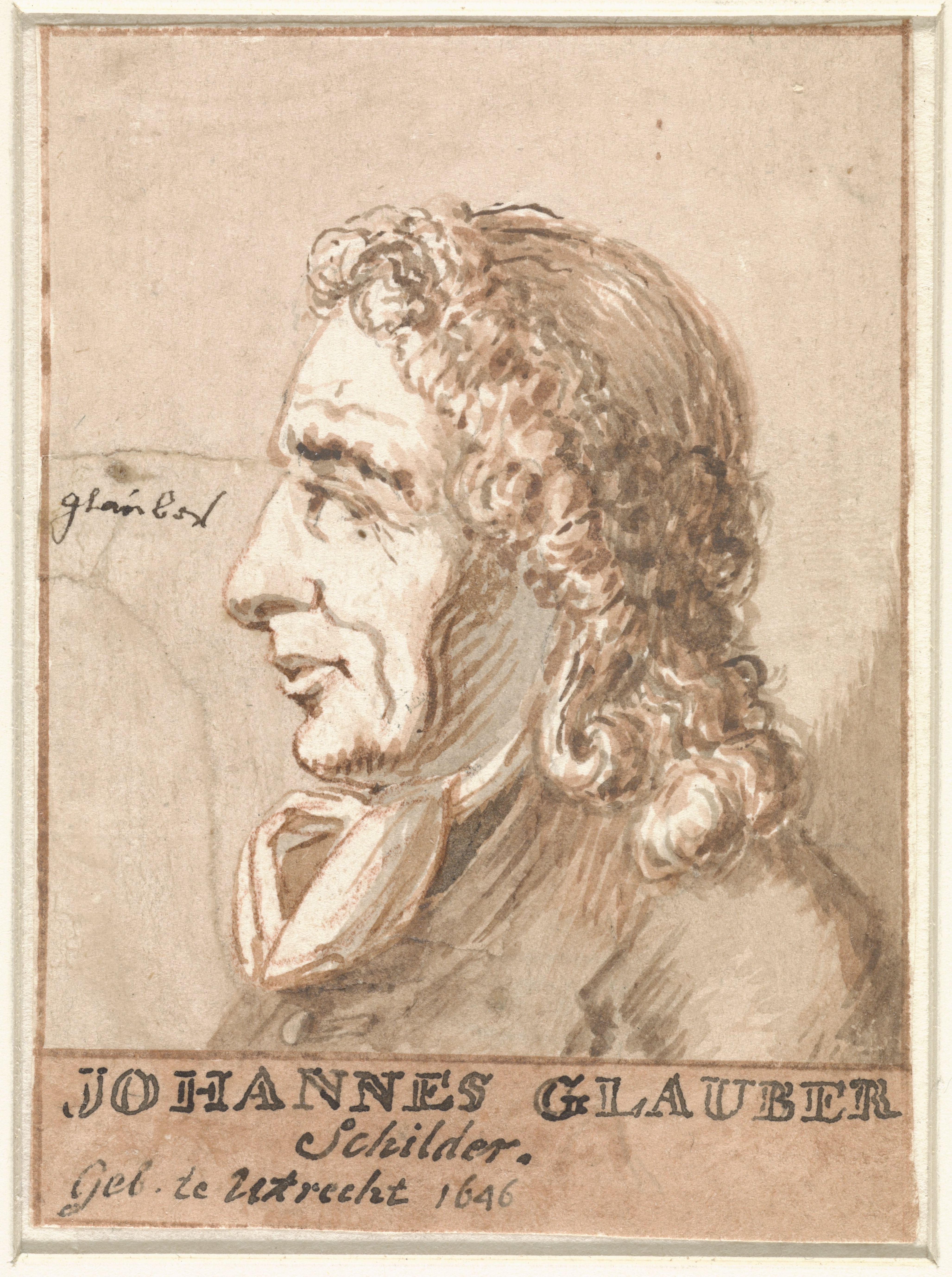
1646–1726
**Johannes Glauber (1646–c. 1726)** was a Dutch Golden Age painter renowned for his Italianate landscapes and decorative wall paintings. Born in Utrecht, he pursued art against the wishes of his father, the prominent chemist Johann Rudolph Glauber. He became a pupil of Nicolaes Berchem and lived for a time with Gerrit van Uylenburgh in Amsterdam, where he produced copies of Italianate landscapes for the city’s growing market of connoisseurs.
After his father’s death, Glauber embarked on extensive travels with his younger brother, the painter Johannes Gottlieb Glauber, and the Van Doren brothers. They journeyed to Paris, where he worked for the art dealer Picart, then to Lyon to paint for Adriaen van der Kabel. In Italy he spent time in Rome—joining the Bentvueghels under the nickname “Polidoor”—as well as Padua and Venice, before moving north to Hamburg and briefly to Copenhagen, where he contributed decorations to Charlottenborg Palace. Returning to the Netherlands, he settled in Amsterdam and collaborated closely with Gerard de Lairesse on ambitious wall decorations for grand homes and estates, including Soestdijk Palace and several Herengracht residences.
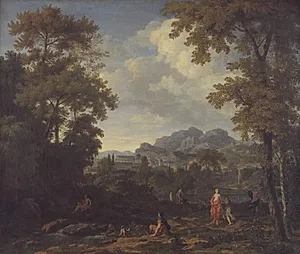
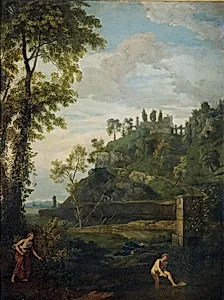
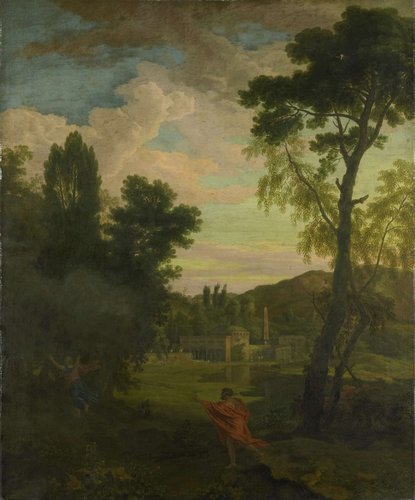
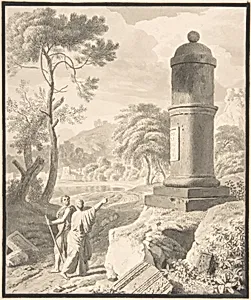
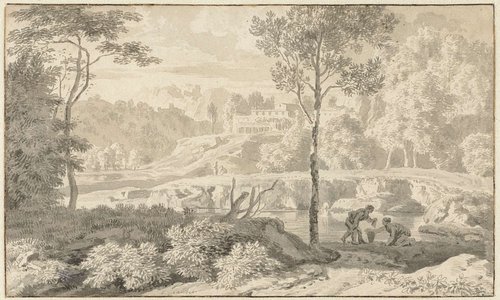
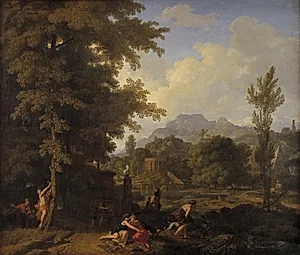
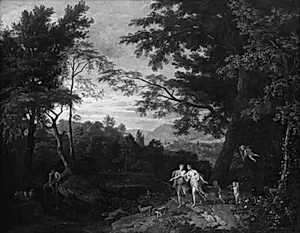
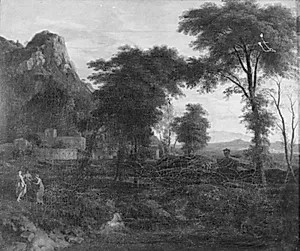
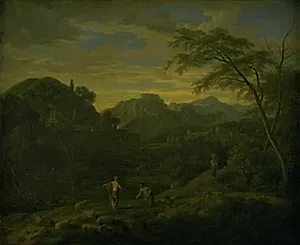
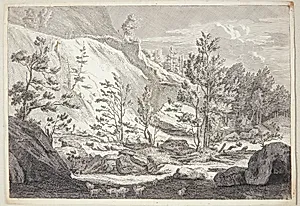
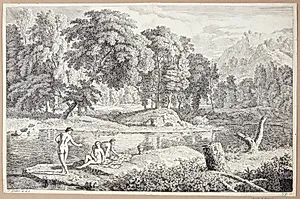
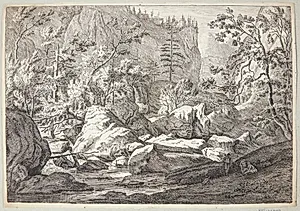
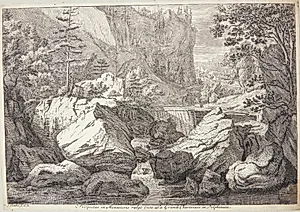
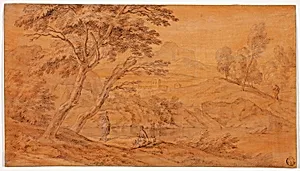
Glauber’s style blended Dutch landscape traditions with classical Italianate elements, featuring arcadian scenes, rocky vistas, and figures in pastoral or mythological settings. Notable surviving works include the *Rocky landscape with vagrants* (Wilanów Palace, Warsaw), *Pastoral landscape with figures* (Rijksmuseum), and drawings such as *Arcadian Landscape* (Metropolitan Museum of Art). He also created large-scale decorative schemes, some of which survive in institutions like the Peace Palace in The Hague.
In later years Glauber lived in Schoonhoven and became a member of the Confrerie Pictura in The Hague in 1687. He married the sister of architect Steven Vennecool and taught the painter Willem Troost. His brother Johannes Gottlieb and sister Diana were also artists, making the Glauber family a notable artistic dynasty. Though many of his decorative works have been lost or dispersed, Glauber remains appreciated for bridging landscape painting and architectural decoration in the late Dutch Golden Age.