Ctrl K
1887–1953
John Taylor Arms (1887–1953) was one of America's foremost etchers of the twentieth century, renowned for his meticulous renderings of Gothic architecture. Born in Washington, D.C., he initially pursued law at Princeton University before transferring to the Massachusetts Institute of Technology, where he earned a master's degree in architecture in 1912. He apprenticed as a draftsman and worked for prominent firms like Carrère and Hastings and Clark and Adams, eventually partnering in his own practice in 1914. Arms studied with watercolorist Ross Turner, David A. Gregg, and Felton Brown, though he was largely self-taught as a printmaker after his wife, Dorothy Noyes Arms, gifted him an etching kit in 1913.
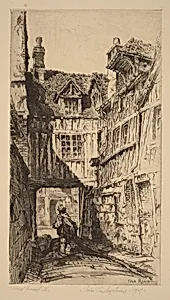
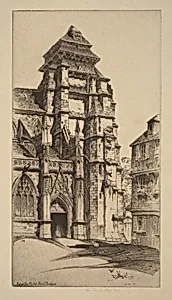
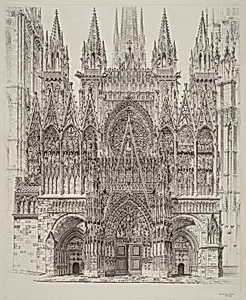
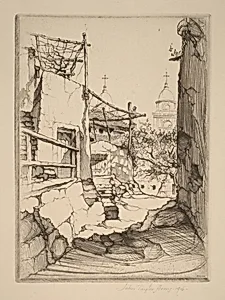
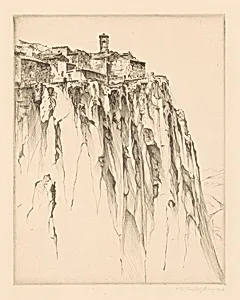
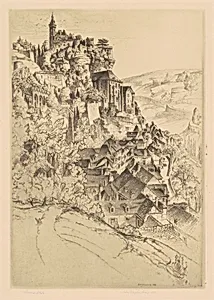
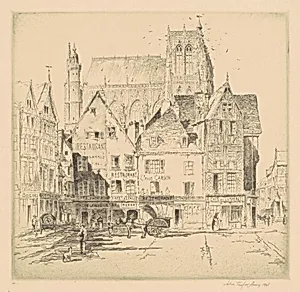
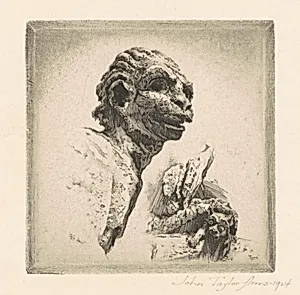
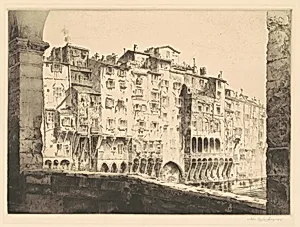
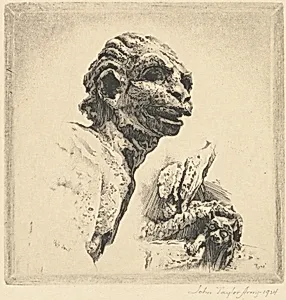
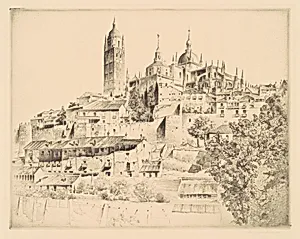
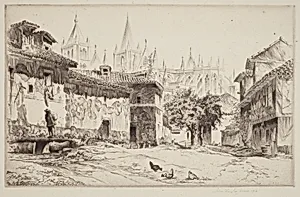
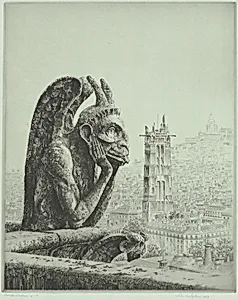
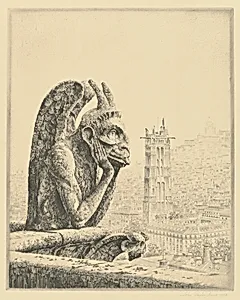
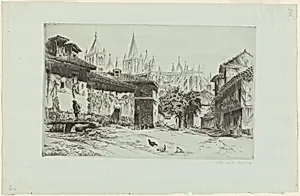
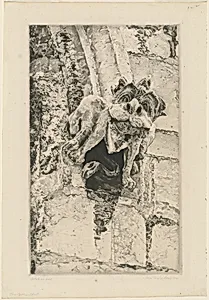
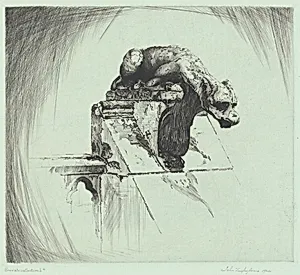
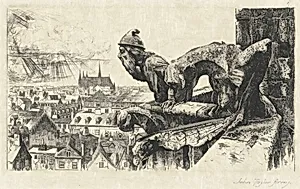
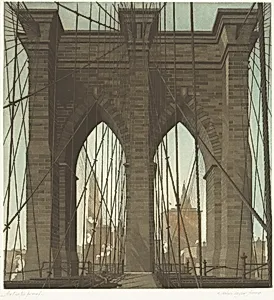
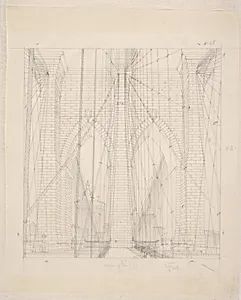
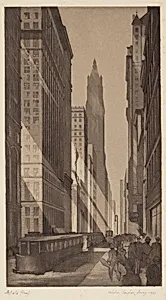
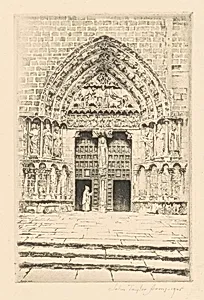
Transitioning from architecture, Arms produced his first etching, *Sunlight and Shadow*, in 1915 and served as a U.S. Navy officer during World War I. Postwar, he devoted himself fully to printmaking, creating over 440 works, primarily etchings characterized by extraordinary precision and detail achieved with sewing needles and magnifying glasses. His style celebrated the intricate stonework of medieval French and Italian cathedrals, which he viewed as humanity's greatest architectural achievement, alongside early subjects like New York's Brooklyn Bridge, ships, and urban scenes. Working in the tradition of the etching revival, Arms captured the sublime spirituality of Gothic forms through aquatint and fine lines that evoked texture and light.
Among his notable works are *On Lake Como, Number Two* (1919, color etching and aquatint) and extensive series on Gothic churches, including those documented in his illustrations for Dorothy's books *Churches of France* and *Hill Towns and Cities of Northern Italy*. He authored the influential *Handbook of Print Making and Print Makers* (1934), lectured widely, and served as president of the Society of American Graphic Artists and the Tiffany Foundation. Elected to the National Academy of Design in 1933, his prints appeared in the 1932 Olympics art competition.
Arms's legacy endures in major collections worldwide, from the Metropolitan Museum of Art and British Museum to the Smithsonian American Art Museum and Library of Congress, with retrospectives like the National Gallery of Art's 2011 "The Gothic Spirit of John Taylor Arms" affirming his mastery. His technical virtuosity and reverence for the past continue to inspire printmakers, bridging architectural precision with artistic reverence.