Ctrl K
1856–1919
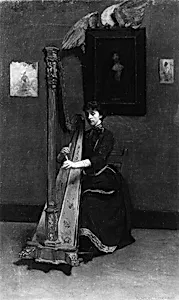
Kenyon Cox (1856–1919) was born on October 27 in Warren, Ohio, to General Jacob Dolson Cox, a prominent politician and Civil War veteran, and Helen Finney Cox. Despite fragile health, young Cox pursued art at the Art Academy of Cincinnati before advancing to the Pennsylvania Academy of the Fine Arts in Philadelphia. In 1877, he traveled to Paris, studying first under Carolus-Duran, then at the École des Beaux-Arts with Alexandre Cabanel and Jean-Léon Gérôme. Immersed in the French academic tradition, he toured Italy, absorbing Renaissance masterpieces that profoundly shaped his classical ideals.
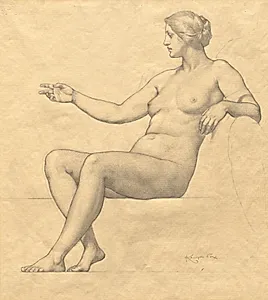
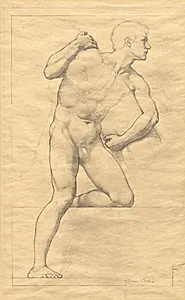
Returning to New York City in 1882, Cox worked as an illustrator and critic while becoming a foundational instructor at the Art Students League, where he designed its enduring logo bearing the motto *Nulla Dies Sine Linea* ("No Day Without a Line"). He championed a representational style rooted in careful drawing, modulated color, allegory, and symbolism—idealized nudes, portraits, and landscapes rendered with classical precision. A vocal opponent of modernism, including cubism and abstraction, Cox argued in writings like *Concerning Painting* (1917) that art must remain imitative, declaring it "highly improbable" for painting to abandon representation after millennia. Elected to the National Academy of Design in 1903, he led the National Society of Mural Painters and promoted public art's educational role.
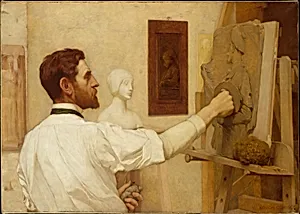
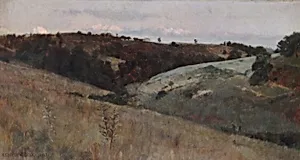
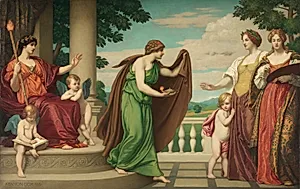
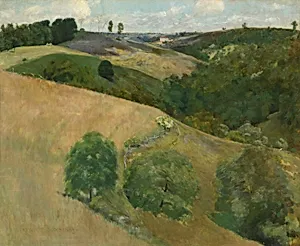
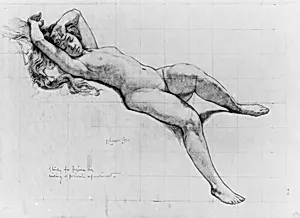
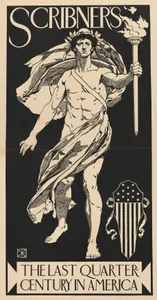
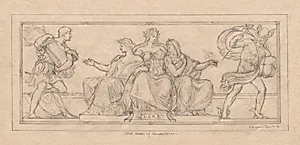
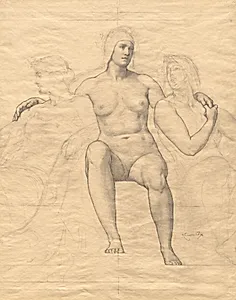
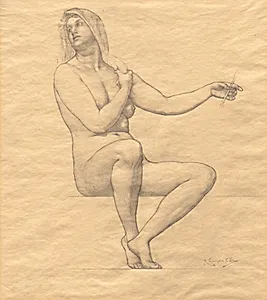
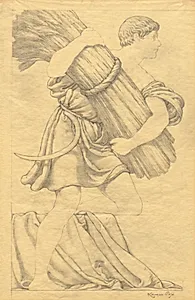
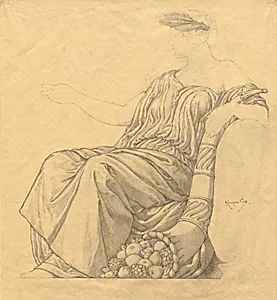
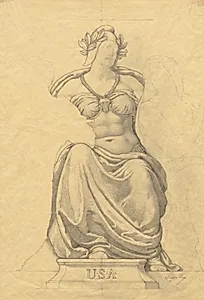
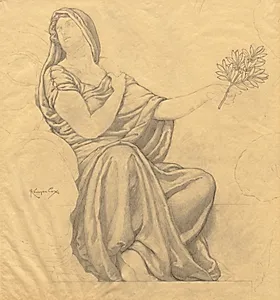
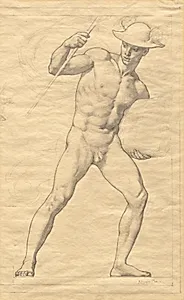
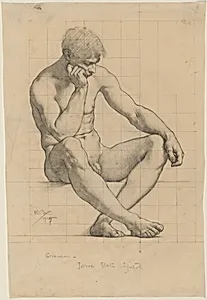
Cox's oeuvre spans sensuous nudes like *Sacre Conversazione* (1878–1882, Smithsonian American Art Museum), landscapes such as *Flying Shadows* (1883), and portraits including *Augustus Saint-Gaudens* (1908, Metropolitan Museum of Art) and *Henry L. Fry* (1883, Cincinnati Art Museum). His murals adorned grand spaces: Library of Congress panels (1896–1897), state capitols in Wisconsin, Minnesota, and Iowa; Oberlin College's "The Spirit of Self-Sacrificing Love" (1914); and a 1917 Navy recruitment poster, *The Sword is Drawn, The Navy Upholds It!*. Collaborating with his wife, sculptor Louise Howland King—whom he married in 1892—he created decorations for the 1893 World's Columbian Exposition. Their three children, Leonard, Allyn, and Caroline, also pursued artistic careers.
Cox died of pneumonia on March 17, 1919, in New York City, leaving a legacy as a defender of classical tradition amid rising modernism. His teaching influenced generations, and his essays, poetry, and vast mural output embodied art as moral and civic service, ensuring his place in America's Gilded Age cultural firmament.