Ctrl K
1471–1532
**Kolman Helmschmid: Master Armourer of the Renaissance**
Kolman Helmschmid (1471–1532), born in Augsburg, Germany, emerged from one of Europe's most illustrious families of armourers, the Helmschmieds, whose name aptly means "helmet smith." The son of the renowned Lorenz Helmschmied (active 1467–1515), Kolman trained within the family workshop, taking control after his father's death in 1515 and continuing the dynasty's tradition of crafting exceptional plate armour. He married Agnes Breu, daughter of a prominent artist family, in a union commemorated by a wedding portrait painted by Jörg Breu the Elder; their son, Desiderius Kolman Helmschmid (1513–1579), carried on the workshop until around 1600. Little is documented about his early years beyond this familial context, but Augsburg's vibrant guild system undoubtedly honed his skills amid a competitive scene rivaling Innsbruck's Seusenhofer family and Milan's Missaglias.
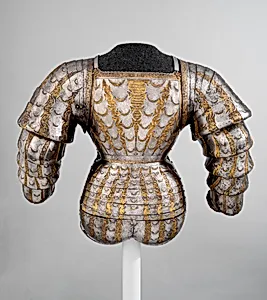
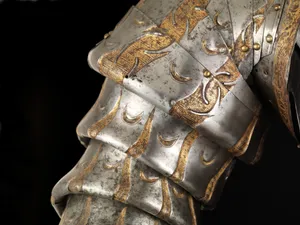
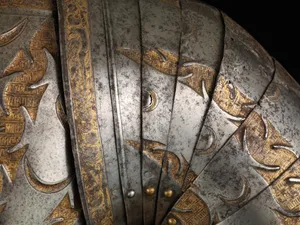
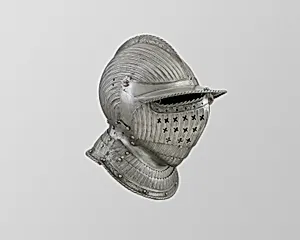
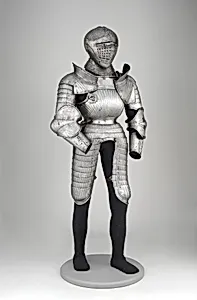
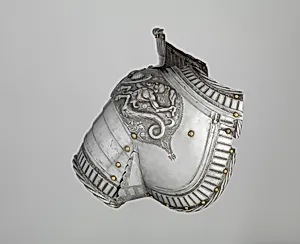
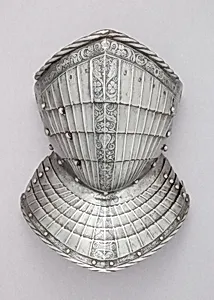
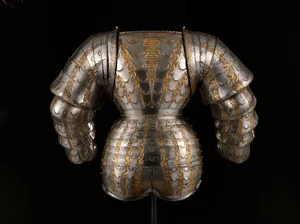
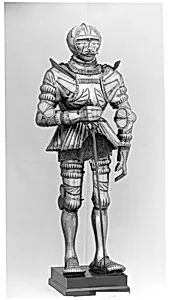
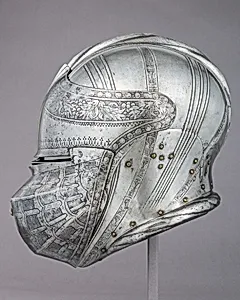
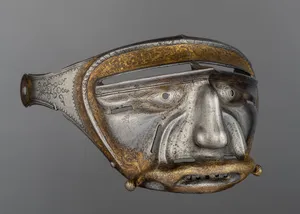
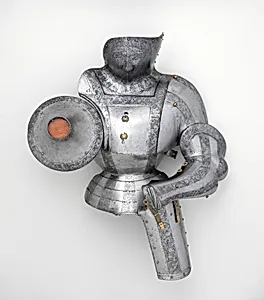
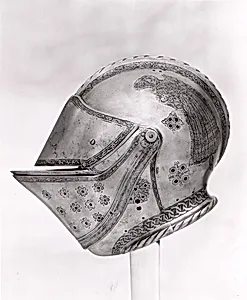
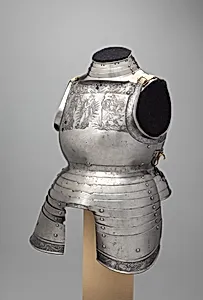
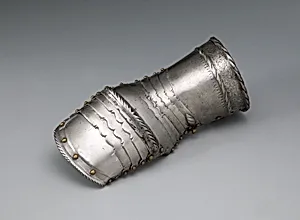
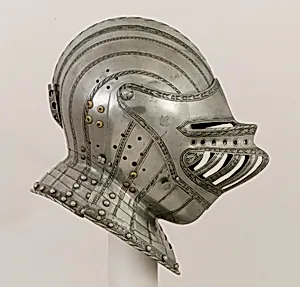
Helmschmid mastered the southern German Renaissance style of "costume armour," transforming steel into illusions of extravagant Landsknecht fashion—puffed, slashed doublets and embroidered silks—through masterful hammering, embossing, etching, and gilding. Iconic works include portions of a costume armour (ca. 1525, Metropolitan Museum of Art), featuring vambraces and a backplate that mimic fabric textures with uncanny precision; a helmet (ca. 1515, also Met) with a mask-like visor inspired by carnival disguises; and an armet (ca. 1525). He collaborated with etcher Daniel Hopfer on armours like that for Reichsfreiherr Wilhelm von Roggendorf (1523), and produced garnitures such as one for a Radziwill prince (1573, Art Institute of Chicago) and a full engraved, gilded suit for Emperor Charles V (ca. 1525).
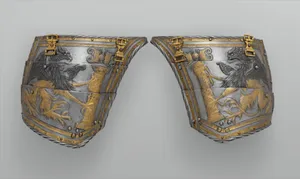
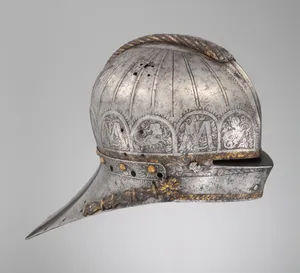
Helmschmid's patrons spanned Europe's elite: Holy Roman Emperors Maximilian I (sallet helmet, horse armour), Charles V (tassets, equestrian armour), and Ferdinand I, as well as Philip II of Spain and William the Silent. His legacy endures in collections like Madrid's Real Armería and Vienna's Kunsthistorisches Museum, where over a dozen pieces attest to his innovation amid shifting warfare—from knightly plate to firearm-adapted designs. A 1532 medal by Hans Kels the Younger immortalizes him, underscoring his stature among Renaissance artists who elevated armoury to high art. (312 words)