Ctrl K
1525–1560
**Master of the Die** (fl. 1525–1560) was an anonymous Italian engraver and printmaker active primarily in Rome during the mid-16th century. Named for the distinctive small die he used to sign his prints—a tiny emblematic mark that became his moniker—this elusive artist remains unidentified despite scholarly proposals linking him to figures like Benedetto Verino, Giovanni Francesco Zabello, Tommaso Vincidor, or even Daddi (or Dado), the son of the renowned engraver Marcantonio Raimondi. His career flourished amid the vibrant printmaking scene of Renaissance Rome, where he contributed to the rapid dissemination of classical and High Renaissance imagery through intricate engravings.
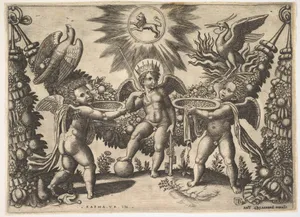
The Master of the Die studied under Marcantonio Raimondi, the pivotal figure who revolutionized engraving by faithfully reproducing designs from masters like Raphael. This training honed his technical precision, evident in his fine line work and tonal modeling. He worked in the elegant style of Raphael, often copying compositions by the artist himself, as well as Perino del Vaga, Michiel Coxie, and Giulio Romano. His prints typically feature mythological narratives, biblical scenes, and classical triumphs, blending narrative clarity with dynamic figures and architectural backdrops characteristic of Mannerist tendencies emerging in Roman art.
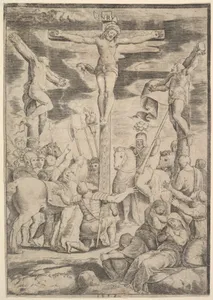
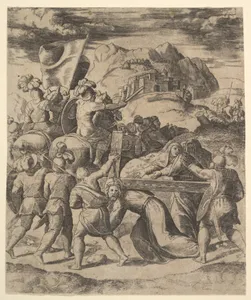
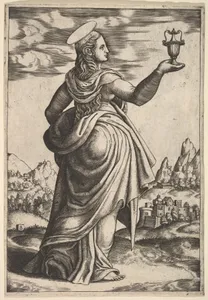
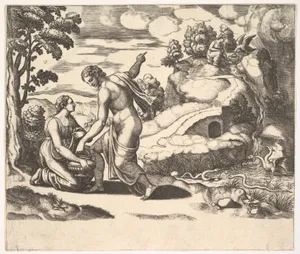
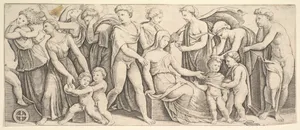
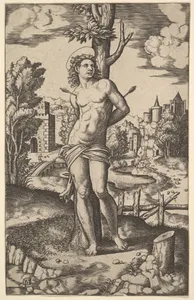
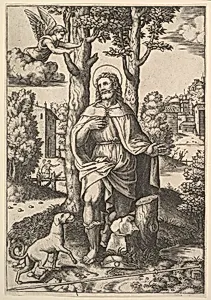
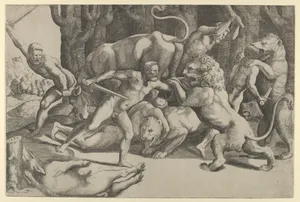
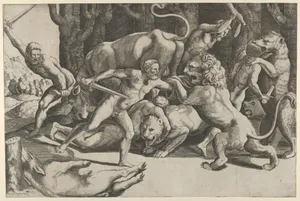
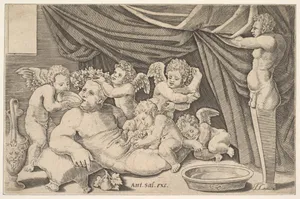
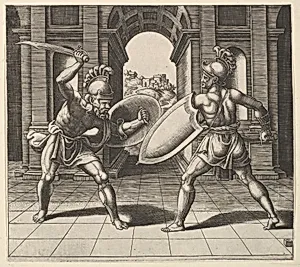
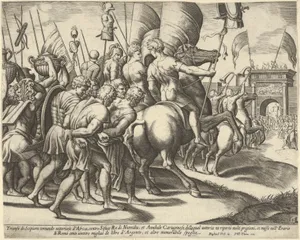
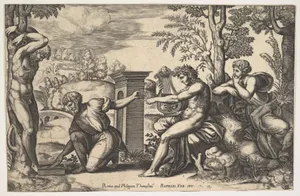
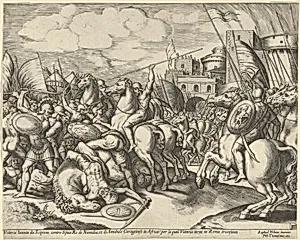
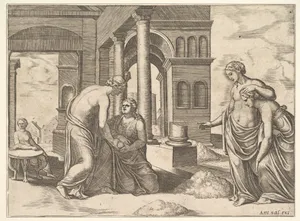
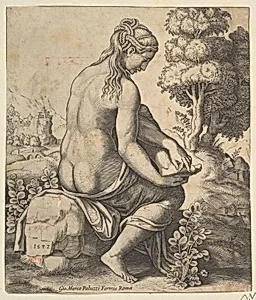
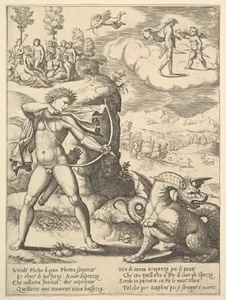
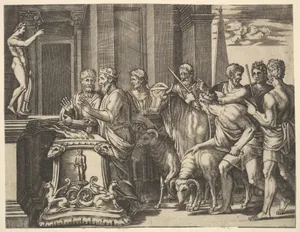
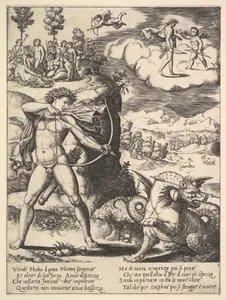
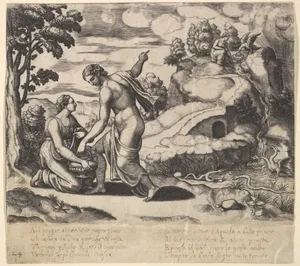
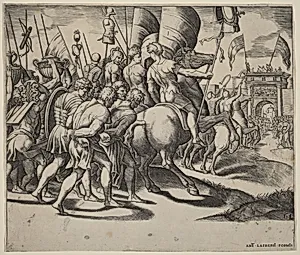
Among his notable works are *Apollo and Marsyas* (1530s), depicting the god flaying the satyr in a dramatic forest scene; *Five Men Fighting Beasts* (1532); and *Joseph Sold by His Brothers* (1533). He produced extensive series like the *Story of Cupid and Psyche* after Coxie, including *Psyche Relating Her Misfortunes* and plates from the *Speculum Romanae Magnificentiae*, as well as *The Triumph of Scipio*, *Sacrifice to Priapus*, *Victory of Scipio over Syphax*, *Naval Battle*, *Saint Roch*, and *The Magdalen*. These engravings, preserved in collections such as the National Gallery of Art (12 works), the Art Institute of Chicago (45), and the Metropolitan Museum of Art, showcase his versatility in mythological, historical, and religious subjects.
The Master's legacy endures as a key reproductive engraver, bridging the workshops of Raphael and Mannerism to a wider European audience. His technically masterful prints influenced later artists and collectors, embodying the Renaissance ideal of print as both art and scholarly tool. Today, over 50 works attest to his productivity, making him a cornerstone of 16th-century graphic arts despite his anonymity.