
Ctrl K
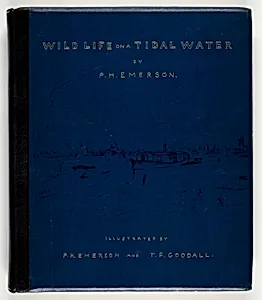
1856–1936
Peter Henry Emerson (1856–1936) was born on May 13 at his family's sugar plantation, La Palma Estate, near Encrucijada, Cuba, to an American father, Henry Ezekiel Emerson, and British mother, Jane Harris Billing. A distant relative of Ralph Waldo Emerson and Samuel Morse, he spent his early childhood amid the island's landscapes before moving to Wilmington, Delaware, during the American Civil War and settling in England in 1869 following his father's death. Educated at Cranleigh School, where he excelled as a scholar and athlete, Emerson studied medicine at King's College London and Clare College, Cambridge, earning his degree in 1885. He briefly practiced surgery but abandoned it in 1886 after discovering photography during bird-watching expeditions around 1881–1882. Self-taught in the medium, he approached it scientifically, integrating physics and chemistry learned at Cambridge, with no formal art training or mentors noted.
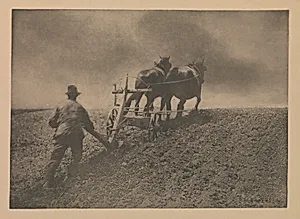
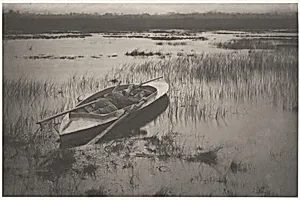
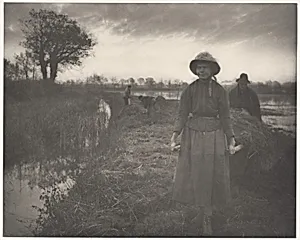
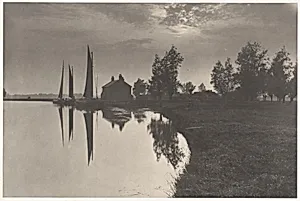
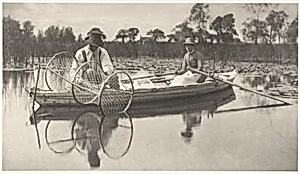
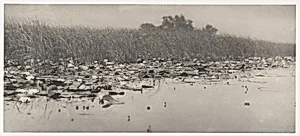
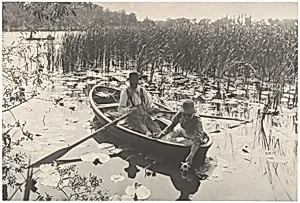
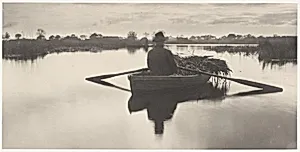
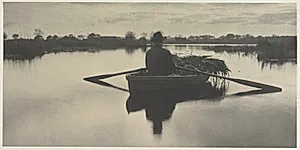
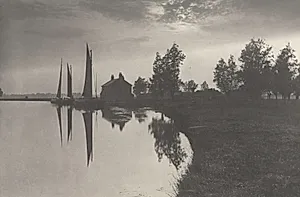
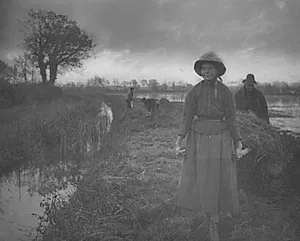
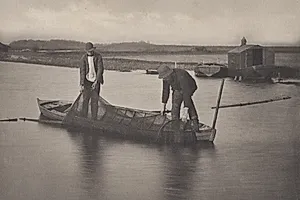
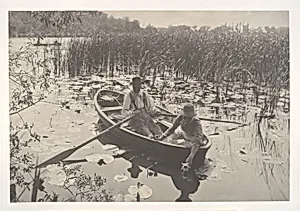
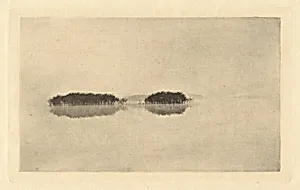
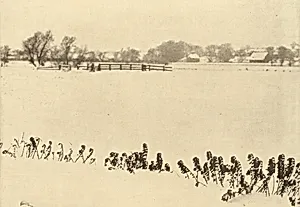
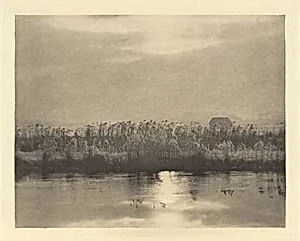
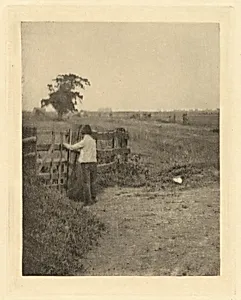
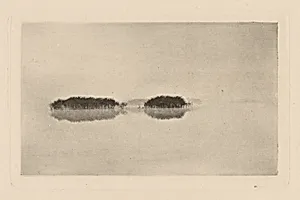
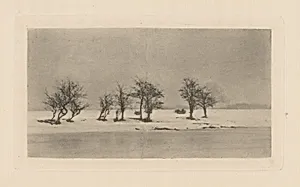
Emerson championed "naturalistic photography," advocating straight, unmanipulated images that captured rural life with scientific precision, mimicking the human eye's selective focus—one plane sharp, the rest softly blurred—as theorized by Hermann von Helmholtz. Rejecting Victorian pictorialism's retouching and composite printing epitomized by Henry Peach Robinson and O.G. Reijlander, he insisted photography was a distinct art form rooted in nature's truths. His breakthrough came with platinum prints of East Anglia's Norfolk Broads, romanticizing peasant laborers and fenland vistas. Key works include *Ricking the Reed* and *Poling the Marsh Hay* (both 1886) from *Life and Landscape on the Norfolk Broads*, which featured an essay by painter Thomas Goodall; *At Plough, The End of the Furrow* and *Confessions* (1887) from *Pictures of Life in Field and Fen*; and *Blackshore, River Blythe, Suffolk* (1888).
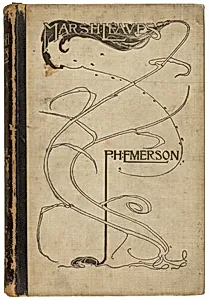
In 1889, Emerson's manifesto *Naturalistic Photography for Students of the Art* solidified his influence, though he sparked feuds within the Photographic Society and helped form the Camera Club of London. He later recanted aspects of his doctrine in 1891's "The Death of Naturalistic Photography," ceasing public photographic publication after *Marsh Leaves* (1895), his finest work, to pursue writing, genealogy, and fiction. Married to Edith Amy Ainsworth since 1881, with whom he had five children, he died in Falmouth, Cornwall.
Emerson's legacy endures as a pioneer of straight photography, laying groundwork for 20th-century modernists by elevating the medium's fidelity to reality over painterly imitation. Inducted into the International Photography Hall of Fame in 1979, his Norfolk imagery remains a poignant testament to vanishing rural traditions.
![Sheep on the Marshes [Landscape with Cattle]](https://images.artheonmuseum.org/nga/thumb/sheep-on-the-marshes-landscape-with-cattle-nga-205595.webp)