
Ctrl K
1800–1900
Prince Albert of Saxe-Coburg and Gotha (1819–1861) was born in Coburg, Germany, as the second son of Ernest I, Duke of Saxe-Coburg and Gotha, and Princess Louise of Saxe-Gotha-Altenburg. He married his first cousin, Queen Victoria, in 1840, becoming Prince Consort and a central figure in British cultural life. Educated in Brussels and at the University of Bonn, where he studied law, political economy, philosophy, and the history of art, Albert developed a sophisticated appreciation for the visual arts that shaped his lifelong engagement with them.
Though not a professional artist, Albert was an accomplished amateur practitioner, particularly in watercolour, pencil, and etching. His works often depicted intimate family scenes, children, pets, and royal residences such as Windsor and Claremont. He and Queen Victoria shared a passion for watercolour painting, compiling albums that recorded their private and public lives; Albert’s contributions were noted for their greater sophistication and technical skill compared to many contemporary amateur efforts. His training in art history informed a refined approach that blended observation with classical influences.
Albert’s most significant contributions lay in patronage and institutional leadership rather than personal output. He chaired the Fine Arts Commission overseeing the decoration of the new Palace of Westminster, promoted British artists through the Society of Arts (later Royal Society of Arts), and masterminded the Great Exhibition of 1851. As a collector, he acquired important early German and Italian paintings for the Royal Collection, often with the assistance of advisor Ludwig Gruner. He also designed Osborne House on the Isle of Wight in collaboration with Thomas Cubitt.
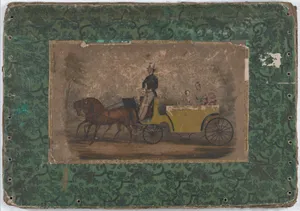
Albert’s legacy endures through his transformative influence on Victorian art and culture. His vision helped elevate public appreciation for the arts, fostered international exchange via the Great Exhibition, and enriched the Royal Collection with enduring acquisitions. The four works attributed to him in the present collection exemplify his personal artistic practice within this broader context of royal patronage and cultural modernisation.
All 1 artworks loaded