Ctrl K
1749–1759
**Saint James's Factory: A Jewel in Early English Porcelain**
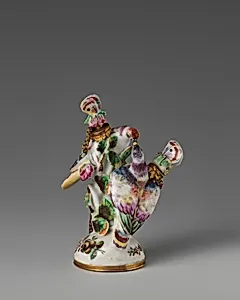
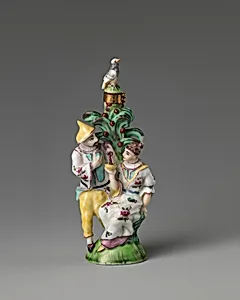
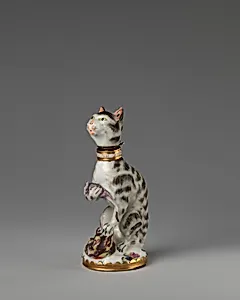
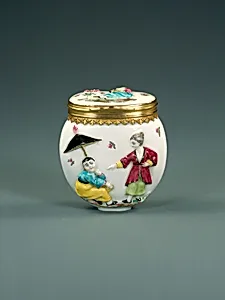
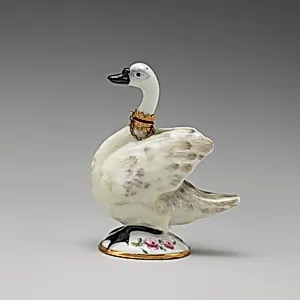
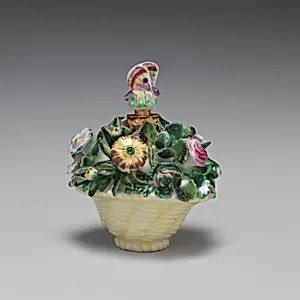
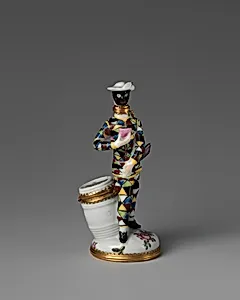
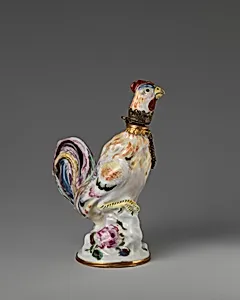
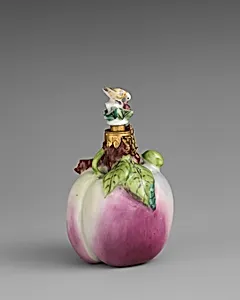
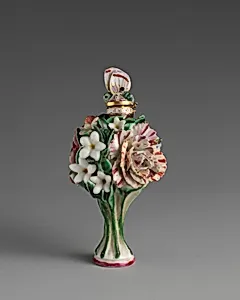
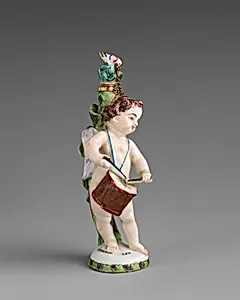
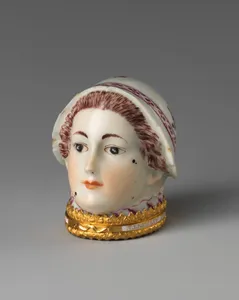
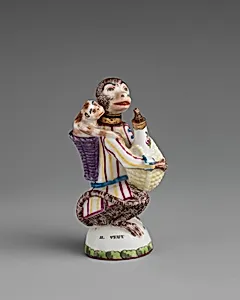
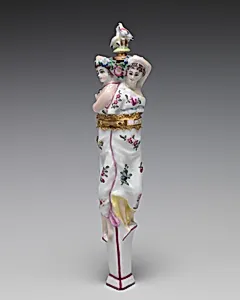
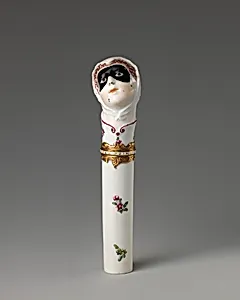
The Saint James's Factory, a pioneering British porcelain manufactory, emerged in London around 1749 under the direction of Charles Gouyn, a Huguenot jeweler from Dieppe who died in 1785. Operating from premises near the Turk's Head on Bennett Street in St. James's until about 1759, Gouyn had previously collaborated with Nicholas Sprimont to establish the Chelsea Porcelain Factory circa 1745 before branching out independently by 1748. This small-scale enterprise specialized in luxurious "toys"—delicate soft-paste porcelain figures, figural groups, scent bottles, patch boxes, etuis, and bonbonnières—often enhanced with gold or gilt-metal mounts, reflecting Gouyn's jewelry expertise.
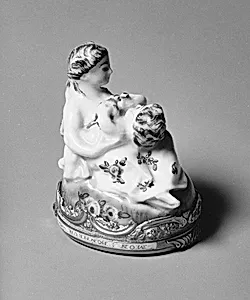
Working in the vibrant tradition of early English soft-paste porcelain, the factory produced wares with a high-lead-content paste that required structural supports for limbs to combat sagging during firing, resulting in distinctive, elegant forms influenced by Meissen and Chelsea models—though mutual imitation occurred between the rivals. The output emphasized Rococo whimsy in small-scale sculptures, typically white or lightly enameled, with rudimentary yet harmonious modeling that conveyed sophistication despite modest size. An unidentified modeller, possibly a single artisan, crafted these pieces, capturing pastoral and mythological themes with a focus on frontal display for mantelpieces or cabinets.
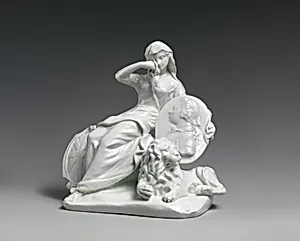
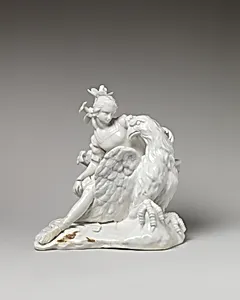
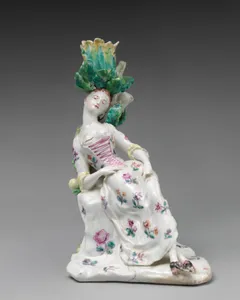
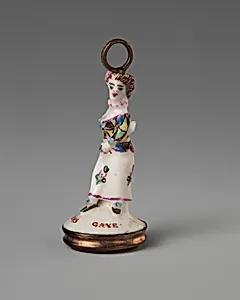
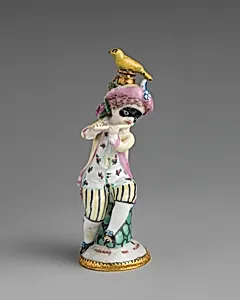
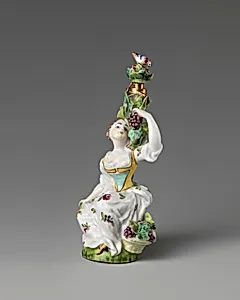
Iconic works include the eponymous *Girl-in-a-Swing* (ca. 1749–1759), a slip-cast figure of a girl on an oval base, emblematic of the factory's playful style; *Mourning Britannia* (1751), a poignant group lamenting Frederick, Prince of Wales's death, featuring the seated figure with a medallion portrait, globe, shield, and lion; and rare groups like *Ganymede and the Eagle* (ca. 1749–1760) and *Hercules and Omphale*. Other treasures encompass *Columbine* (ca. 1755), *Ceres*, and whimsical items like seal fobs shaped as musicians or Cupid.
Though short-lived and resource-limited compared to Chelsea, the Saint James's Factory's legacy endures through around thirty surviving models in prestigious collections, including the Metropolitan Museum of Art, Victoria & Albert Museum, and British Museum. Rediscovered via 1990s French archival research, its rarities command high auction values today, underscoring Gouyn's innovative bridge between jewelry and porcelain artistry in mid-18th-century Britain.