Ctrl K
1730–1788
Salomon Gessner was born in Zurich in 1730 into a family of printers and publishers, an upbringing that placed books, images, and ideas at the center of his world from an early age. Though largely self-taught as a visual artist, he received some instruction during a period in Berlin, where he encountered the German Rococo tradition, and his mature work reflects a deep absorption in the pastoral literary tradition of classical antiquity — above all the idylls of Theocritus and Virgil — which he translated into both poetry and visual art with remarkable coherence.
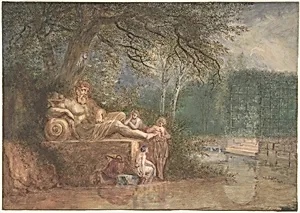
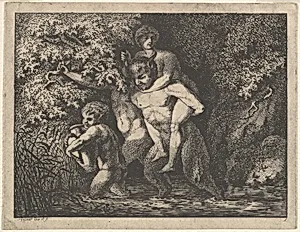
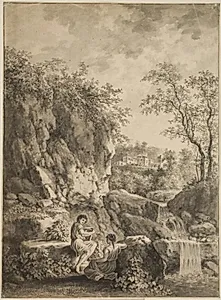
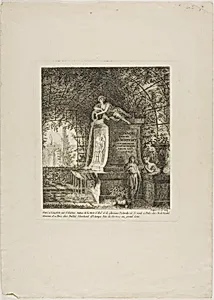
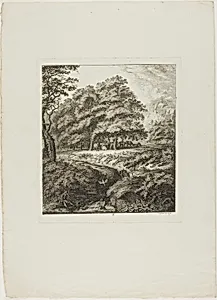
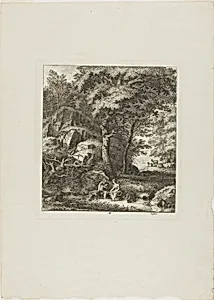
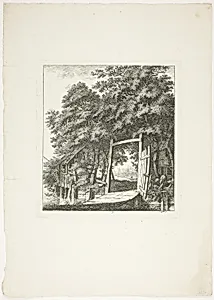
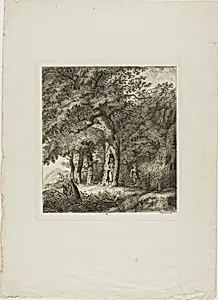
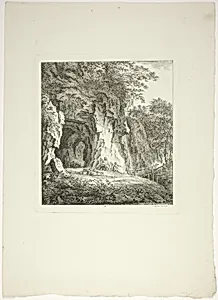
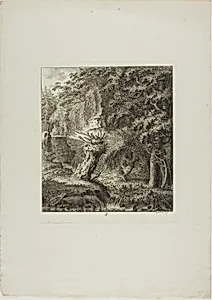
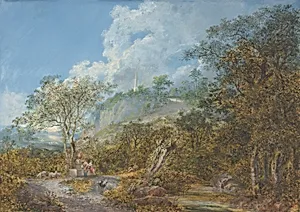
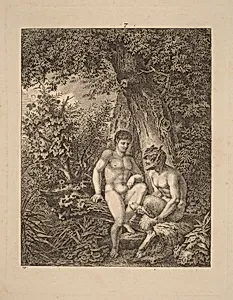
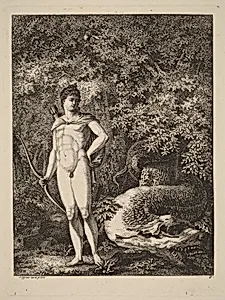
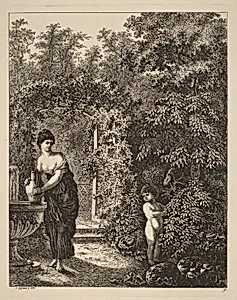
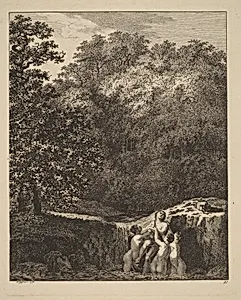
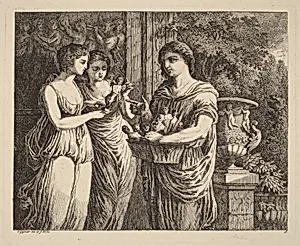
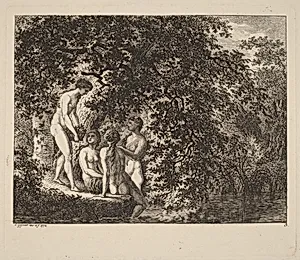
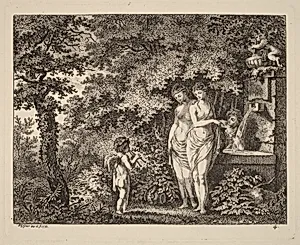
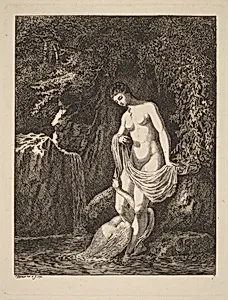
Gessner is a rare figure in European cultural history: an artist who achieved equal distinction as a writer and as a visual creator. His literary idylls, prose poems celebrating an idealized Arcadian world of shepherds, nymphs, and gentle nature, were published from the 1750s onward and became European bestsellers, translated into French, English, Italian, and numerous other languages. These texts in turn directly shaped his paintings, drawings, and etchings, which depict the same softly lit, harmonious pastoral world populated by graceful figures moving through idealized landscapes of mossy banks, leafy grottos, and meandering streams.
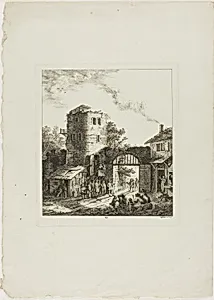
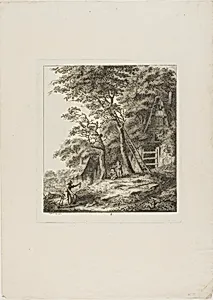
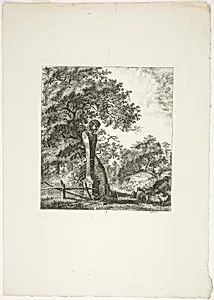
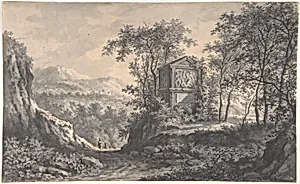
As a visual artist Gessner worked primarily in gouache and etching, producing intimate, jewel-like images that combine precise observation of botanical and landscape detail with a dream-like overall atmosphere. His etchings in particular — delicate, refined, and exquisitely controlled — brought his pastoral vision to a wide European audience through print publication, and they influenced landscape artists across the continent.
Gessner died in Zurich in 1788, celebrated throughout Europe as a poet and artist who had revived the Arcadian dream with genuine feeling and technical sophistication. His legacy lies in his demonstration that the pastoral was not merely an exhausted classical convention but a living mode capable of speaking to the Enlightenment's longing for natural simplicity and moral innocence.