Ctrl K
**School of Nottingham**
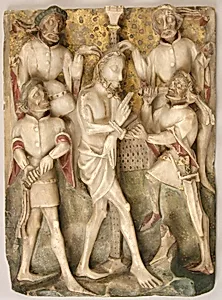
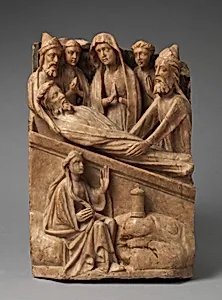
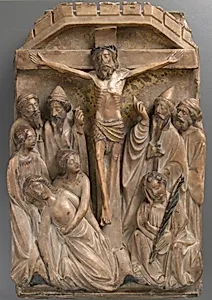
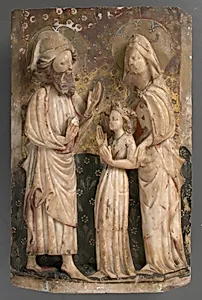
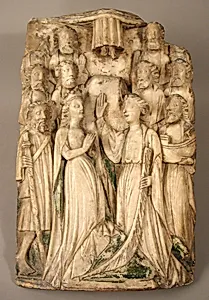
The School of Nottingham, a prolific workshop tradition of alabaster carvers based in Nottingham and surrounding Midlands areas like South Derbyshire, flourished from the fourteenth to the early sixteenth century, with its peak in the fifteenth. Quarrying soft gypsum alabaster locally, these anonymous image-makers—known as alabastermen, kervers, or marblers—produced thousands of small-scale religious sculptures for domestic devotion, altarpieces, and tombs, often exported across Europe to markets in France, Spain, Iceland, and beyond. An early documented figure was Peter Maceon of Nottingham, paid in 1371 for an alabaster altarpiece at St George's Chapel, Windsor, signaling the industry's organized scale. Workshops standardized designs for mass production, carving thin high-relief panels (typically 40 x 25 cm) and free-standing figures in sizes from 16 inches to over three feet, shipped in bulk to continental dealers.
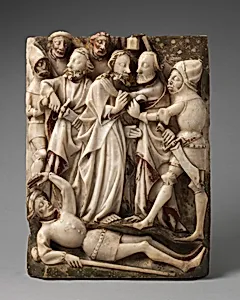
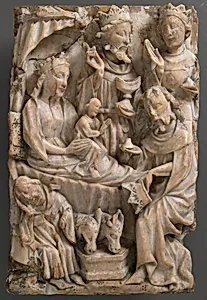
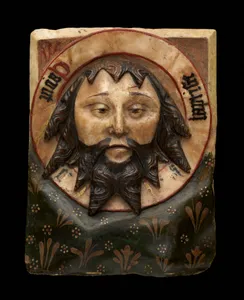
Carvings exemplified late Gothic style, richly polychromed in vivid scarlets, blues, and golds, with gesso detailing for candlelit viewing. Subjects drew from the Life of Christ (especially Passion cycles like Nativity ca. 1400, Crucifixion late fifteenth century, Resurrection 1450–90), the Virgin (Madonna and Child statues, Coronation of the Virgin), and saints such as Thomas Becket (martyrdom panels) and John the Baptist (detached heads for devotional fasting cults). Unique English motifs included the Bosom of Abraham Trinity, with nine panels and five statues surviving. Notable works encompass the *Adoration of the Magi* (fifteenth century, alabaster with paint and gilding, 15⅞ x 10¼ in., Metropolitan Museum of Art) and *The Betrayal of Christ* (fifteenth century, 14¾ x 11¼ in.) from the same collection, alongside the exported *Our Lady of Westminster* (ca. 1450, 36 in. high) and the Nailloux Altarpiece (1450–1500, five panels in situ, France).
The school's legacy endured the English Reformation's iconoclasm (1549 Act), pivoting to larger church monuments for nobility and gentry until the late eighteenth century, as seen in the Brudenell tomb (1590). Principal collections grace the Victoria and Albert Museum, Nottingham Castle Museum (three Flawford figures), and international sites like the Met and Warsaw's National Museum. Scholar Francis Cheetham's studies (e.g., *English Medieval Alabasters*, 1984) have illuminated this vibrant export industry, revealing its influence on European devotional art despite the anonymity of its creators. Today, these luminous survivors evoke the era's piety and craftsmanship.