Ctrl K
1833–1904
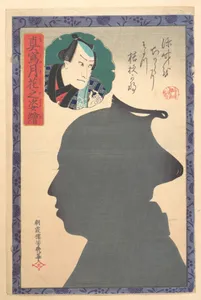
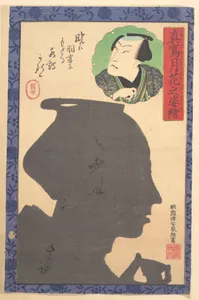
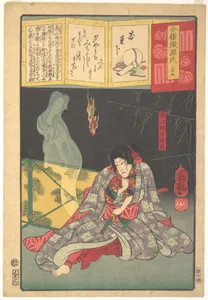
Utagawa Yoshiiku (1833–1904) was a prolific Japanese woodblock print artist and journalist who lived through one of the most turbulent and transformative periods in his country's history, the transition from the Edo period through the Meiji Restoration. A student of the celebrated Utagawa Kuniyoshi, Yoshiiku inherited his master's taste for bold compositional drama and dynamic figuration, applying these qualities to an extraordinarily wide range of subjects.
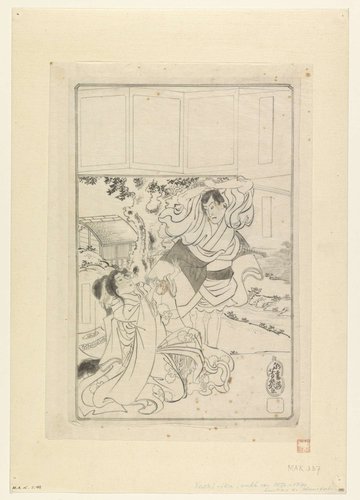
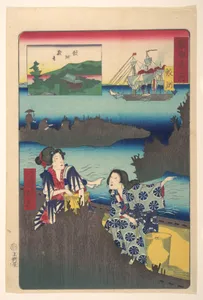
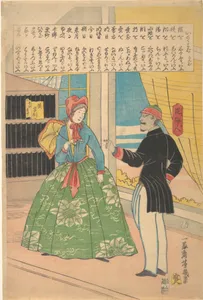
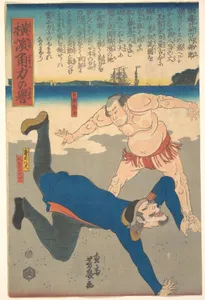
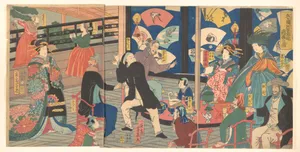
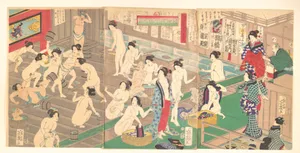
Yoshiiku worked across the major ukiyo-e genres — warrior prints (musha-e), actor portraits (yakusha-e), and images of beautiful women (bijin-ga) — but he is particularly distinguished for his engagement with the rapidly changing world around him. As Japan opened to Western influence following the Meiji Restoration of 1868, Yoshiiku became a pioneer of illustrated journalism, co-founding the newspaper Tokyo Nichinichi Shimbun Nishiki-e and producing newspaper prints that brought current events to a mass audience in vivid pictorial form.
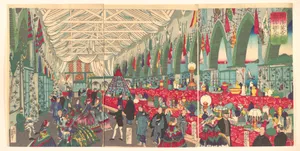
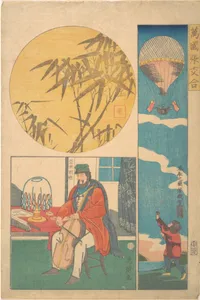
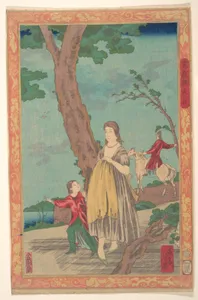
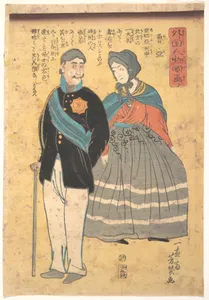
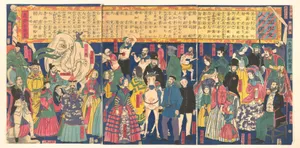
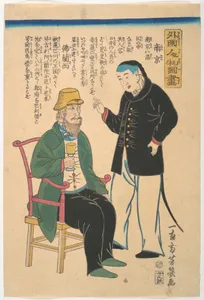
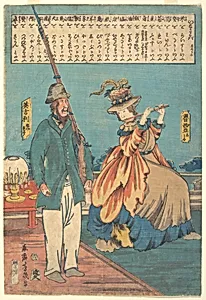
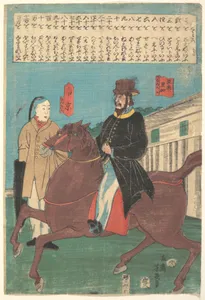
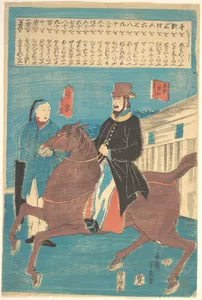
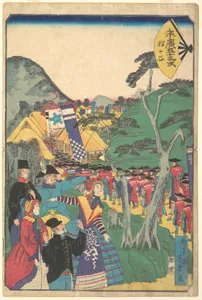
His series depicting the Boshin War and other contemporary conflicts showcased his ability to render modern subject matter with the dramatic intensity of traditional warrior imagery, while his actor prints continued the Utagawa school's long theatrical tradition. He also produced notable work in the kaika-e genre — pictures celebrating Western-influenced modernity — capturing the fashions, technologies, and social changes sweeping Meiji Japan.
Yoshiiku occupies a pivotal position as an artist who bridges two worlds: the rich pictorial heritage of Edo-period ukiyo-e and the media-driven visual culture of modern Japan. His newspaper prints in particular foreshadow the role that illustration and photojournalism would play in shaping public opinion, making him a significant figure not only in art history but in the history of Japanese communications.