Ctrl K
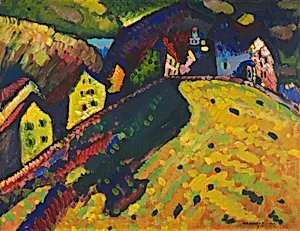
**Wassily Kandinsky (1866–1944)** was a Russian painter and art theorist widely recognized as one of the pioneers of abstract art in Western painting. Born in Moscow on December 16, 1866, to a tea merchant father and a mother from a noble family with Tatar roots, he initially pursued studies in law and economics before turning to art at age 30. In 1896 he settled in Munich, where he trained first at Anton Ažbe’s private school and then at the Academy of Fine Arts under Franz von Stuck.
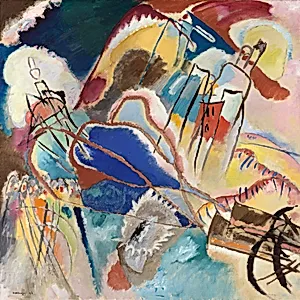
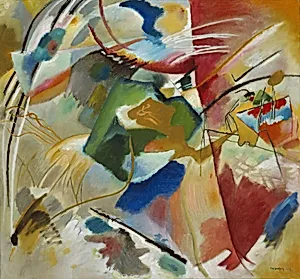
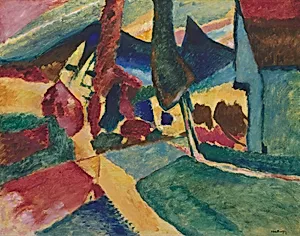
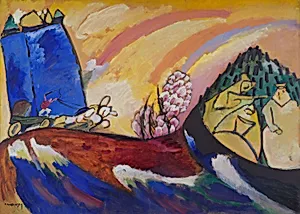
His early work reflected influences from Impressionism—sparked by a Monet *Haystacks* exhibition—and Symbolism, alongside an interest in folk art, color psychology, and theosophy. By the first decade of the twentieth century he had developed a distinctive style using vibrant colors and simplified forms, evident in paintings such as *The Blue Rider* (1903) and *Blue Mountain* (1908–09). In 1911 he co-founded the influential *Der Blaue Reiter* group with artists including Franz Marc and Gabriele Münter (his partner from 1902 to 1916), publishing an almanac and organizing exhibitions that championed expressive, non-naturalistic art. His seminal treatise *Concerning the Spiritual in Art* (1910) articulated his belief in color and form as vehicles for inner spiritual experience, independent of representational subject matter.
After returning to Russia during World War I and participating briefly in post-revolutionary cultural institutions, Kandinsky moved back to Germany in 1920. From 1922 until the Nazi closure of the school in 1933, he taught at the Bauhaus, where his geometric abstractions aligned with the institution’s modernist ethos. He spent his final years in France, becoming a citizen in 1939 and continuing to produce luminous, dynamic compositions. Kandinsky died in Neuilly-sur-Seine on December 13, 1944. His theoretical writings and pioneering abstractions profoundly shaped twentieth-century art, inspiring generations of abstract painters and establishing color and line as autonomous expressive elements.
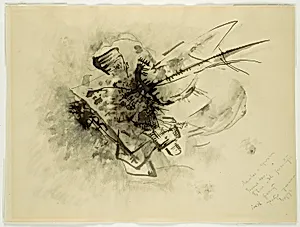
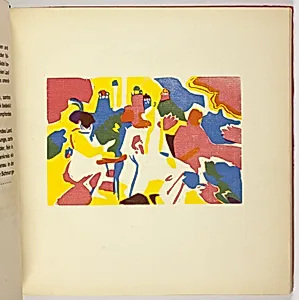
The museum’s holdings of seven works by Kandinsky offer visitors a direct encounter with this transformative vision.