
山本梅逸筆 四季山水図|Landscapes of the Four Seasons
1848
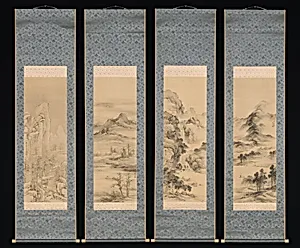
Medium
Set of four hanging scrolls; ink and color on silk
Dimensions
Image (a): 40 3/8 × 13 7/8 in. (102.6 × 35.2 cm) Overall with mounting (a): 75 1/16 × 19 3/4 in. (190.7 × 50.1 cm) Overall with knobs (a): 75 1/16 × 21 5/8 in. (190.7 × 55 cm) Image (b): 40 3/8 × 13 7/8 in. (102.6 × 35.3 cm) Overall with mounting (b): 75 1/4 × 19 11/16 in. (191.2 × 50 cm) Overall with knobs (b): 75 1/4 × 21 11/16 in. (191.2 × 55.1 cm) Image (c): 40 7/16 × 13 7/8 in. (102.7 × 35.3 cm) Overall with mounting (c): 75 1/16 × 19 3/4 in. (190.6 × 50.1 cm) Overall with knobs (c): 75 1/16 × 21 3/4 in. (190.6 × 55.3 cm) Image (d): 40 1/2 × 13 15/16 in. (102.8 × 35.4 cm) Overall with mounting (d): 75 3/8 × 19 11/16 in. (191.5 × 50 cm) Overall with knobs (d): 75 3/8 × 21 11/16 in. (191.5 × 55.1 cm)
Classification
Paintings
Culture & Period
Japan · Edo period (1615–1868)
Department
Asian Art
Museum
Metropolitan Museum of Art, New York, NY
Credit
Mary Griggs Burke Collection, Gift of the Mary and Jackson Burke Foundation, 2015
Accession Number
2015.300.190a–d
Rights
Public Domain
Tags
Art Historical Context
Yamamoto Baiitsu's *Landscapes of the Four Seasons (1848) is a captivating set of four hanging scrolls rendered in ink and color on silk. Each scroll measures approximately 40 by 14 inches in its image area, with elaborate mountings extending them to over 75 inches tall—perfect for dramatic display in a traditional Japanese interior. Depicting mountainous landscapes across spring, summer, autumn, winter, the series invites viewers to contemplate nature's cyclical beauty. Created during the late Edo period1615–1868), this work exemplifies the refined artistry of Japanese painting traditions. Hanging scrolls like these were cherished possessions, often rotated seasonally to harmonize with the changing environment, reflecting Japan's deep cultural reverence for the four seasons. Baiitsu's use of ink and subtle colors on silk allowed for delicate gradations, evoking mist-shrouded peaks and serene vistas that transport us to an idealized natural world. Now part of the Metropolitan Museum of Art's Asian Art collection, thanks to the Mary Griggs Burke Collection, these scrolls offer a window into Edo-era aesthetics. Their monumental scale and thematic unity make them a highlight for anyone exploring Japan's enduring landscape legacy.
About the Artist
Yamamoto Baiitsu · 1783–1856
Yamamoto Baiitsu (1783–1856) was a leading literati painter of late Edo-period Japan, celebrated for his refined bird-and-flower compositions and evocative landscapes. Born in Nagoya in the Owari domain to a sculptor's family, he was the son of Yamamoto Yumigiemon, an artisan who served the Tokugawa lords of the Owari clan. Baiitsu received early training under local masters, studying bird-and-flo...